
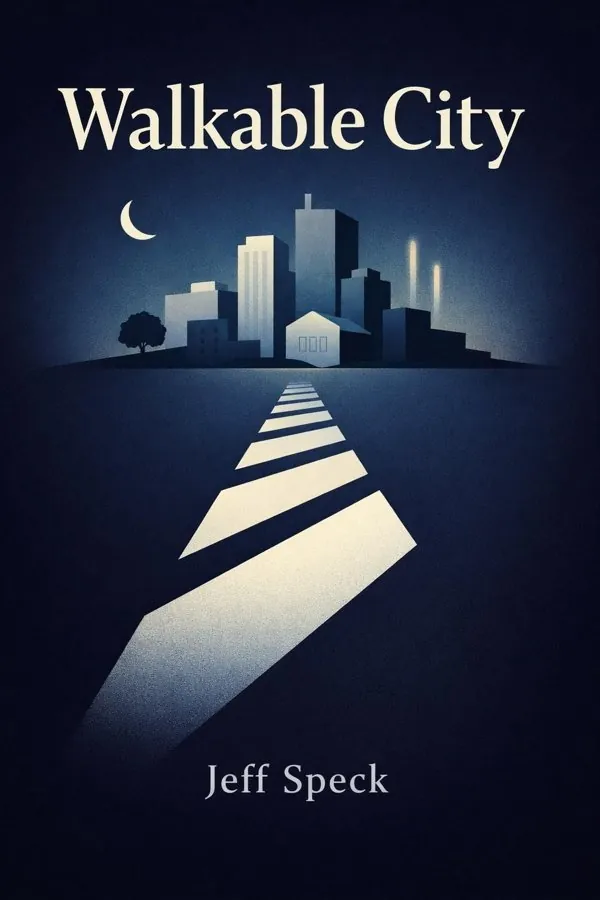
Walkable City: How Downtown Can Save America, One Step at a Time: Summary & Key Insights
by Jeff Speck
 10 min12 chaptersAudio available
What Is Walkable City: How Downtown Can Save America, One Step at a Time About?
Walkable City: How Downtown Can Save America, One Step at a Time by Jeff Speck is a urban_design book spanning 12 pages. In 'Walkable City', urban planner Jeff Speck argues that the key to revitalizing American cities lies in making them more walkable. Drawing on decades of experience, he outlines ten steps to create vibrant, sustainable, and economically resilient downtowns. The book combines urban design principles with practical policy recommendations, showing how walkability improves health, environment, and community life.
This FizzRead summary covers all 12 key chapters of Walkable City: How Downtown Can Save America, One Step at a Time in approximately 10 minutes, distilling the most important ideas, arguments, and takeaways from Jeff Speck's work. Also available as an audio summary and Key Quotes Podcast.
Walkable City: How Downtown Can Save America, One Step at a Time
In 'Walkable City', urban planner Jeff Speck argues that the key to revitalizing American cities lies in making them more walkable. Drawing on decades of experience, he outlines ten steps to create vibrant, sustainable, and economically resilient downtowns. The book combines urban design principles with practical policy recommendations, showing how walkability improves health, environment, and community life.
Who Should Read Walkable City: How Downtown Can Save America, One Step at a Time?
This book is perfect for anyone interested in urban_design and looking to gain actionable insights in a short read. Whether you're a student, professional, or lifelong learner, the key ideas from Walkable City: How Downtown Can Save America, One Step at a Time by Jeff Speck will help you think differently.
- ✓Readers who enjoy urban_design and want practical takeaways
- ✓Professionals looking to apply new ideas to their work and life
- ✓Anyone who wants the core insights of Walkable City: How Downtown Can Save America, One Step at a Time in just 10 minutes
Want the full summary?
Get instant access to this book summary and 100K+ more with Fizz Moment.
Get Free SummaryAvailable on App Store • Free to download
Key Chapters
Walkability may sound charming, even optional, but it’s actually measurable and essential. I define it through four interrelated qualities: usefulness, safety, comfort, and interest. A truly walkable environment satisfies all four. Each complements the others; neglect any one, and pedestrian life falters.
Usefulness means that walking serves a purpose beyond recreation—you can reach the things you need. This requires proximity and mixed uses: homes near shops, offices near parks, schools near homes. Without this everyday usefulness, we choose cars because only they connect scattered destinations.
Safety comes next. Pedestrians must feel protected from fast-moving vehicles and exposed hazards. Street design plays a decisive role here—narrower lanes, slower speeds, curb extensions, and visible crosswalks remind drivers that they are guests in shared space.
Comfort shapes how much we enjoy being outside. Streets lined with buildings, trees, and active façades provide a sense of enclosure and human scale. Sidewalks should feel like outdoor rooms, not leftover shoulders beside asphalt deserts.
Interest keeps us engaged. A walk is worthwhile when each block offers variety—storefronts, textures, changing views, signs of life. Repetition and monotony kill curiosity; good urban design sparks continual discovery.
Together, these four conditions turn movement into experience. When sidewalks invite us rather than merely permit us, walking becomes natural. That is the heart of walkable urbanism.
The first and hardest task is adjusting our relationship with the automobile. For too long, we’ve assumed that cities must serve cars first. We widened roads, flattened neighborhoods, and scattered destinations. We mistook traffic flow for progress. But every lane added to reduce congestion only invited more driving, just as every parking space invited more cars.
Putting cars in their place does not mean banning them; it means designating appropriate space and cost. Congestion pricing, strategic road diets, and investment in alternatives all help rebalance priorities. Parking should be priced to reflect its value, and streets should be designed to accommodate—not dominate—pedestrians and cyclists.
Cities like Portland and New York show that when driving becomes optional rather than mandatory, downtown businesses flourish. Freed from endless parking lots and wide arterials, urban land can return to what it does best: housing people, not vehicles.
+ 10 more chapters — available in the FizzRead app
All Chapters in Walkable City: How Downtown Can Save America, One Step at a Time
About the Author
Jeff Speck is an American city planner, urban designer, and author known for his advocacy of walkability and sustainable urban development. He has served as Director of Design at the National Endowment for the Arts and co-authored 'Suburban Nation' before writing 'Walkable City'.
Get This Summary in Your Preferred Format
Read or listen to the Walkable City: How Downtown Can Save America, One Step at a Time summary by Jeff Speck anytime, anywhere. FizzRead offers multiple formats so you can learn on your terms — all free.
Available formats: App · Audio · PDF · EPUB — All included free with FizzRead
Download Walkable City: How Downtown Can Save America, One Step at a Time PDF and EPUB Summary
Key Quotes from Walkable City: How Downtown Can Save America, One Step at a Time
“Walkability may sound charming, even optional, but it’s actually measurable and essential.”
“The first and hardest task is adjusting our relationship with the automobile.”
Frequently Asked Questions about Walkable City: How Downtown Can Save America, One Step at a Time
Walkable City: How Downtown Can Save America, One Step at a Time by Jeff Speck is a urban_design book that explores key ideas across 12 chapters. In 'Walkable City', urban planner Jeff Speck argues that the key to revitalizing American cities lies in making them more walkable. Drawing on decades of experience, he outlines ten steps to create vibrant, sustainable, and economically resilient downtowns. The book combines urban design principles with practical policy recommendations, showing how walkability improves health, environment, and community life.
Browse by Category
Ready to read Walkable City: How Downtown Can Save America, One Step at a Time?
Get the full summary and 100K+ more books with Fizz Moment.