
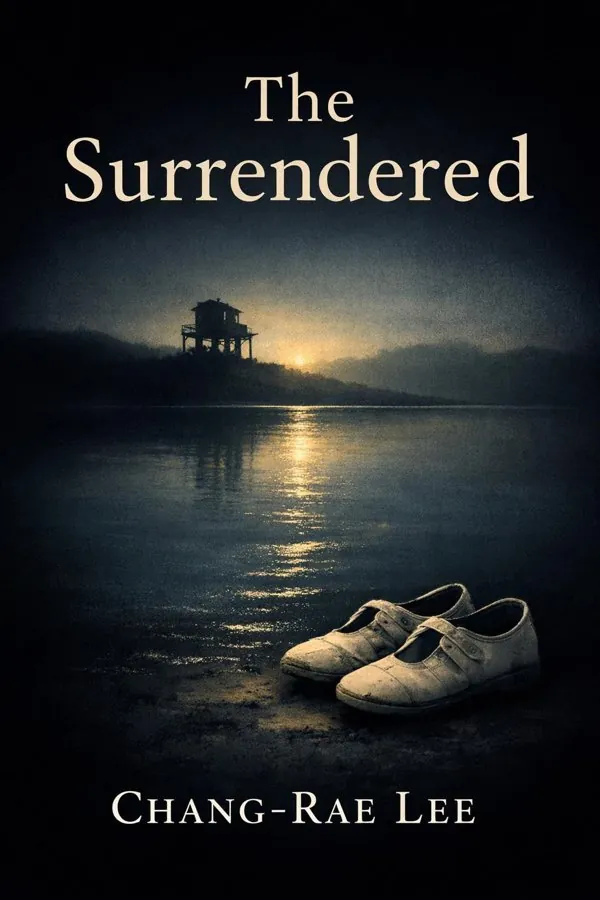
The Surrendered: Summary & Key Insights
 10 min8 chaptersAudio available
Key Takeaways from The Surrendered
One of the novel’s deepest insights is that surviving catastrophe is not the same as escaping it.
We do not merely remember the past; we organize our present around it.
Violence does not only kill bodies; it erodes the moral categories people depend on to understand themselves.
A painful truth in The Surrendered is that affection, devotion, and longing do not automatically heal deep wounds.
The novel makes clear that identity is not formed only by culture, family, or personal choice; it is also shaped by what has been taken away.
What Is The Surrendered About?
The Surrendered by Chang-Rae Lee is a general book. The Surrendered by Chang-Rae Lee is a haunting literary novel about war, memory, love, guilt, and the long afterlife of trauma. Set across multiple decades and locations, it follows three deeply damaged people whose lives intersect through the violence of the Korean War and its aftermath: June Han, a Korean woman marked by childhood loss; Hector Brennan, an American veteran burdened by memory and regret; and Sylvie Tanner, a former missionary whose private wounds mirror the devastation around her. Rather than telling a straightforward war story, Lee examines what happens after survival, when people must carry history inside their bodies and relationships for years. The novel matters because it shows that war does not end when the fighting stops; it continues in memory, in silence, and in the impossible choices people make to keep living. Chang-Rae Lee, one of the most respected contemporary novelists in American literature, brings unusual emotional precision and stylistic depth to this subject. The result is a powerful, unsettling exploration of how people endure suffering, seek connection, and confront what cannot be undone.
This FizzRead summary covers all 8 key chapters of The Surrendered in approximately 10 minutes, distilling the most important ideas, arguments, and takeaways from Chang-Rae Lee's work. Also available as an audio summary and Key Quotes Podcast.
The Surrendered
The Surrendered by Chang-Rae Lee is a haunting literary novel about war, memory, love, guilt, and the long afterlife of trauma. Set across multiple decades and locations, it follows three deeply damaged people whose lives intersect through the violence of the Korean War and its aftermath: June Han, a Korean woman marked by childhood loss; Hector Brennan, an American veteran burdened by memory and regret; and Sylvie Tanner, a former missionary whose private wounds mirror the devastation around her. Rather than telling a straightforward war story, Lee examines what happens after survival, when people must carry history inside their bodies and relationships for years. The novel matters because it shows that war does not end when the fighting stops; it continues in memory, in silence, and in the impossible choices people make to keep living. Chang-Rae Lee, one of the most respected contemporary novelists in American literature, brings unusual emotional precision and stylistic depth to this subject. The result is a powerful, unsettling exploration of how people endure suffering, seek connection, and confront what cannot be undone.
Who Should Read The Surrendered?
This book is perfect for anyone interested in general and looking to gain actionable insights in a short read. Whether you're a student, professional, or lifelong learner, the key ideas from The Surrendered by Chang-Rae Lee will help you think differently.
- ✓Readers who enjoy general and want practical takeaways
- ✓Professionals looking to apply new ideas to their work and life
- ✓Anyone who wants the core insights of The Surrendered in just 10 minutes
Want the full summary?
Get instant access to this book summary and 100K+ more with Fizz Moment.
Get Free SummaryAvailable on App Store • Free to download
Key Chapters
One of the novel’s deepest insights is that surviving catastrophe is not the same as escaping it. In The Surrendered, people endure war, hunger, displacement, and loss, yet their true struggle begins afterward, when they must build lives on top of unbearable memories. June, Hector, and Sylvie are all survivors, but survival has left each of them fractured. Their pain does not always appear dramatic from the outside. Instead, it emerges in restraint, emotional distance, obsession, shame, and the inability to trust peace when it finally arrives.
Chang-Rae Lee shows trauma as something lived in the body and mind long after violence has passed. June’s childhood experiences during the Korean War shape her adult identity and choices. Hector is trapped by memories of combat and by the moral confusion of what he witnessed and failed to prevent. Sylvie, though outwardly composed, carries grief and guilt that have become inseparable from her sense of purpose. Their stories suggest that extreme suffering does not simply become “the past.” It becomes a lens through which all future life is interpreted.
This idea applies beyond wartime experience. People often assume that once a crisis ends, healing should naturally follow. But loss, abuse, migration, illness, or family rupture can linger in hidden ways. Someone may function well professionally while feeling emotionally unreachable. Someone else may appear calm while living in quiet fear or numbness.
The actionable takeaway is simple but demanding: do not confuse endurance with recovery. In your own life and in others, make space for the possibility that what has been survived may still need to be understood, named, and gently healed.
We do not merely remember the past; we organize our present around it. That idea sits at the heart of The Surrendered. Lee portrays memory not as a clean archive of facts but as a force that directs love, guilt, loyalty, and self-protection. The characters are constantly living in two times at once: the immediate moment and the remembered wound beneath it. What they choose, whom they trust, and what they avoid are all influenced by unresolved memory.
June’s past is not a background detail; it defines her emotional posture toward the world. Hector’s recollections of war and of June become central to his understanding of himself, especially as he ages and revisits what once seemed buried. Sylvie, too, is driven by memory, including memories of faith, family, and irreversible loss. In each case, memory is selective and unstable. It preserves pain, distorts motives, and sometimes becomes a substitute for honest confrontation. The novel suggests that memory can be both sacred and dangerous: it keeps the dead close, but it can also imprison the living.
This concept matters in everyday life because many people are guided by stories they tell themselves about what happened to them. A betrayal from years ago may shape present relationships. Childhood deprivation may influence adult ambition. A single failure may become a lifelong identity. Reflection becomes powerful when it reveals these hidden continuities.
A practical takeaway is to examine the memories that still exert control. Ask: which past events continue to define my reactions, fears, or loyalties? Naming those influences is often the first step toward living more consciously rather than repeating an inherited emotional script.
Violence does not only kill bodies; it erodes the moral categories people depend on to understand themselves. In The Surrendered, the Korean War is not presented as a backdrop of heroic sacrifice or simple political conflict. Instead, Lee explores war as a condition in which innocence, responsibility, loyalty, and guilt become painfully entangled. People make impossible choices under pressure, and those choices continue to haunt them long after the immediate danger has passed.
Hector, in particular, embodies this moral disorientation. As a soldier, he is exposed to brutality that cannot be neatly explained by patriotism or military duty. His memories are shaped not only by what he saw but by what he failed to stop, misunderstood, or became complicit in through fear and limitation. June’s experience as a civilian reveals another aspect of war’s cruelty: ordinary people are forced into survival decisions that outsiders may judge but cannot fully comprehend. Sylvie’s role as a missionary complicates matters further, showing how idealism, compassion, and self-deception can coexist.
The novel resists easy judgment. It asks readers to sit with the fact that under extreme conditions, human beings can be both victims and flawed agents. This has relevance far beyond wartime. In workplaces, families, or institutions, people often want clean heroes and villains. Real life is messier. Pressure exposes weakness, and good intentions do not guarantee good outcomes.
The actionable lesson is to be cautious about simplistic moral narratives, especially in complex situations. Instead of rushing to label people or even yourself as wholly right or wholly wrong, ask what forces, fears, and constraints shaped the decision. Moral clarity matters, but so does moral humility.
A painful truth in The Surrendered is that affection, devotion, and longing do not automatically heal deep wounds. The novel contains intense emotional connections, but Lee refuses the comforting idea that love alone can redeem a shattered life. His characters reach toward one another because they need witness, recognition, and tenderness. Yet the very damage that draws them together often prevents full intimacy.
June and Hector share a bond forged in extreme circumstances, but their connection is burdened by class, race, war, memory, and the unequal meanings they attach to the past. Sylvie’s relationships are similarly shaped by grief and unmet need. In each case, love is real, but it is not magical. It may provide moments of grace, loyalty, or temporary refuge, yet it cannot restore innocence or undo death. This is what gives the novel its emotional realism. Lee honors love without romanticizing it.
This idea is useful because many people unconsciously expect relationships to solve inner pain. They hope a partner, child, friend, or vocation will compensate for old wounds. When that does not happen, disappointment turns into resentment or withdrawal. The book suggests a more mature understanding: relationships matter enormously, but they are not substitutes for grief work, accountability, or self-knowledge.
In practical terms, the takeaway is to approach love as companionship in truth rather than rescue from truth. If you want healthier relationships, ask not only how you can be loved, but what unresolved sorrow or fear you may be asking someone else to carry for you. Honest connection grows when healing and love work together, not when one is expected to replace the other.
The novel makes clear that identity is not formed only by culture, family, or personal choice; it is also shaped by what has been taken away. June’s life is defined by displacement, migration, and the loss of the stable world that should have anchored her childhood. Her identity develops through rupture rather than continuity. She is not simply a person with a past; she is someone forced to become herself in the aftermath of destruction.
Lee treats displacement with emotional and historical seriousness. To be uprooted is not only to move geographically. It is to lose language environments, social belonging, family roles, and the ordinary assumptions that make life feel coherent. Hector experiences a different kind of displacement as a veteran and outsider, a man whose wartime past separates him from civilian normalcy. Sylvie too lives in a kind of spiritual and emotional exile. All three characters inhabit worlds in which home is more memory than reality.
This theme resonates widely in modern life. Immigrants, refugees, adoptees, veterans, children of fractured families, and even people who have undergone major life upheavals often carry this sense of internal displacement. They may appear settled while still feeling fundamentally unmoored.
A practical application is to treat identity as something that may include grief as well as aspiration. Instead of asking only, “Who do I want to be?” it can be meaningful to ask, “What losses shaped who I became?” Understanding that link can create compassion for yourself and others. The takeaway: if your life has been marked by rupture, do not dismiss that history as incidental. It may be central to understanding your values, fears, resilience, and longing for belonging.
Not everything unsaid is harmless. In The Surrendered, silence functions as both shield and prison. Characters withhold truths because language feels inadequate, because shame is overwhelming, or because speaking would reopen unbearable wounds. At times, silence helps them survive. It keeps them moving, functioning, and emotionally intact enough to continue. But over time, that same silence deepens isolation and distorts relationships.
Lee is especially skilled at showing the emotional cost of what remains unspoken. People do not simply hide facts; they hide interpretations, needs, resentments, and fears. This means others encounter only fragments of who they really are. June’s reserve, Hector’s inwardness, and Sylvie’s controlled surfaces all reveal how silence can become a life strategy. Yet strategies that once protected vulnerable selves may later prevent love, understanding, and peace.
This pattern is familiar in ordinary life. Families often avoid discussing the event that changed everything: an affair, a death, addiction, abuse, financial collapse, migration trauma. Workplaces hide conflict under politeness. Individuals avoid naming depression, grief, or anger because they fear burdening others or losing control. Silence can keep the system stable, but the cost is usually intimacy and truth.
The takeaway is not to confess everything indiscriminately. Rather, it is to notice when silence has outlived its usefulness. Ask: what am I protecting, and what is that protection costing me? One practical step is to speak one difficult truth in a safe setting, whether with a trusted person, therapist, or journal. Healing often begins when what was unspeakable becomes sayable.
Real compassion is not sentimental. The Surrendered argues, through story rather than sermon, that compassion begins when we stop demanding that suffering look noble or understandable. Lee’s characters are damaged in ways that make them difficult, guarded, proud, or morally compromised. The novel does not ask readers to excuse everything they do. Instead, it asks us to perceive them fully. That fuller perception is the beginning of mercy.
Sylvie’s missionary background raises important questions here. Acts of care can be sincere, but they can also contain ego, control, or the need to feel righteous. Similarly, Hector’s concern for others is entangled with guilt and longing. June’s hardness can seem severe until we recognize what it took for her to survive. Compassion in this novel is not about idealizing pain. It is about acknowledging that people shaped by trauma rarely remain simple, innocent versions of themselves.
In modern life, this insight matters in parenting, leadership, friendship, and social debate. We often find it easier to sympathize with people whose suffering appears clean and relatable. It is much harder to extend understanding to those whose pain makes them distant, angry, rigid, or self-defeating. Yet these are often the people who most need patient recognition.
The actionable takeaway is to practice one additional layer of interpretation before judgment. When someone behaves coldly, defensively, or inconsistently, ask what burden might be underneath the behavior. This does not mean abandoning boundaries or standards. It means pairing accountability with curiosity. Compassion becomes stronger, not weaker, when it is rooted in clear-eyed understanding rather than comforting fantasy.
Nothing in The Surrendered stays buried forever. The novel’s structure and emotional movement both reinforce a difficult truth: whatever is denied, deferred, or sealed away tends to reappear. The past returns in memory, in aging, in renewed encounters, and in the subtle repetition of unresolved emotional patterns. Characters may change locations, roles, or routines, but they cannot outrun the meanings of what happened to them.
Hector’s later-life reflections reveal how time does not necessarily weaken the grip of formative experience. Instead, old age can remove distractions and force a more direct reckoning. June’s life also demonstrates that adaptation is not the same as resolution. One can become competent, composed, and socially functional while still carrying an unprocessed inner history. Sylvie’s arc underscores that spiritual conviction or busyness cannot permanently suppress grief and guilt.
This insight has broad practical relevance. Many people postpone difficult reckoning by staying busy, moving cities, changing partners, or defining themselves through achievement. These strategies may provide temporary relief, but unresolved pain often resurfaces through anxiety, repeating relationship conflicts, emotional numbness, or sudden intensity around seemingly minor events.
The takeaway is to begin reckoning before life forces it upon you. Set aside time to revisit a formative event, relationship, or period you usually avoid. Write about it, discuss it, or reflect on how it still influences your reactions today. The goal is not to relive pain for its own sake, but to reduce its hidden power. What is examined can gradually be integrated; what is ignored tends to return with greater force.
All Chapters in The Surrendered
About the Author
Chang-Rae Lee is an award-winning novelist and one of the most distinguished voices in contemporary American literature. Born in Seoul, South Korea, in 1965, he moved to the United States with his family when he was a child. His work often explores identity, memory, migration, cultural belonging, and the emotional consequences of history. Lee first gained major acclaim with Native Speaker, and he went on to write celebrated novels including A Gesture Life, Aloft, The Surrendered, On Such a Full Sea, and My Year Abroad. Known for his precise prose and psychologically rich characters, he has received wide critical recognition and numerous literary honors. In addition to his fiction, Lee has taught creative writing at prominent universities, influencing a new generation of writers.
Get This Summary in Your Preferred Format
Read or listen to the The Surrendered summary by Chang-Rae Lee anytime, anywhere. FizzRead offers multiple formats so you can learn on your terms — all free.
Available formats: App · Audio · PDF · EPUB — All included free with FizzRead
Download The Surrendered PDF and EPUB Summary
Key Quotes from The Surrendered
“One of the novel’s deepest insights is that surviving catastrophe is not the same as escaping it.”
“We do not merely remember the past; we organize our present around it.”
“Violence does not only kill bodies; it erodes the moral categories people depend on to understand themselves.”
“A painful truth in The Surrendered is that affection, devotion, and longing do not automatically heal deep wounds.”
“The novel makes clear that identity is not formed only by culture, family, or personal choice; it is also shaped by what has been taken away.”
Frequently Asked Questions about The Surrendered
The Surrendered by Chang-Rae Lee is a general book that explores key ideas across 8 chapters. The Surrendered by Chang-Rae Lee is a haunting literary novel about war, memory, love, guilt, and the long afterlife of trauma. Set across multiple decades and locations, it follows three deeply damaged people whose lives intersect through the violence of the Korean War and its aftermath: June Han, a Korean woman marked by childhood loss; Hector Brennan, an American veteran burdened by memory and regret; and Sylvie Tanner, a former missionary whose private wounds mirror the devastation around her. Rather than telling a straightforward war story, Lee examines what happens after survival, when people must carry history inside their bodies and relationships for years. The novel matters because it shows that war does not end when the fighting stops; it continues in memory, in silence, and in the impossible choices people make to keep living. Chang-Rae Lee, one of the most respected contemporary novelists in American literature, brings unusual emotional precision and stylistic depth to this subject. The result is a powerful, unsettling exploration of how people endure suffering, seek connection, and confront what cannot be undone.
You Might Also Like
Duct Tape Marketing: The World's Most Practical Small Business Marketing Guide
John Jantsch
10 minDusk, Night, Dawn: On Revival and Courage
Anne Lamott
10 minFinish Big: How Great Entrepreneurs Exit Their Companies on Top
Bo Burlingham
10 minFirst As Tragedy, Then As Farce
Slavoj Zizek
10 minFirst Principles: What America's Founders Learned from the Greeks and Romans and How That Shaped Our Country
Thomas E. Ricks
10 minGood Habits, Bad Habits: The Science of Making Positive Changes That Stick
Wendy Wood
10 minBrowse by Category
Ready to read The Surrendered?
Get the full summary and 100K+ more books with Fizz Moment.