
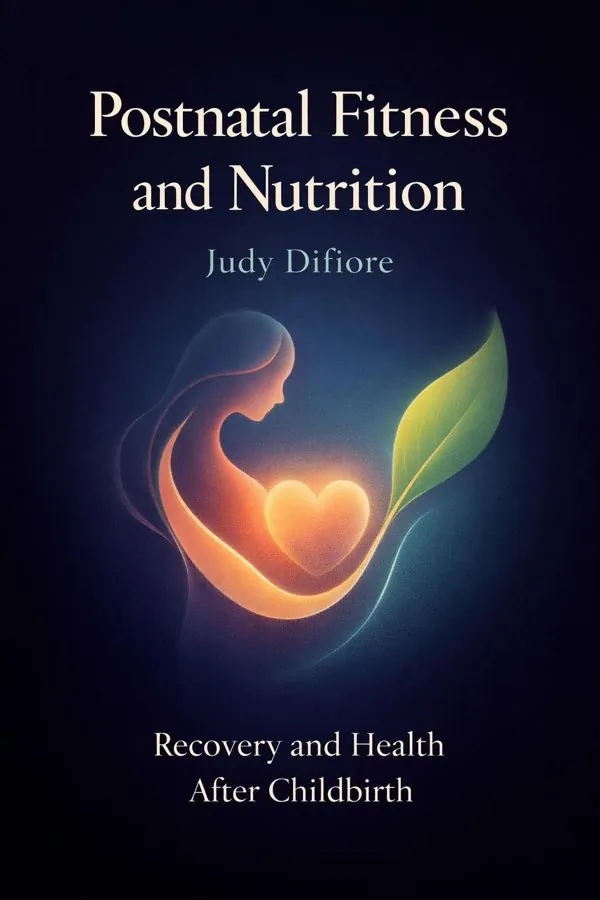
Postnatal Fitness and Nutrition: Recovery and Health After Childbirth: Summary & Key Insights
by Judy Difiore
 10 min9 chaptersAudio available
Key Takeaways from Postnatal Fitness and Nutrition: Recovery and Health After Childbirth
Recovery after childbirth is not a single event but a layered biological transition.
Strength after childbirth begins in places that are often invisible.
The smartest postpartum exercise plan is not the hardest one but the most progressive.
After childbirth, cardio is often seen as the fastest path back to fitness, but DiFiore warns that endurance work should support recovery, not compete with it.
Food after childbirth is not just about weight; it is recovery infrastructure.
What Is Postnatal Fitness and Nutrition: Recovery and Health After Childbirth About?
Postnatal Fitness and Nutrition: Recovery and Health After Childbirth by Judy Difiore is a fitness book spanning 5 pages. The weeks and months after childbirth are often described as joyful, but they are also physically demanding, emotionally complex, and full of uncertainty. In Postnatal Fitness and Nutrition: Recovery and Health After Childbirth, Judy DiFiore offers a practical roadmap for navigating this transition with strength, patience, and self-compassion. Rather than treating postpartum recovery as a race to “get your body back,” she frames it as a period of healing, rebuilding, and learning how to support a changed body with intelligent movement and nourishing food. The book matters because many new mothers receive only scattered advice after delivery, despite facing major hormonal shifts, weakened core muscles, pelvic floor strain, sleep disruption, and changing nutritional needs. DiFiore bridges that gap by combining fitness expertise with realistic guidance for daily life. She explains how recovery unfolds, how to return to exercise safely, and how nutrition can support both healing and energy. As a fitness professional focused on prenatal and postnatal health, DiFiore brings credibility, clarity, and empathy to the subject. Her message is reassuring but practical: recovery is not about perfection, but about building a sustainable foundation for long-term health.
This FizzRead summary covers all 9 key chapters of Postnatal Fitness and Nutrition: Recovery and Health After Childbirth in approximately 10 minutes, distilling the most important ideas, arguments, and takeaways from Judy Difiore's work. Also available as an audio summary and Key Quotes Podcast.
Postnatal Fitness and Nutrition: Recovery and Health After Childbirth
The weeks and months after childbirth are often described as joyful, but they are also physically demanding, emotionally complex, and full of uncertainty. In Postnatal Fitness and Nutrition: Recovery and Health After Childbirth, Judy DiFiore offers a practical roadmap for navigating this transition with strength, patience, and self-compassion. Rather than treating postpartum recovery as a race to “get your body back,” she frames it as a period of healing, rebuilding, and learning how to support a changed body with intelligent movement and nourishing food.
The book matters because many new mothers receive only scattered advice after delivery, despite facing major hormonal shifts, weakened core muscles, pelvic floor strain, sleep disruption, and changing nutritional needs. DiFiore bridges that gap by combining fitness expertise with realistic guidance for daily life. She explains how recovery unfolds, how to return to exercise safely, and how nutrition can support both healing and energy.
As a fitness professional focused on prenatal and postnatal health, DiFiore brings credibility, clarity, and empathy to the subject. Her message is reassuring but practical: recovery is not about perfection, but about building a sustainable foundation for long-term health.
Who Should Read Postnatal Fitness and Nutrition: Recovery and Health After Childbirth?
This book is perfect for anyone interested in fitness and looking to gain actionable insights in a short read. Whether you're a student, professional, or lifelong learner, the key ideas from Postnatal Fitness and Nutrition: Recovery and Health After Childbirth by Judy Difiore will help you think differently.
- ✓Readers who enjoy fitness and want practical takeaways
- ✓Professionals looking to apply new ideas to their work and life
- ✓Anyone who wants the core insights of Postnatal Fitness and Nutrition: Recovery and Health After Childbirth in just 10 minutes
Want the full summary?
Get instant access to this book summary and 100K+ more with Fizz Moment.
Get Free SummaryAvailable on App Store • Free to download
Key Chapters
Recovery after childbirth is not a single event but a layered biological transition. One of the book’s most important insights is that the postpartum period should be understood as a time of profound adaptation, not simply as a countdown to normalcy. After delivery, the uterus begins shrinking back to its pre-pregnancy size, hormone levels shift dramatically, abdominal tissues remain stretched, and energy reserves are often depleted. At the same time, a new mother may be coping with sleep loss, breastfeeding demands, incision healing, or soreness from vaginal birth. DiFiore emphasizes that this complexity requires patience and informed care.
She explains that healing does not happen evenly. A woman may feel emotionally eager to move again while her muscles, connective tissue, and pelvic floor are still vulnerable. Some recover quickly in certain areas but need longer support in others, especially after complications, tearing, or cesarean delivery. That is why general advice like “start exercising when you feel ready” can be misleading. Readiness must include medical clearance, body awareness, and respect for symptoms such as pain, bleeding, heaviness, or exhaustion.
The book encourages women to track recovery in functional terms rather than cosmetic ones. Can you stand comfortably? Walk without strain? Engage your deep abdominal muscles? Breathe fully? Rest when needed? These are better measures of progress than scale weight or appearance. DiFiore normalizes the uneven rhythm of recovery and reminds readers that setbacks do not mean failure.
A practical application is to create a simple weekly recovery check-in: note energy, sleep, mood, discomfort, bleeding, and activity tolerance. This helps identify patterns and prevents overexertion. The actionable takeaway is clear: treat the early postpartum period as a healing phase first, and build your routine around recovery signals rather than pressure to bounce back.
Strength after childbirth begins in places that are often invisible. DiFiore argues that no area deserves more careful attention than the deep core and pelvic floor, because these structures support posture, breathing, continence, spinal stability, and safe return to movement. Pregnancy and childbirth place enormous stress on these tissues. The abdominal wall stretches, the linea alba may separate, pressure patterns change, and the pelvic floor may become weak, tight, or poorly coordinated after labor.
Instead of recommending aggressive abdominal workouts, the book starts with awareness. DiFiore teaches that many postpartum women need to relearn how to breathe, align the rib cage and pelvis, and gently activate the transverse abdominis and pelvic floor together. This kind of work may look subtle, but it lays the foundation for walking, lifting, carrying a baby, and later progressing into more demanding exercise. Rushing into crunches, planks, or high-impact exercise too soon can worsen dysfunction if the core system is not ready.
Practical examples include diaphragmatic breathing, gentle pelvic floor contractions paired with full relaxation, heel slides, supported bridges, and controlled posture drills. DiFiore also highlights the signs that more specialized help is needed, such as leaking urine, pelvic heaviness, doming in the abdomen, back pain, or persistent weakness. She makes the valuable point that the pelvic floor is not only about tightening; sometimes release and coordination matter just as much as strength.
In daily life, this means using core awareness when standing from a chair, lifting the baby from the crib, or carrying a car seat. Small moments become rehabilitation opportunities. The actionable takeaway: rebuild from the inside out by prioritizing breathing, alignment, and deep muscular coordination before advancing to traditional abdominal or impact-based training.
The smartest postpartum exercise plan is not the hardest one but the most progressive. DiFiore’s approach rejects the all-or-nothing mindset that traps many new mothers between inactivity and overexertion. Instead, she presents recovery-based fitness as a sequence: restore mobility, reconnect with stabilizing muscles, rebuild endurance, and only then increase resistance or intensity. This progression protects healing tissues while helping mothers regain confidence in what their bodies can do.
The book explains that even familiar movements can feel different after childbirth. Squatting, lunging, pushing, pulling, or rotating may reveal weakness, instability, or compensations that were not present before. That is why DiFiore recommends starting with low-load functional exercises that improve body mechanics. Examples include sit-to-stand movements, supported squats, wall push-ups, band rows, gentle hip strengthening, and controlled bodyweight patterns. The goal is not only exercise for exercise’s sake, but exercise that improves daily life: lifting the baby, carrying supplies, bending, feeding, and moving without pain.
She also stresses that progression should be based on symptoms and recovery capacity, not on a calendar. Two women at the same number of weeks postpartum may need very different programs depending on delivery experience, sleep deprivation, fitness history, and current health. This personalized pacing is one of the book’s strengths. It reassures readers that slowing down is not weakness; it is smart training.
A useful application is to follow a simple rule: if a workout increases pain, pelvic pressure, bleeding, leakage, or severe fatigue, reduce the challenge and reassess. If you feel stable and recover well by the next day, that is a sign you may be ready to progress gradually. The actionable takeaway is to earn intensity through consistency, movement quality, and symptom-free progress rather than rushing toward pre-pregnancy performance.
After childbirth, cardio is often seen as the fastest path back to fitness, but DiFiore warns that endurance work should support recovery, not compete with it. The postpartum body is already under stress from healing, interrupted sleep, hormonal changes, and the demands of infant care. In that context, more exercise is not always better. The book encourages women to rethink cardiovascular training as a tool for circulation, energy, mood, and stamina rather than as punishment for pregnancy weight gain.
Walking is presented as one of the best starting points because it is accessible, functional, and easy to scale. A short walk around the block, a stroller walk with upright posture, or several five- to ten-minute movement breaks can be more beneficial than forcing a long, draining session. DiFiore explains that low- to moderate-intensity cardio often fits postpartum life best because it builds endurance without overwhelming the nervous system. As recovery improves, women can increase duration, terrain, or pace, but only if the body remains comfortable and symptoms do not worsen.
The book also addresses when to be cautious with running, jumping, or high-impact classes. These activities place significant pressure on the core and pelvic floor. Before returning to them, a woman should demonstrate good walking tolerance, core control, pelvic stability, and an absence of leakage or heaviness. This practical standard helps readers avoid the common mistake of returning to impact too early simply because they miss it.
For everyday application, DiFiore suggests weaving cardio into family routines: brief walks after feeding, standing and marching during fussy periods, or using stairs mindfully. These modest choices accumulate. The actionable takeaway is to choose cardiovascular exercise that leaves you feeling more energized and stable, not depleted, sore, or physically strained.
Food after childbirth is not just about weight; it is recovery infrastructure. DiFiore emphasizes that the postpartum body needs nourishment to heal tissue, regulate energy, stabilize mood, and, for many women, support breastfeeding. Yet this is often the exact period when eating becomes most inconsistent. New mothers skip meals, rely on convenience snacks, and place everyone else’s needs above their own. The book reframes nutrition as a form of physical care, not an indulgence.
DiFiore highlights the importance of balanced eating patterns built around protein, complex carbohydrates, healthy fats, hydration, and micronutrients. Protein supports tissue repair and muscle rebuilding. Carbohydrates restore energy and help fight fatigue. Healthy fats contribute to hormone production and satiety. Iron-rich foods may be especially important after blood loss, while calcium and other minerals support overall health. Rather than prescribing strict dieting, she encourages practical meal construction that works in real life: yogurt with fruit and nuts, eggs with whole-grain toast, soups with beans or lean protein, pre-cut vegetables, oatmeal, smoothies, and easy batch-cooked meals.
The book is especially helpful in recognizing that appetite and eating patterns may shift due to stress, sleep deprivation, or breastfeeding. DiFiore advises women to plan for nourishment before they become ravenously hungry or completely depleted. This may mean keeping water nearby during feedings, preparing snack baskets, or asking others to stock the kitchen with supportive foods rather than sweets alone.
One of her strongest messages is that postpartum nutrition should be steady and forgiving, not restrictive. A body that is healing and caregiving needs fuel. The actionable takeaway: build each day around simple, repeatable meals and snacks that provide protein, hydration, and lasting energy rather than chasing rapid weight loss.
A postpartum recovery plan that ignores emotions is incomplete. DiFiore makes the important point that physical healing and emotional well-being are deeply linked. New mothers may experience joy, grief, fear, pride, irritability, overwhelm, and isolation, sometimes all in the same day. Hormonal shifts, body image changes, feeding challenges, relationship strain, and chronic sleep loss can intensify these feelings. Because of this, exercise and nutrition should be viewed not only as body tools but also as stabilizing supports for mental health.
The book acknowledges that many women feel pressure to appear grateful and resilient, even when they are struggling. DiFiore counters this with a more humane view: needing support is normal. She encourages readers to notice mood patterns, energy crashes, anxiety around movement or body changes, and signs that stress is undermining recovery. Gentle exercise can help improve mood and restore a sense of competence. Nutritious meals can reduce irritability caused by blood sugar swings. Rest and social support can make the difference between coping and burnout.
Practical strategies include lowering unrealistic standards, scheduling brief self-care windows, accepting help with meals or chores, and speaking openly with healthcare providers when emotions feel unmanageable. DiFiore also reminds readers that postpartum depression and anxiety require attention, not self-criticism. Recovery is not a solo performance.
In application, this may mean replacing a demanding workout with stretching and a short walk on a hard day, or choosing sleep over perfection in meal prep. Emotional flexibility is part of health. The actionable takeaway is to treat your mental state as a vital sign: if stress, sadness, or anxiety persist, build more support into your routine and seek professional help when needed.
One of the most overlooked truths of postpartum fitness is that adaptation happens during recovery, not just during effort. DiFiore repeatedly returns to the role of rest, showing that sleep disruption and chronic stress can slow healing, reduce exercise tolerance, destabilize mood, and make healthy eating harder. In a culture that celebrates productivity, new mothers may feel guilty for resting. The book challenges that mindset by presenting rest as an active contributor to recovery.
Because uninterrupted sleep is often unrealistic with a newborn, DiFiore recommends focusing on what can be controlled: reducing unnecessary demands, sharing nighttime responsibilities when possible, using naps strategically, and creating small rituals that calm the nervous system. Breathing exercises, gentle stretching, lying down for ten quiet minutes, or stepping outside for fresh air can all help regulate stress even when full rest is unavailable.
She also explains how stress can distort decision-making. A sleep-deprived mother is more likely to skip meals, overconsume sugar for quick energy, push through pain, or abandon movement entirely because everything feels too hard. Recognizing this pattern allows women to build systems that work when they are tired: simple meals, shorter workouts, and lower expectations during difficult weeks. This is not lowering the standard of care; it is adapting wisely to reality.
For example, a 15-minute mobility and walking session may be more sustainable than a 45-minute program that never happens. Likewise, asking a partner or family member for one protected recovery block each day can restore enough energy to improve the rest of the day. The actionable takeaway is to make rest and stress management part of your fitness plan, because a depleted body cannot rebuild effectively.
Postnatal fitness is most meaningful when it improves the tasks that fill a mother’s day. DiFiore’s practical genius lies in connecting exercise to function. New motherhood involves repetitive lifting, feeding in awkward positions, carrying growing weight, bending, pushing strollers, getting up from the floor, and staying upright for long stretches. If a fitness program ignores these demands, it misses the point. The goal is not merely to complete workouts but to move through daily life with less pain, more stamina, and greater confidence.
The book encourages women to assess where they struggle most. Is lower-back pain flaring during feeding sessions? Do shoulders tighten from holding the baby? Does getting out of bed strain the abdomen? Is carrying the car seat exhausting? These are clues that guide training priorities. Core coordination, posture work, hip strengthening, upper-back endurance, and safe lifting mechanics become highly relevant not because they look impressive, but because they make caregiving easier.
DiFiore offers an empowering shift in mindset: every caregiving movement can become a chance to practice better mechanics. Bend with support through the legs instead of hinging into the back. Exhale and engage gently when lifting. Alternate sides when carrying. Set up feeding stations that reduce hunching. Choose baby gear arrangements that minimize repetitive strain. Fitness is woven into the environment.
This approach also helps women appreciate progress sooner. If you can carry your baby longer without pain, walk farther with the stroller, or get off the floor more easily, you are getting stronger, regardless of whether your body looks different yet. The actionable takeaway is to judge your postnatal fitness by improved daily function and comfort, then tailor exercise to support the movements motherhood requires most.
The postpartum period is short compared with motherhood, and DiFiore urges readers to think beyond immediate recovery. One of the book’s strongest themes is that postnatal care should lead into lifelong health habits, not a temporary burst of effort followed by neglect. The early months after childbirth can reveal both vulnerabilities and opportunities. Women may become more aware of bone health, muscle strength, pelvic stability, energy management, and the importance of regular movement than ever before. DiFiore encourages them to use this awareness as the starting point for a sustainable wellness identity.
This means avoiding extreme plans that depend on uninterrupted schedules, flawless motivation, or rapid visible results. Instead, the book favors repeatable habits: short strength sessions, regular walking, basic meal planning, hydration, recovery check-ins, and periodic progression. These are less exciting than dramatic transformations, but they are far more likely to survive the realities of family life. Health becomes a rhythm rather than a project.
DiFiore also reminds readers that postpartum needs evolve. What works at six weeks may not fit at six months or two years. As sleep improves, work resumes, children grow, and confidence returns, exercise can become more challenging and goals can expand. But the foundation remains the same: respect the body, progress intelligently, and stay connected to function and well-being.
A simple application is to define a minimum effective routine for busy weeks: for example, three 20-minute workouts, daily water goals, and one batch-cooked meal. Then add more only when life allows. This creates continuity instead of cycles of overcommitment and collapse. The actionable takeaway is to build a postpartum routine you can imagine maintaining for years, because lasting health grows from consistency, not intensity.
All Chapters in Postnatal Fitness and Nutrition: Recovery and Health After Childbirth
About the Author
Judy DiFiore is a fitness professional and author specializing in prenatal and postnatal health. Her work focuses on helping women exercise safely during pregnancy and recover thoughtfully after childbirth, with an emphasis on function, strength, and long-term well-being. Drawing on extensive experience with new mothers, she has developed practical programs that address core recovery, pelvic floor support, cardiovascular conditioning, and sustainable nutrition. DiFiore is known for a realistic and compassionate approach that avoids extreme fitness messaging and instead encourages gradual progress based on the body’s actual needs. Through her writing and coaching, she has helped make postpartum exercise more accessible and better informed, giving women the tools to heal, regain confidence, and build healthy routines that fit the realities of motherhood.
Get This Summary in Your Preferred Format
Read or listen to the Postnatal Fitness and Nutrition: Recovery and Health After Childbirth summary by Judy Difiore anytime, anywhere. FizzRead offers multiple formats so you can learn on your terms — all free.
Available formats: App · Audio · PDF · EPUB — All included free with FizzRead
Download Postnatal Fitness and Nutrition: Recovery and Health After Childbirth PDF and EPUB Summary
Key Quotes from Postnatal Fitness and Nutrition: Recovery and Health After Childbirth
“Recovery after childbirth is not a single event but a layered biological transition.”
“Strength after childbirth begins in places that are often invisible.”
“The smartest postpartum exercise plan is not the hardest one but the most progressive.”
“After childbirth, cardio is often seen as the fastest path back to fitness, but DiFiore warns that endurance work should support recovery, not compete with it.”
“Food after childbirth is not just about weight; it is recovery infrastructure.”
Frequently Asked Questions about Postnatal Fitness and Nutrition: Recovery and Health After Childbirth
Postnatal Fitness and Nutrition: Recovery and Health After Childbirth by Judy Difiore is a fitness book that explores key ideas across 9 chapters. The weeks and months after childbirth are often described as joyful, but they are also physically demanding, emotionally complex, and full of uncertainty. In Postnatal Fitness and Nutrition: Recovery and Health After Childbirth, Judy DiFiore offers a practical roadmap for navigating this transition with strength, patience, and self-compassion. Rather than treating postpartum recovery as a race to “get your body back,” she frames it as a period of healing, rebuilding, and learning how to support a changed body with intelligent movement and nourishing food. The book matters because many new mothers receive only scattered advice after delivery, despite facing major hormonal shifts, weakened core muscles, pelvic floor strain, sleep disruption, and changing nutritional needs. DiFiore bridges that gap by combining fitness expertise with realistic guidance for daily life. She explains how recovery unfolds, how to return to exercise safely, and how nutrition can support both healing and energy. As a fitness professional focused on prenatal and postnatal health, DiFiore brings credibility, clarity, and empathy to the subject. Her message is reassuring but practical: recovery is not about perfection, but about building a sustainable foundation for long-term health.
You Might Also Like
The Men's Health Handbook: Practical Fitness, Nutrition, and Wellbeing for Men
Men's Health Editors
10 min
30 Ways to Reboot Your Body: A Complete User Manual for Getting the Most Out of the Human Body
Ben Greenfield
10 min
Active Aging: Exercise Plans for Older Adults: Safe Training for Seniors and Aging Populations
Patricia A. Brill
10 min
Becoming a Supple Leopard: The Ultimate Guide to Resolving Pain, Preventing Injury, and Optimizing Athletic Performance
Kelly Starrett
10 min
Bigger Leaner Stronger: The Simple Science of Building the Ultimate Male Body
Michael Matthews
10 min
Body by Science: A Research-Based Program for Strength Training, Bodybuilding, and Complete Fitness in 12 Minutes a Week
Doug McGuff, John Little
10 minBrowse by Category
Ready to read Postnatal Fitness and Nutrition: Recovery and Health After Childbirth?
Get the full summary and 100K+ more books with Fizz Moment.