
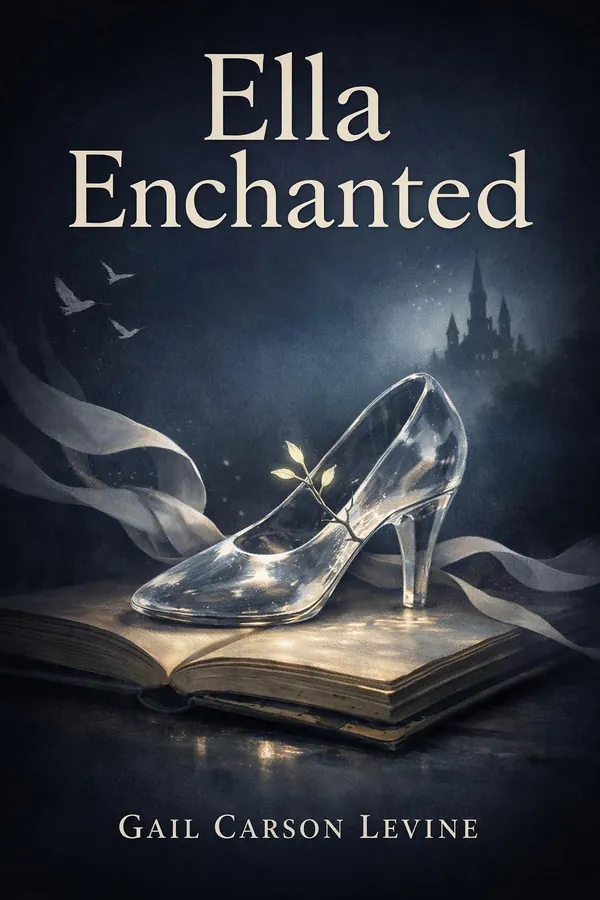
Ella Enchanted: Summary & Key Insights
 10 min9 chaptersAudio available
Key Takeaways from Ella Enchanted
A command may sound harmless, but when choice disappears, even ordinary requests become acts of domination.
The most powerful victories are often invisible at first, because they begin inside a person before they change the world around them.
Character is easiest to admire in comfort, but it is most meaningful when circumstances make cruelty understandable.
A retelling becomes memorable not when it repeats an old story, but when it reveals what the original left unexamined.
Affection without freedom may look tender, but it cannot become genuine love unless both people can choose it.
What Is Ella Enchanted About?
Ella Enchanted by Gail Carson Levine is a general book. What if obedience were not a virtue, but a prison? Gail Carson Levine’s Ella Enchanted begins with a fairy-tale premise and turns it into a sharp, emotionally intelligent story about freedom, identity, and the courage to resist. At birth, Ella of Frell is given a “gift” by the fairy Lucinda: she must always obey any direct command. What sounds whimsical quickly becomes dangerous, shaping every relationship in Ella’s life and forcing her to navigate a world where kindness, vanity, power, and love can all become tools of control. As Ella grows, she faces cruelty at home, impossible social expectations, and political threats that make her curse more perilous than ever. The novel matters because it transforms a familiar Cinderella framework into something deeper and more modern. It explores personal agency, manipulation, and moral choice in ways that resonate with young readers and adults alike. Gail Carson Levine, an acclaimed children’s author known for her inventive fairy-tale retellings, brings humor, heart, and psychological depth to the story. Ella Enchanted is not just a fantasy adventure; it is a memorable meditation on what it means to own your voice and choose your life.
This FizzRead summary covers all 9 key chapters of Ella Enchanted in approximately 10 minutes, distilling the most important ideas, arguments, and takeaways from Gail Carson Levine's work. Also available as an audio summary and Key Quotes Podcast.
Ella Enchanted
What if obedience were not a virtue, but a prison? Gail Carson Levine’s Ella Enchanted begins with a fairy-tale premise and turns it into a sharp, emotionally intelligent story about freedom, identity, and the courage to resist. At birth, Ella of Frell is given a “gift” by the fairy Lucinda: she must always obey any direct command. What sounds whimsical quickly becomes dangerous, shaping every relationship in Ella’s life and forcing her to navigate a world where kindness, vanity, power, and love can all become tools of control. As Ella grows, she faces cruelty at home, impossible social expectations, and political threats that make her curse more perilous than ever.
The novel matters because it transforms a familiar Cinderella framework into something deeper and more modern. It explores personal agency, manipulation, and moral choice in ways that resonate with young readers and adults alike. Gail Carson Levine, an acclaimed children’s author known for her inventive fairy-tale retellings, brings humor, heart, and psychological depth to the story. Ella Enchanted is not just a fantasy adventure; it is a memorable meditation on what it means to own your voice and choose your life.
Who Should Read Ella Enchanted?
This book is perfect for anyone interested in general and looking to gain actionable insights in a short read. Whether you're a student, professional, or lifelong learner, the key ideas from Ella Enchanted by Gail Carson Levine will help you think differently.
- ✓Readers who enjoy general and want practical takeaways
- ✓Professionals looking to apply new ideas to their work and life
- ✓Anyone who wants the core insights of Ella Enchanted in just 10 minutes
Want the full summary?
Get instant access to this book summary and 100K+ more with Fizz Moment.
Get Free SummaryAvailable on App Store • Free to download
Key Chapters
A command may sound harmless, but when choice disappears, even ordinary requests become acts of domination. The central idea of Ella Enchanted is built around this unsettling truth. Ella’s curse forces her to obey any direct order, whether it is to finish a meal, reveal private information, or place herself in danger. By turning obedience into magic, Gail Carson Levine exposes how often authority is treated as natural or harmless when it can actually strip a person of autonomy.
Ella’s situation makes visible something that exists in less magical forms in everyday life. Children may be expected to obey adults without question. Students may feel unable to challenge unfair teachers. Employees may comply with unreasonable workplace demands because saying no feels risky. The book shows that obedience is not automatically moral. A command’s legitimacy depends on whether it respects the dignity and judgment of the person receiving it.
What makes this theme especially powerful is that Ella is not rebellious for the sake of rebellion. She is thoughtful, kind, and often willing to help others. Her struggle is not against responsibility, but against control. The difference matters. Real maturity is not blind compliance; it is the ability to choose wisely and ethically.
Levine also highlights how language can be used as a weapon. Because Ella must obey direct commands, other characters learn to manipulate wording to gain power over her. This mirrors how people in real life can use pressure, guilt, or official-sounding language to force agreement. The lesson is subtle but important: if someone never gives you space to choose, they are not guiding you; they are controlling you.
Actionable takeaway: Pay attention to where obedience is expected in your life, and ask whether it is grounded in trust and respect or in fear and control.
The most powerful victories are often invisible at first, because they begin inside a person before they change the world around them. Ella’s journey is not only about escaping a curse; it is about becoming someone who understands her own mind, values, and limits. In many fantasy stories, strength is measured by magic, wealth, or battle skill. In Ella Enchanted, strength is the hard-earned ability to remain inwardly free even when outward freedom is threatened.
Ella spends much of the novel adapting, surviving, and thinking ahead. She learns to avoid direct commands, to interpret language carefully, and to protect others from the consequences of her curse. These strategies are practical, but they also show her growing self-awareness. She comes to understand what she fears, what she wants, and what kind of person she intends to be despite constant external pressure.
This theme has broad relevance. Many people live with expectations imposed by family, culture, school, or social norms. They may feel defined by labels such as “good,” “helpful,” “successful,” or “agreeable.” Like Ella, they can begin by simply coping. But the deeper challenge is to ask: Who am I when I am not just responding to what others demand?
The novel suggests that self-ownership does not mean selfishness. Ella remains compassionate and loyal throughout the story. What changes is that she increasingly acts from conviction rather than compulsion. That distinction is the foundation of mature character. You are strongest not when you satisfy everyone, but when your actions come from values you can honestly claim as your own.
Actionable takeaway: Identify one area where you act mostly from expectation rather than conviction, and take a small step toward making a conscious choice instead.
Character is easiest to admire in comfort, but it is most meaningful when circumstances make cruelty understandable. Ella’s world gives her many reasons to become bitter. She is cursed at birth, loses the security of her loving mother, and suffers under a cruel stepfamily. Yet she repeatedly chooses empathy, humor, and decency. Levine uses these choices to show that kindness is not weakness; it is a disciplined response to pain.
One of the novel’s strengths is that it does not present goodness as naive. Ella knows the world can be dangerous. She understands manipulation and recognizes selfishness when she sees it. Her kindness is therefore not ignorance but resistance. By refusing to become as petty and controlling as those around her, she preserves a moral identity that the curse itself cannot erase.
This idea applies well beyond fairy tales. Stress often narrows people’s emotional range. Under pressure, it becomes tempting to lash out, withdraw, or justify unkind behavior because of exhaustion or hurt. The book reminds readers that difficult circumstances do not remove responsibility for how we treat others. In fact, our choices under strain reveal our deepest habits and values.
At the same time, Ella’s kindness is not limitless compliance. She can be clever, guarded, and strategic. This is important because many readers confuse kindness with passivity. Levine argues for something wiser: compassionate strength. Ella helps where she can, protects those she loves, and still recognizes danger. Her kindness works best because it is paired with intelligence.
Actionable takeaway: In your next stressful situation, choose one deliberate act of kindness that does not compromise your boundaries, and notice how it changes both your mood and the interaction.
A retelling becomes memorable not when it repeats an old story, but when it reveals what the original left unexamined. Ella Enchanted is often recognized as a Cinderella-inspired tale, yet Gail Carson Levine does much more than update a classic plot. She reimagines the core problem. Instead of focusing mainly on beauty, romance, or rescue, the novel asks a sharper question: What happens when a girl is trained, enchanted, and socially expected to obey?
This shift gives the story modern psychological depth. Traditional fairy tales often reward goodness in broad, simplified ways. Levine keeps the enchantment and wonder, but she complicates the moral landscape. Ella’s challenge is not merely to endure injustice until fate intervenes. She must think, adapt, and eventually confront the central force limiting her freedom. That gives the story emotional and ethical stakes beyond the usual fantasy romance.
Retellings matter because familiar narratives shape how people understand love, gender, power, and success. When authors revisit those stories, they can preserve what is magical while correcting what is limiting. Ella Enchanted honors the appeal of fairy tales—royal intrigue, charming settings, and transformative endings—yet it also invites readers to question old assumptions about passivity and reward.
The book offers a useful model for readers and creators alike. If a familiar script in your life no longer feels true, you do not have to discard the entire story. You can reinterpret it. Families can revise traditions. Teachers can revisit old classroom rules. Individuals can challenge inherited beliefs about what a “good” daughter, friend, or leader is supposed to be.
Actionable takeaway: Take one story or expectation you have always accepted, and ask what changes when you view it through the lens of freedom rather than tradition.
Affection without freedom may look tender, but it cannot become genuine love unless both people can choose it. One of the novel’s most meaningful insights appears in Ella’s relationship with Prince Char. Their bond is warm, playful, and intellectually equal, but the curse casts a shadow over it. Ella understands that if others learn the truth, she could be used against him, his kingdom, and even herself. More deeply, she knows that a life shaped by compulsion threatens the integrity of any relationship she enters.
This is what makes the story more sophisticated than a simple romance. The central question is not whether Char loves Ella, but whether Ella can love and be loved as a free person. Love, in Levine’s telling, is inseparable from agency. To choose another person honestly, you must first have some ownership of your own will.
That idea has practical power. In real life, relationships can be distorted by obligation, guilt, dependence, or pressure to perform a role. Someone may stay because they fear disappointing family. Another may say yes to plans, commitments, or emotional labor out of habit rather than desire. The book invites readers to ask whether their relationships leave room for authentic consent, disagreement, and self-expression.
Ella and Char’s connection works because it includes respect, delight, and mutual recognition. Yet the novel refuses to sentimentalize romance as a cure-all. Love does not erase structural problems; it intensifies the need to face them honestly. Ella must confront her curse herself. Only then can love become fully mutual rather than dangerous.
Actionable takeaway: Reflect on one important relationship and ask whether your choices in it come from freedom, fear, or obligation, then communicate one honest boundary or desire.
When direct power is unavailable, intelligence becomes a form of resistance. Ella may be physically constrained by her curse, but she is rarely mentally passive. One of the book’s great pleasures is watching her use wit, language, planning, and observation to navigate danger. She avoids commands when possible, interprets them carefully when she must obey, and anticipates how others might exploit her condition. In a world where brute force and social status often dominate, Levine celebrates resourcefulness.
This matters because many readers, especially young ones, do not control the systems around them. They may not be able to change a family rule, a school policy, or a social hierarchy overnight. But they can learn to think critically, notice patterns, ask better questions, and find openings others miss. Ella models a kind of practical intelligence that is not flashy but deeply effective.
The novel also suggests that cleverness should serve ethical ends. Ella’s strategic thinking is usually focused on protection rather than domination. She does not outsmart people merely to feel superior. She does it to preserve dignity, safeguard those she cares about, and widen her range of choice. That moral orientation keeps intelligence from becoming manipulation.
In daily life, cleverness can mean preparing for difficult conversations, choosing precise language, or designing systems that reduce unnecessary pressure. A student might organize their schedule to avoid burnout. An employee might ask clarifying questions to prevent being cornered into unfair commitments. A child might learn when to seek help from a trustworthy adult instead of confronting every problem alone.
Actionable takeaway: In a situation where you feel limited, stop asking only “How do I endure this?” and ask “What strategy, wording, or preparation could give me more room to act wisely?”
Fear does not disqualify a person from courage; often it is the very condition that makes courage meaningful. Ella is not fearless. She is often anxious, uncertain, and aware of the risks around her. She knows that one spoken order can override her will. She knows that telling the wrong person about her curse could endanger her future. And she knows that love, public life, and political power all make her more vulnerable, not less. Yet she continues to act.
This portrayal matters because many stories glamorize bravery as confidence or natural heroism. Levine offers a more realistic and useful model. Courage is shown as persistence, honesty, and decisive action in moments where fear remains fully present. Ella does not wait to feel invincible. She moves forward while afraid because what is at stake matters more than temporary comfort.
Readers can apply this idea in countless ways. Courage may mean admitting a mistake, standing up to bullying, leaving an unhealthy relationship, telling the truth about a hidden struggle, or refusing a role that no longer fits. None of these actions require a lack of fear. They require a willingness to let values outrank fear.
What makes Ella’s courage especially compelling is that it is tied to responsibility. She is not taking risks for applause. She is trying to prevent harm and protect the people she loves. That gives her bravery a moral center. The novel suggests that courage is strongest when it serves something larger than pride.
Actionable takeaway: Name one fear-driven delay in your life, decide what value is being compromised by waiting, and take one concrete step this week even if the fear does not disappear.
Escaping control is never only about changing circumstances; it also requires changing the beliefs and habits that control has planted inside you. Ella Enchanted builds toward liberation, but the novel understands that freedom is complex. Ella’s curse is magical and external, yet her struggle also becomes psychological. Years of enforced obedience shape how she anticipates danger, manages relationships, and thinks about her own options. To become free, she must confront both the curse itself and the internal patterns built around it.
This idea gives the book unusual emotional depth for a fantasy novel. Many readers know what it is like to outgrow a limiting environment but still carry its voice within them. Someone raised under harsh criticism may remain self-doubting long after leaving home. Someone who spent years pleasing others may still struggle to express a preference. External barriers matter, but so do the mental habits they create.
Levine’s story suggests that freedom is not a single event. It is a process of reclaiming voice, testing boundaries, and learning to act from choice rather than reflex. Even when opportunities appear, a person may need time to trust that they are allowed to use them. Ella’s development captures this truth in a form that is accessible to young readers yet insightful for adults.
The book therefore offers hope without simplification. Change is possible, but it often requires both confrontation and reorientation. You may need to alter your environment, your relationships, and your self-understanding at the same time. Lasting freedom is built not only by removing what constrains you, but by practicing what a self-directed life looks like.
Actionable takeaway: Choose one old pattern of compliance or self-silencing, and pair an external change with an internal one—for example, say no once and then journal about why doing so felt difficult.
All Chapters in Ella Enchanted
About the Author
Gail Carson Levine is an American author celebrated for her inventive children’s and young adult fantasy novels, particularly her fairy-tale retellings. Born in New York City, she developed a love of storytelling that eventually led her to write books known for their wit, warmth, and strong emotional core. She rose to prominence with Ella Enchanted, which received a Newbery Honor and became a modern classic. Levine’s fiction often explores themes such as courage, self-discovery, kindness, and personal freedom, making her work appealing to both younger readers and adults. In addition to Ella Enchanted, she has written numerous other novels that reimagine folklore and fantasy traditions in fresh ways. Her enduring reputation comes from her ability to combine magical settings with psychologically rich characters and meaningful moral questions.
Get This Summary in Your Preferred Format
Read or listen to the Ella Enchanted summary by Gail Carson Levine anytime, anywhere. FizzRead offers multiple formats so you can learn on your terms — all free.
Available formats: App · Audio · PDF · EPUB — All included free with FizzRead
Download Ella Enchanted PDF and EPUB Summary
Key Quotes from Ella Enchanted
“A command may sound harmless, but when choice disappears, even ordinary requests become acts of domination.”
“The most powerful victories are often invisible at first, because they begin inside a person before they change the world around them.”
“Character is easiest to admire in comfort, but it is most meaningful when circumstances make cruelty understandable.”
“A retelling becomes memorable not when it repeats an old story, but when it reveals what the original left unexamined.”
“Affection without freedom may look tender, but it cannot become genuine love unless both people can choose it.”
Frequently Asked Questions about Ella Enchanted
Ella Enchanted by Gail Carson Levine is a general book that explores key ideas across 9 chapters. What if obedience were not a virtue, but a prison? Gail Carson Levine’s Ella Enchanted begins with a fairy-tale premise and turns it into a sharp, emotionally intelligent story about freedom, identity, and the courage to resist. At birth, Ella of Frell is given a “gift” by the fairy Lucinda: she must always obey any direct command. What sounds whimsical quickly becomes dangerous, shaping every relationship in Ella’s life and forcing her to navigate a world where kindness, vanity, power, and love can all become tools of control. As Ella grows, she faces cruelty at home, impossible social expectations, and political threats that make her curse more perilous than ever. The novel matters because it transforms a familiar Cinderella framework into something deeper and more modern. It explores personal agency, manipulation, and moral choice in ways that resonate with young readers and adults alike. Gail Carson Levine, an acclaimed children’s author known for her inventive fairy-tale retellings, brings humor, heart, and psychological depth to the story. Ella Enchanted is not just a fantasy adventure; it is a memorable meditation on what it means to own your voice and choose your life.
You Might Also Like
Duct Tape Marketing: The World's Most Practical Small Business Marketing Guide
John Jantsch
10 minDusk, Night, Dawn: On Revival and Courage
Anne Lamott
10 minFinish Big: How Great Entrepreneurs Exit Their Companies on Top
Bo Burlingham
10 minFirst As Tragedy, Then As Farce
Slavoj Zizek
10 minFirst Principles: What America's Founders Learned from the Greeks and Romans and How That Shaped Our Country
Thomas E. Ricks
10 minGood Habits, Bad Habits: The Science of Making Positive Changes That Stick
Wendy Wood
10 minBrowse by Category
Ready to read Ella Enchanted?
Get the full summary and 100K+ more books with Fizz Moment.