
The Energy Bus vs Never Eat Alone: Which Should You Read?
A detailed comparison of The Energy Bus by Jon Gordon and Never Eat Alone by Keith Ferrazzi. Discover the key differences, strengths, and which book is right for you.
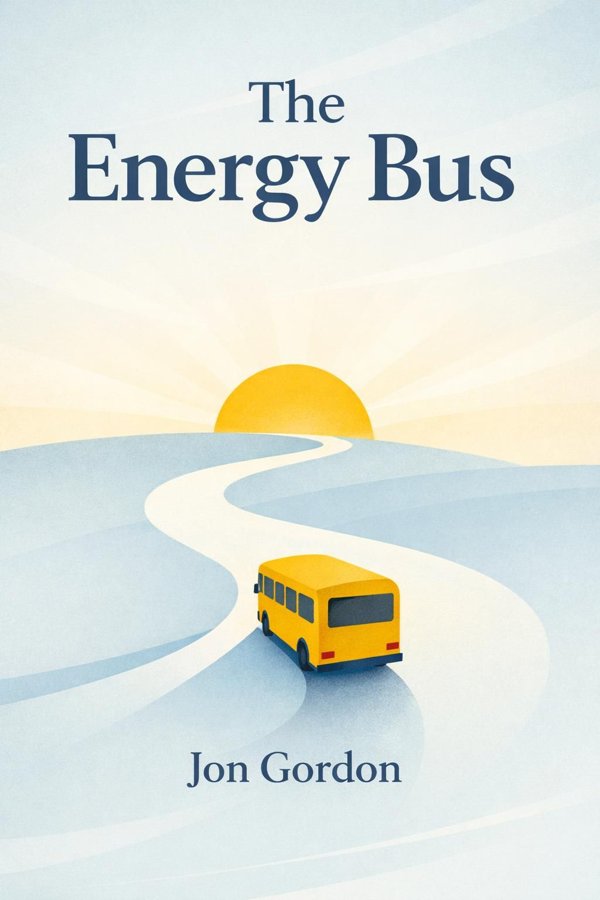
The Energy Bus
Never Eat Alone
In-Depth Analysis
Jon Gordon’s The Energy Bus and Keith Ferrazzi’s Never Eat Alone are both business books about success, but they diagnose the source of success very differently. Gordon begins from the inside out: your mindset, your emotional energy, and your ability to shape a shared vision determine whether your work and life improve. Ferrazzi begins from the outside in: your opportunities expand in proportion to the quality of your relationships, your generosity, and your willingness to stay connected. Read together, they reveal two complementary but distinct models of professional growth—one rooted in emotional leadership, the other in relational capital.
The Energy Bus is deliberately framed as a fable. George is not just a character; he is a recognizable stand-in for the exhausted mid-career professional whose work project is failing, marriage is under strain, and sense of agency has eroded. The catalytic figure, Joy, is both literal bus driver and symbolic mentor. Her first lesson, “You Are the Driver of Your Bus,” establishes the book’s central claim: passivity is the real enemy. George’s circumstances may be difficult, but Gordon insists that reclaiming responsibility is the beginning of change. This is a classic motivational move, but the bus metaphor gives it unusual durability. Vision becomes destination, teammates become passengers, and daily attitude becomes fuel.
That metaphor matters because Gordon’s book is less interested in procedural complexity than in cognitive reframing. Rule #2—desire, vision, and focus move your bus in the right direction—pushes readers to define what they want rather than merely react to what they dislike. This is especially useful for leaders presiding over tired teams, because a demoralized workplace often suffers not only from poor execution but from a vacuum of meaningful direction. Gordon’s method is therefore emotionally clarifying: before a team can perform better, it must recover belief, language, and shared momentum.
Never Eat Alone, by contrast, treats career growth as a networked phenomenon. Ferrazzi’s “mindset shift” is that networking should not be cynical self-promotion but authentic relationship-building. This move is more radical than it first appears because many professionals either avoid networking as manipulative or embrace it too instrumentally. Ferrazzi rejects both errors. He argues that the most effective networkers are not extractive but generous; they maintain contact, create value for others, and develop visibility around a mission rather than around ego alone.
One of the strongest contrasts between the books lies in how they define action. In The Energy Bus, action begins with attitude: choose positive energy, share your vision, and stop wasting energy on those who do not get on your bus. This has immediate resonance in leadership settings. A manager dealing with chronic negativity can use Gordon’s framework to distinguish between coaching and energy drain. The phrase “don’t waste your energy on those who don’t get on your bus” is powerful because it gives permission to stop overinvesting in chronic resistance. Yet it can also be simplistic if applied carelessly; not all dissent is toxic, and not every disengaged employee is merely refusing positivity.
Ferrazzi’s action model is more behavioral and external. Develop a personal mission. Increase your visibility. Reach out deliberately. Build trust by giving before receiving. These are not just values but repeatable routines. A young consultant, founder, or executive can turn Ferrazzi’s advice into a calendar system: schedule follow-ups, host introductions, maintain weak ties, and become known for usefulness. In that sense, Never Eat Alone often provides more measurable next steps than The Energy Bus. Gordon tells you how to think and lead; Ferrazzi more often tells you what to do on Tuesday morning.
Their treatment of other people is also revealing. Gordon asks: who is on your bus, and do they share the vision? His orientation is toward alignment and cohesion. Ferrazzi asks: who is in your ecosystem, and how can you deepen trust over time? His orientation is toward breadth, continuity, and mutual benefit. One book is ideal for a struggling internal team; the other is ideal for building an external web of advocates, collaborators, and friends. Put differently, Gordon is stronger on culture, Ferrazzi on connectivity.
Stylistically, the books reach different kinds of readers. The Energy Bus is quick, metaphorical, and emotionally accessible. Its strengths are memorability and morale. Even readers who forget chapter details often remember the bus itself and key phrases like driving your bus or fueling your ride with positive energy. Never Eat Alone is less poetic but richer in practical scenarios. Ferrazzi’s stories and advice feel more embedded in the actual mechanics of career advancement. Readers who want systems, outreach tactics, and examples of professional relationship-building will likely find it more substantial.
Neither book is especially rigorous in an academic sense. Both rely more on anecdote, observation, and business wisdom than on controlled evidence. But they succeed for a reason: each offers a compelling simplification of an overwhelming reality. Gordon simplifies chaos into a question of energy and direction. Ferrazzi simplifies ambition into a question of generosity and connection. These simplifications are useful so long as readers recognize their limits. Positivity does not solve every structural problem, and networking does not replace competence. But attitude can amplify competence, and relationships can distribute it.
Ultimately, the books are best seen not as rivals but as complements. The Energy Bus helps readers become the kind of person others want to follow: responsible, hopeful, vision-driven, and emotionally steady. Never Eat Alone helps readers become the kind of person others want to know: generous, proactive, visible, and trustworthy. If Gordon teaches how to generate momentum within a team, Ferrazzi teaches how to create opportunity across a wider professional world. The first transforms the emotional climate you carry; the second transforms the social architecture around you. Together, they offer a fuller account of modern success: energy gives direction, and relationships give reach.
Side-by-Side Comparison
| Aspect | The Energy Bus | Never Eat Alone |
|---|---|---|
| Core Philosophy | The Energy Bus argues that attitude is the central lever of change. Through Joy’s ten rules, Jon Gordon frames leadership, teamwork, and personal renewal as products of choosing positive energy and taking responsibility for the direction of one’s 'bus.' | Never Eat Alone is built on the idea that success is relational rather than individual. Keith Ferrazzi treats networking not as transaction but as generous, purposeful community-building in which helping others creates long-term opportunity. |
| Writing Style | The Energy Bus uses a short business fable format, with George and Joy embodying lessons through scenes and metaphor. Its style is simple, motivational, and highly memorable because the 'bus' image unifies the book’s advice. | Never Eat Alone is written as a direct, conversational guide that blends memoir, business advice, and tactical instruction. Ferrazzi relies more on anecdotes from his own career and explicit frameworks than on allegory. |
| Practical Application | Its application lies in team culture, morale, and self-management: define a vision, protect energy, and bring committed people aboard. Managers can immediately use its language in meetings, coaching, and culture-building exercises. | Its advice is more outward-facing and concrete for career advancement: follow up, host dinners, reconnect regularly, and make yourself useful to others. Readers can translate the book directly into networking habits, outreach systems, and relationship maps. |
| Target Audience | The Energy Bus best fits readers facing burnout, disengagement, or team dysfunction, especially supervisors and organizational leaders. It also appeals to readers who prefer motivational storytelling over dense instruction. | Never Eat Alone best serves ambitious professionals, entrepreneurs, salespeople, and career builders who want to expand influence through relationships. It is especially useful for readers in fields where access, trust, and visibility shape advancement. |
| Scientific Rigor | The Energy Bus is light on formal research and leans heavily on inspirational psychology and anecdotal wisdom. Its claims about positivity are persuasive at an emotional level, but they are not systematically evidenced in the text provided. | Never Eat Alone is also not a research-heavy book, but it feels somewhat more grounded in observed professional behavior and lived examples. Ferrazzi’s arguments are practical and experience-based rather than academically rigorous. |
| Emotional Impact | The Energy Bus is designed to create an emotional lift by dramatizing George’s personal and professional crisis, then offering hope through Joy’s guidance. Its fable structure makes the transformation feel intimate and affirming. | Never Eat Alone tends to inspire through possibility rather than catharsis. The emotional effect comes from reframing connection as generosity and from making success feel more accessible through human relationships. |
| Actionability | Its ten rules are easy to remember and implement, but some are broad principles rather than step-by-step procedures. Readers often leave with mindset tools more than detailed execution plans. | Never Eat Alone is highly actionable because it breaks relationship-building into recurring behaviors: reaching out, maintaining contact, creating visibility, and giving before asking. It offers habits that can be scheduled and measured. |
| Depth of Analysis | The Energy Bus prioritizes clarity and motivation over nuance, so problems are often reduced to energy, vision, and choice. That simplicity is part of its appeal, but it can flatten structural or organizational complexity. | Never Eat Alone offers more layered analysis of how careers develop through social capital, credibility, and reciprocity. It still remains accessible, yet it examines professional ecosystems in a more concrete way than Gordon’s fable. |
| Readability | The Energy Bus is extremely readable, with short chapters and a narrative arc that makes it easy to finish quickly. Its metaphor-driven style works well for readers who dislike conventional business books. | Never Eat Alone is also accessible, though denser because it contains more advice, examples, and career-oriented detail. It demands slightly more attention but rewards it with broader practical takeaways. |
| Long-term Value | Its long-term value lies in its reusable vocabulary for leadership and culture: 'drive your bus,' 'fuel with positive energy,' and 'invite people on your bus.' These ideas can become enduring team mantras. | Its long-term value is especially strong because relationships compound over time. Ferrazzi’s emphasis on generosity, trust, and sustained contact remains relevant across industries and career stages. |
Key Differences
Inner Energy vs External Network
The Energy Bus focuses on the psychological and emotional state that drives performance. Never Eat Alone focuses on the social infrastructure of success, arguing that relationships create access, information, and opportunity.
Fable Format vs Advice-Driven Narrative
Jon Gordon teaches through George and Joy, using a symbolic bus journey to package leadership lessons. Keith Ferrazzi writes more directly, mixing personal anecdotes with explicit networking strategies readers can adopt in real life.
Team Alignment vs Relationship Expansion
Gordon is primarily concerned with getting the right people on the bus and uniting them around a shared destination. Ferrazzi is more concerned with expanding and maintaining a wide circle of meaningful professional relationships over time.
Motivational Simplicity vs Tactical Specificity
The Energy Bus is easy to remember because its ideas are distilled into ten rules and a single metaphor. Never Eat Alone tends to be more operational, offering clearer examples of how to reach out, stay visible, and give value before making requests.
Leadership Through Positivity vs Influence Through Generosity
Gordon’s model assumes that positive energy is contagious and central to effective leadership. Ferrazzi’s model assumes that generosity and authentic care are what make influence durable and relationships trustworthy.
Immediate Morale Boost vs Long-Term Career Compounding
The Energy Bus can create a quick reset for discouraged individuals or teams because its message is emotionally energizing. Never Eat Alone often pays off over a longer timeline, as repeated acts of connection and reciprocity build cumulative social capital.
Selective Energy Protection vs Broad Relational Investment
One of Gordon’s notable lessons is not to waste energy on people who do not get on your bus, emphasizing boundaries and alignment. Ferrazzi, by contrast, emphasizes sustained outreach and investment in many relationships, including those that may not offer immediate returns.
Who Should Read Which?
Burned-out manager trying to rebuild a struggling team
→ The Energy Bus
This reader needs a framework for morale, vision, and emotional leadership more than a networking manual. Gordon’s lessons about driving the bus, fueling it with positive energy, and inviting the right people aboard speak directly to culture repair.
Early-career professional seeking mentors, opportunities, and visibility
→ Never Eat Alone
Ferrazzi’s book is more directly useful for learning how to reach out, stay in touch, and build trust through generosity. It helps ambitious readers convert good intentions into a real network that can open doors.
Founder or executive who must inspire internally and connect externally
→ Never Eat Alone
Although this reader would benefit from both books, Ferrazzi offers the broader strategic advantage because leadership at that level depends heavily on partnerships, recruiting, customers, and influence. The Energy Bus is still valuable, but Never Eat Alone better matches the outward-facing demands of the role.
Which Should You Read First?
Read The Energy Bus first if you currently feel overwhelmed, cynical, or stuck. Its short fable structure makes it easy to finish quickly, and it provides a useful emotional foundation: take responsibility, clarify where you are going, and protect the energy that fuels progress. Those lessons prepare you to approach relationships more intentionally rather than desperately. Then read Never Eat Alone as the operational sequel. Once you know your direction, Ferrazzi helps you build the human network that can support that direction. His emphasis on personal mission works better after you have already reflected on vision, which Gordon’s book encourages. In that order, the books form a coherent progression: first fix the driver and destination, then strengthen the routes, allies, and opportunities around you. If you are already confident and motivated but lack connections, you can reverse the order. Still, for most readers, The Energy Bus offers the cleaner on-ramp, while Never Eat Alone provides the more expansive second stage.
Want the full summary?
Get instant access to this book summary and 100K+ more with Fizz Moment.
Get Free SummaryAvailable on App Store • Free to download
Frequently Asked Questions
Is The Energy Bus better than Never Eat Alone for beginners?
For many beginners, The Energy Bus is the easier entry point because it uses a simple story and a single unifying metaphor. If you are new to business books, George’s journey from frustration to renewed purpose is easier to absorb than a strategy-heavy networking guide. However, if your immediate goal is career advancement through meeting people, mentors, clients, or collaborators, Never Eat Alone may be more useful right away. In short, The Energy Bus is better for beginners who need mindset and motivation first, while Never Eat Alone is better for beginners who already have drive but need practical relationship-building skills.
Which book is more practical for career growth: The Energy Bus or Never Eat Alone?
Never Eat Alone is generally more practical for direct career growth because its advice maps clearly onto visible behaviors: reaching out, maintaining relationships, creating credibility, and giving before asking. These tactics can influence hiring, partnerships, referrals, and access to decision-makers. The Energy Bus can absolutely help career growth, but more indirectly. Its strengths are mindset, team leadership, and emotional resilience—factors that improve performance and influence over time. If your problem is stalled morale or lack of direction, Gordon may be the right fix. If your problem is limited opportunity or weak professional connections, Ferrazzi is usually the stronger choice.
Should managers read The Energy Bus or Never Eat Alone first?
Managers who are dealing with disengaged teams, negativity, or a lack of shared direction should probably start with The Energy Bus. Gordon’s rules provide language for vision-setting, accountability, and protecting team energy. The book is especially effective when a manager needs a fast reset in culture and communication. On the other hand, managers responsible for business development, recruiting, partnerships, or executive visibility may benefit more from reading Never Eat Alone first. Ferrazzi’s emphasis on long-term relationship stewardship is invaluable for leaders whose success depends on influence beyond their immediate team. The right first choice depends on whether your biggest challenge is internal culture or external relationships.
Is Never Eat Alone too focused on networking compared with the leadership lessons in The Energy Bus?
Never Eat Alone is definitely more concentrated on networking, but that does not make it narrow. Ferrazzi expands networking into a broader philosophy of generosity, credibility, and purposeful connection. In that sense, the book is also about leadership, because modern leaders must build trust across organizations and industries. Still, The Energy Bus is more directly focused on emotional leadership and team alignment. If you want guidance on motivating people around a vision, Gordon is more centered on that question. If you want to understand how influence and opportunity flow through relationships, Ferrazzi offers the deeper framework.
Which book has more lasting value for entrepreneurs: The Energy Bus vs Never Eat Alone?
For entrepreneurs, Never Eat Alone often has broader long-term value because startups and small businesses live or die through relationships—with customers, investors, partners, hires, and advisors. Ferrazzi’s habits of authentic outreach and giving before receiving can compound for years. That said, The Energy Bus remains highly valuable for founders who must sustain morale through uncertainty. Entrepreneurs often serve as the emotional thermostat of their teams, and Gordon’s emphasis on vision and positive energy can be crucial during difficult stretches. The best answer is contextual: Ferrazzi helps entrepreneurs build opportunity pipelines, while Gordon helps them lead with steadiness and belief.
What if I dislike overly positive business books—should I still read The Energy Bus or choose Never Eat Alone?
If you are skeptical of highly upbeat business books, Never Eat Alone is probably the safer choice. Ferrazzi’s book is still optimistic, but its optimism is tied to specific social behaviors and career mechanics rather than to a central doctrine of positivity. The Energy Bus can be genuinely helpful, yet some readers find its message too simplified if they prefer nuance about organizational dysfunction, difficult personalities, or structural constraints. That said, readers who usually resist motivational books are sometimes surprised by how memorable Gordon’s bus metaphor is. If you want practicality first, choose Ferrazzi; if you want a mindset reset, Gordon may still work.
The Verdict
These two books serve different but overlapping needs, and the better choice depends less on quality than on your current professional bottleneck. If you are drained, discouraged, or leading a team that has lost belief, The Energy Bus is the sharper intervention. Jon Gordon’s fable gives readers a fast, memorable framework for reclaiming agency, clarifying vision, and building a more intentional emotional culture. It is not subtle, but its simplicity is exactly why it works for many readers and teams. If, however, your main challenge is opportunity—finding mentors, clients, collaborators, advocates, or a stronger professional presence—Never Eat Alone is the more valuable book. Keith Ferrazzi offers a richer and more durable model for career development because relationships truly do compound. His insistence that networking should be generous rather than transactional makes the book more ethical and more sustainable than many books in the genre. Overall, Never Eat Alone has the edge as the more broadly useful business book because its lessons apply across industries and over longer time horizons. But The Energy Bus is more immediately effective if you need an emotional and leadership reset. The best recommendation is this: choose Gordon for culture and mindset, choose Ferrazzi for connection and career leverage. Read both if you want a fuller playbook for modern professional success.
Want to read both books?
Get AI-powered summaries of both The Energy Bus and Never Eat Alone in just 20 minutes total.