
Gone Girl vs The Woman in the Window: Which Should You Read?
A detailed comparison of Gone Girl by Gillian Flynn and The Woman in the Window by A.J. Finn. Discover the key differences, strengths, and which book is right for you.

Gone Girl
The Woman in the Window
In-Depth Analysis
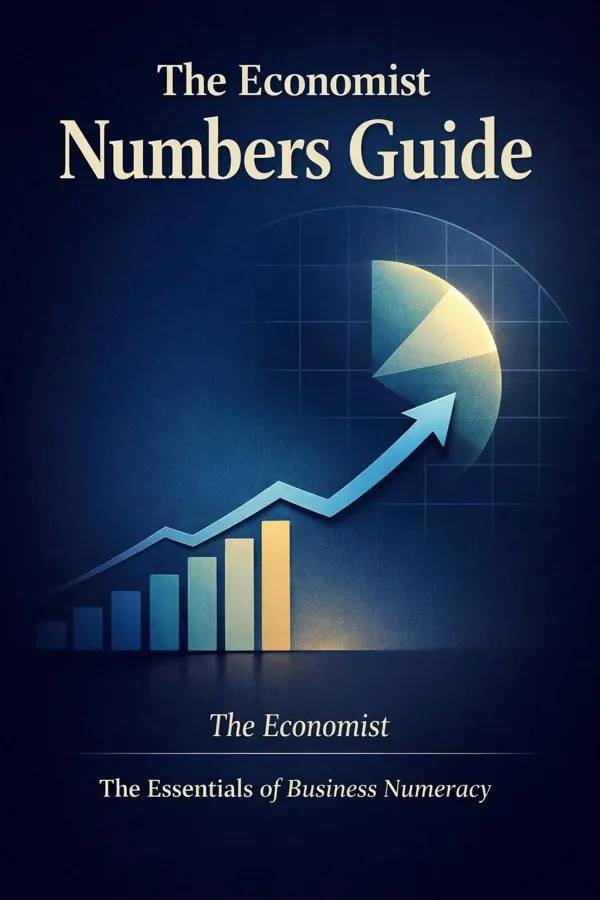
A meaningful comparison between Gone Girl and the supplied description for The Woman in the Window must begin with an obvious but important correction: these are not actually two books in the same genre, despite both being labeled “thriller” in the prompt. Gone Girl is accurately described as Gillian Flynn’s psychological thriller about a marriage collapsing into performance, revenge, and mutual captivity. The material provided for The Woman in the Window, however, clearly describes a business numeracy manual, more akin to a compact professional guide than to A.J. Finn’s actual novel. That mismatch matters, because the contrast is not simply between two suspense books but between a literary thriller and a practical reference text.
Gone Girl is built around instability: unstable narration, unstable marriage, unstable public truth. Flynn’s opening places readers in a small domestic scene that feels subtly contaminated. Amy is missing, but the early achievement of the novel is not simply raising the question “What happened?” It is making every ordinary detail feel narratively charged. Nick’s voice is defensive without being openly confessional; Amy’s diary appears intimate, clever, and vulnerable. The structure invites readers to compare his withholding present-tense account with her retrospective portrait of courtship and decline. This duality is not decorative. It trains the reader to consume marriage as evidence.
That emphasis on evidence becomes one of the novel’s major themes. As the “Performance of Innocence and the Manufacture of Guilt” section in the prompt suggests, Nick is transformed by media coverage into a role: suspicious husband, unfeeling spouse, probable killer. Flynn is especially sharp on how television and public discourse reward legibility over truth. Nick’s awkward smile, Amy’s diary entries, the polished idea of “Amazing Amy,” and the public appetite for a perfect victim all combine into a story more persuasive than facts. When Amy is revealed to be alive, the novel’s frame changes dramatically. What first appears to be an expertly plotted missing-person mystery becomes a study of authored reality. Amy does not merely lie; she curates a narrative ecosystem in which police, television, and even readers become participants.
By contrast, the supplied description for The Woman in the Window has an entirely different purpose. Its introduction emphasizes “business numeracy,” “financial ratios,” “statistical analysis,” “forecasting,” and “data interpretation.” Even its chapter summaries confirm that this is a book of instruction: foundations of arithmetic and algebra, use of averages and variability, financial literacy, and communication of numbers with clarity. Its governing question is not “Who is telling the truth?” but “How can readers make better decisions through quantitative understanding?” If Gone Girl dramatizes the manipulation of evidence, this guide seeks to standardize the interpretation of evidence.
That difference creates an almost ironic opposition. Gone Girl shows how facts can be staged, selected, and emotionally framed to create a convincing falsehood. Amy’s forged diary is the purest example: a document that looks like evidence and functions emotionally like truth, while being structurally fabricated. The business guide, at least in concept, attempts the opposite. It treats numbers as tools for reducing ambiguity. Where Flynn’s novel interrogates public trust in stories, the numeracy book asks readers to trust disciplined methods: percentages, ratios, statistical summaries, forecasts. One book reveals how interpretation can be corrupted; the other aspires to make interpretation more reliable.
Their prose styles also diverge sharply. Flynn’s language is mordant, theatrical, and psychologically loaded. She writes memorable lines because she understands that contempt and self-fashioning are forms of seduction. Amy’s voice, in particular, is designed to charm and then retroactively terrify; once her performance is exposed, earlier passages become exhibits in a larger act of authorial control. The numeracy guide, by contrast, is described as clear, concise, and example-driven. Its success would depend less on verbal flair than on efficiency: can it explain a ratio, a forecast, or a measure of variability in a way that professionals and students can use? In literary terms, one privileges tone and suspense; the other privileges clarity and transferability.
The emotional experiences they offer are therefore incomparable. Gone Girl is meant to unsettle. Its pleasure comes from recognizing that intimacy can become strategy, and that romantic scripts can conceal deep aggression. The “Collision Courses” phase of the plot intensifies this by trapping Nick and Amy in a contest where exposure itself becomes dangerous. Even when Nick sees the truth, he cannot simply reveal it without appearing deranged or vindictive. The reader’s tension comes from this elegant bind. A business numeracy guide, however, aims not for dread but for competence. Its satisfactions are likely incremental: understanding percentages more confidently, interpreting data more accurately, presenting numbers persuasively.
In terms of long-term value, each book succeeds by different standards. Gone Girl endures because its themes remain culturally alive: curated identity, media trials, marriage as branding, and the gap between performed selfhood and lived resentment. It rewards rereading because the first half is transformed by knowledge of Amy’s deception. The numeracy guide’s long-term value would be practical and recursive. Readers might revisit it before making a budget, analyzing performance indicators, or preparing a report. It is useful not because it evolves under reinterpretation, but because it remains serviceable.
So which is “better” depends entirely on what kind of reading experience is wanted. As literature, Gone Girl is overwhelmingly richer: formally more complex, emotionally more intense, and thematically more ambitious. It turns plot into argument. The supplied “The Woman in the Window” text, meanwhile, appears useful only if the reader specifically wants a compact introduction to business mathematics. If the comparison is taken at face value, Gone Girl is the stronger book artistically by a huge margin; the other text belongs to a different category altogether. One teaches suspicion toward stories. The other, ideally, teaches confidence with numbers. The tension between them is almost philosophical: narrative seduction versus quantitative discipline.
Side-by-Side Comparison
| Aspect | Gone Girl | The Woman in the Window |
|---|---|---|
| Core Philosophy | Gone Girl treats intimate relationships as theaters of performance, where identity, affection, and victimhood can be strategically staged. Its central philosophy is that marriage can become a power contest shaped by resentment, fantasy, and social expectation. | The Woman in the Window, as represented by the provided material, is not actually a psychological thriller but a business numeracy guide mislabeled under that title. Its philosophy centers on quantitative literacy, arguing that arithmetic, ratios, statistics, and forecasting enable clearer decisions in professional contexts. |
| Writing Style | Flynn writes with acidic precision, alternating Nick’s defensive, evasive present-tense perspective with Amy’s polished diary voice, then weaponizing that contrast when the diary is exposed as performance. The prose is sleek, cynical, and engineered for narrative reversals. | The supplied description suggests an instructional, explanatory style focused on clarity, examples, and concise reference use. Rather than suspense or atmosphere, it appears designed to simplify technical concepts for practical comprehension. |
| Practical Application | Gone Girl has little direct practical application in the conventional self-help sense, though it offers sharp insight into media manipulation, image management, and coercive dynamics in relationships. Readers may come away more alert to the stories people construct about themselves. | This book is overtly practical, promising tools for financial ratios, forecasting, budgeting, and communicating numerical information. Its usefulness lies in immediate workplace or classroom application rather than interpretive reflection. |
| Target Audience | Gone Girl is aimed at readers who want sophisticated psychological suspense, unreliable narration, and morally corrosive character studies. It especially suits those interested in domestic noir and critiques of gender performance. | The intended audience appears to be students, business professionals, and readers seeking a compact numeracy manual. It is for learners who value structured instruction over immersive storytelling. |
| Scientific Rigor | Flynn’s novel is psychologically astute but not scientific in method; its power comes from dramatic plausibility and social observation rather than formal evidence. It uses behavioral detail to create credibility, not to advance testable claims. | The business guide is framed around quantitative methods, so its rigor depends on the accuracy of its explanations of statistics, ratios, and forecasting. Even in summary form, it presents itself as evidence-oriented and method-driven. |
| Emotional Impact | Gone Girl is emotionally destabilizing, generating dread, disgust, fascination, and dark amusement as affection curdles into mutual warfare. The reveal that Amy is alive radically intensifies the emotional stakes by converting mystery into entrapment. | A numeracy guide is unlikely to provoke strong emotional immersion; its impact is more cognitive than affective. Readers may feel reassurance or empowerment rather than suspense, fear, or shock. |
| Actionability | Its lessons are indirect: it sharpens readers’ awareness of manipulation, public image, and narrative framing, but it does not provide step-by-step guidance. The value is interpretive and diagnostic rather than procedural. | Actionability is one of its defining strengths, since chapters on percentages, statistical interpretation, ratios, and budgeting imply concrete skills readers can apply immediately. It appears built for use, not just appreciation. |
| Depth of Analysis | Flynn offers layered analysis of marriage, class disappointment, recession-era identity, and the commodification of femininity and masculinity. The plot twists do not merely entertain; they deepen the novel’s inquiry into who controls the story. | The provided content suggests breadth across business numeracy topics rather than psychological or thematic depth. Its analysis is likely conceptual and instructional, aimed at competence over interpretive complexity. |
| Readability | Despite its structural complexity, Gone Girl is highly readable because each chapter withholds and recontextualizes information. The momentum comes from suspense and voice-driven tension. | A reference-style business guide may be accessible in short sections, especially for readers looking up specific concepts. However, readers seeking narrative propulsion may find it less absorbing than a thriller. |
| Long-term Value | Gone Girl has strong long-term value as a rereadable modern thriller because its themes of media performance, curated identity, and toxic intimacy remain culturally resonant. It also rewards second readings once the diary deception is known. | Its long-term value lies in recurring utility: readers can return to it when working with ratios, forecasts, or statistical summaries. Unlike a novel, its staying power depends on continued practical need. |
Key Differences
Narrative Fiction vs Instructional Reference
Gone Girl is a fully realized psychological thriller built around character, plot twists, and unreliable narration. The supplied The Woman in the Window content is instead a how-to guide on business numeracy, with chapters on arithmetic, statistics, and forecasting rather than scenes, suspense, or character conflict.
Truth as Manipulation vs Truth as Measurement
In Gone Girl, evidence is manipulated: Amy’s diary and the media narrative create a false but persuasive truth. In the numeracy guide, numbers are framed as tools for clarifying reality through ratios, averages, and data interpretation.
Emotional Immersion vs Functional Utility
Flynn’s novel aims to provoke dread, fascination, shock, and moral unease, especially once Amy is revealed to be alive and orchestrating revenge. The other book seems designed to solve practical problems, such as understanding percentages or making forecasts, not to generate emotional intensity.
Complex Characterization vs Conceptual Frameworks
Gone Girl depends on the layered, contradictory personalities of Nick and Amy, whose perspectives force readers to reassess motive and credibility. The numeracy guide likely prioritizes frameworks and examples over character, since its main purpose is teaching transferable skills.
Rereading for Meaning vs Revisiting for Use
A second reading of Gone Girl changes because readers understand the deception embedded in Amy’s diary and can see how Flynn plants false confidence from the start. A return to the business guide would be more utilitarian: readers would revisit sections on ratios, statistics, or budgeting as needed.
Cultural Critique vs Professional Competence
Gone Girl critiques marriage as a social script, the media as a machine of simplification, and gender roles as strategic performances. The supplied The Woman in the Window text is oriented toward competence in business settings, helping readers speak and interpret the language of numbers.
Momentum Through Plot vs Momentum Through Learning Goals
Gone Girl moves because each revelation alters the reader’s assumptions about guilt, intimacy, and control. The numeracy guide progresses by topic sequence—foundations, statistics, financial literacy, forecasting—so its momentum comes from educational structure rather than dramatic escalation.
Who Should Read Which?
The suspense reader who loves unreliable narrators and morally complex relationships
→ Gone Girl
This reader will appreciate Flynn’s dual-perspective structure, the forged diary twist, and the escalating contest between Nick and Amy. The novel offers not just mystery but a darkly intelligent examination of performance, resentment, and public judgment.
The student or professional who wants clear help with business numbers
→ The Woman in the Window
Based on the supplied description, this book is really a practical numeracy manual covering statistics, ratios, forecasting, and communication of data. It is better for readers who value immediate workplace or classroom usefulness over narrative artistry.
The reader looking for lasting literary discussion value
→ Gone Girl
Gone Girl invites analysis of gender, media, class anxiety, and the politics of storytelling. It is the better choice for book clubs, close reading, and readers who want a thriller that continues to provoke interpretation after the plot is resolved.
Which Should You Read First?
Read Gone Girl first. It demands sustained attention, and its pleasures depend on surprise, tonal control, and the gradual reassembly of what you think you know about Nick and Amy. Beginning with Flynn’s novel lets you experience the full force of its structural design: the apparently sympathetic diary, the mounting suspicion around Nick, the revelation that Amy has authored her own disappearance, and the later battle of counter-narratives. It is the kind of book best read when your attention is freshest. After that, move to the supplied The Woman in the Window text if you want practical, non-fictional value. Because it functions as a numeracy guide rather than a suspense narrative, it can be read selectively rather than in one dramatic rush. You might dip into sections on percentages, averages, ratios, or forecasting depending on your needs. In other words, Gone Girl rewards immersion; the other book rewards consultation. Starting with the thriller gives you the stronger aesthetic experience first, while leaving the more utilitarian text for targeted follow-up reading.
Want the full summary?
Get instant access to this book summary and 100K+ more with Fizz Moment.
Get Free SummaryAvailable on App Store • Free to download
Frequently Asked Questions
Is Gone Girl better than The Woman in the Window for beginners?
If by “beginners” you mean readers new to thrillers, Gone Girl is the better and more coherent choice based on the material provided, because it is clearly a suspense novel with a strong hook, memorable dual narration, and escalating stakes. However, it is not a gentle introduction emotionally: its cynicism, manipulation, and structural reversals demand attention. The supplied description for The Woman in the Window is not actually a beginner thriller at all, but a business numeracy guide. So for beginner fiction readers, Gone Girl wins easily; for beginner business students wanting practical number skills, the other book would be more suitable.
How does Gone Girl compare to The Woman in the Window in terms of psychological depth?
Gone Girl is vastly deeper psychologically than the supplied version of The Woman in the Window. Flynn examines resentment, narcissism, class disappointment, gender performance, and the way romantic identity can harden into hostility. Amy and Nick are not just plot devices; they are competing self-mythologizers. By contrast, the provided material for The Woman in the Window focuses on arithmetic, statistics, financial ratios, and forecasting. Those topics may have intellectual depth, but not psychological depth. If you want layered interiority, unreliable narration, and emotional warfare, Gone Girl is in a completely different league.
Which book has more practical value: Gone Girl or The Woman in the Window?
The supplied The Woman in the Window description has more direct practical value because it is structured as a reference on business numeracy. Skills like interpreting averages, using ratios, budgeting, and presenting numbers clearly can be applied immediately in school or work. Gone Girl offers a different kind of value: it sharpens your sense of how stories are framed, how media constructs guilt, and how personal relationships can involve strategic self-presentation. Those insights are real, but they are interpretive rather than procedural. For everyday task utility, the numeracy guide is more practical; for cultural and psychological insight, Gone Girl is stronger.
Is Gone Girl or The Woman in the Window more readable for casual readers?
For most casual readers seeking entertainment, Gone Girl is more readable because its chapter-by-chapter momentum is driven by mystery, deception, and the revaluation of earlier scenes. Even when it becomes structurally intricate, the reader keeps moving because each revelation changes the meaning of what came before. The supplied The Woman in the Window text appears readable in a different way: concise, sectioned, and approachable for lookup reading. But that kind of readability is functional, not immersive. Casual readers usually mean narrative readability, and on that measure Gone Girl is much more compelling.
What are the main thematic differences between Gone Girl and The Woman in the Window?
Gone Girl revolves around marriage, identity performance, revenge, media spectacle, and the politics of being believed. Its key thematic move is showing that private relationships and public narratives are inseparable: whoever controls the story controls moral perception. The supplied The Woman in the Window material is thematic in a much narrower sense, centering on business literacy, data interpretation, uncertainty, and decision-making through numbers. One book explores emotional manipulation and narrative power; the other emphasizes analytical discipline and practical competence. They differ not just in theme but in the very purpose of reading them.
Should I read Gone Girl or The Woman in the Window first if I want both insight and usefulness?
Read Gone Girl first if you want the more memorable and intellectually provocative experience, then turn to the supplied The Woman in the Window text when you are ready for applied learning. Gone Girl delivers insight through story: Amy’s fabricated diary, Nick’s public unmasking, and their mutual entrapment all reveal how identity is performed under pressure. The other book appears designed for selective consultation, so it does not require the same sustained immersion. Starting with Flynn gives you the stronger aesthetic experience; moving to the numeracy guide afterward gives you practical utility without sacrificing the pleasure of reading a major thriller first.
The Verdict
Taken strictly on the basis of the material provided, Gone Girl is the superior book by a wide margin if your goal is literary quality, psychological sophistication, and memorable reading. Gillian Flynn’s novel is not just a page-turner; it is a structurally intelligent critique of marriage, media, and self-invention. Its most powerful move is turning a missing-wife mystery into a war over authorship, where Amy’s staged disappearance and forged diary expose how easily public truth can be engineered. The book’s suspense works because it is always doing more than generating suspense. The supplied description for The Woman in the Window, however, does not describe A.J. Finn’s thriller at all. It describes a practical guide to business numeracy. Judged as such, it may still be useful—especially for students or professionals who need help with percentages, statistics, financial ratios, forecasting, and communicating quantitative information. But it belongs to a completely different reading category and cannot compete with Gone Girl on artistic terms. So the recommendation is straightforward. Choose Gone Girl if you want a gripping, disturbing, and thematically rich novel that lingers after the final page. Choose the supplied The Woman in the Window only if what you really need is a compact, utilitarian manual for working with numbers. One offers interpretive power; the other offers procedural help. As a reading experience, Gone Girl wins decisively.
Related Comparisons

Want to read both books?
Get AI-powered summaries of both Gone Girl and The Woman in the Window in just 20 minutes total.