
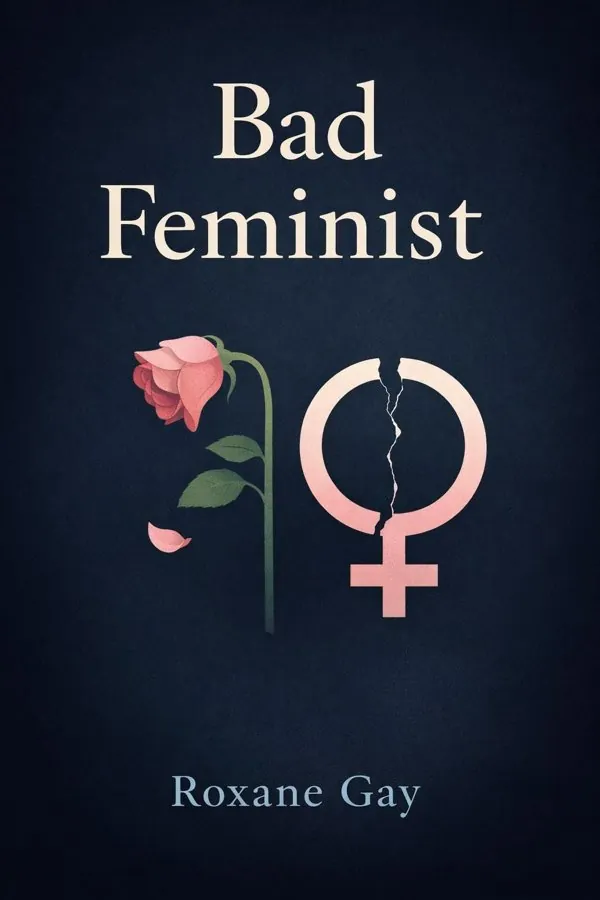
Bad Feminist: Essays: Summary & Key Insights
by Roxane Gay
 10 min9 chaptersAudio available
What Is Bad Feminist: Essays About?
Bad Feminist: Essays by Roxane Gay is a feminism book spanning 9 pages. Bad Feminist is a collection of essays by Roxane Gay that explores feminism, race, gender, and pop culture with humor and honesty. Through personal reflection and cultural critique, Gay examines what it means to be a feminist in modern society, embracing imperfection and contradiction while advocating for equality and inclusivity.
This FizzRead summary covers all 9 key chapters of Bad Feminist: Essays in approximately 10 minutes, distilling the most important ideas, arguments, and takeaways from Roxane Gay's work. Also available as an audio summary and Key Quotes Podcast.
Bad Feminist: Essays
Bad Feminist is a collection of essays by Roxane Gay that explores feminism, race, gender, and pop culture with humor and honesty. Through personal reflection and cultural critique, Gay examines what it means to be a feminist in modern society, embracing imperfection and contradiction while advocating for equality and inclusivity.
Who Should Read Bad Feminist: Essays?
This book is perfect for anyone interested in feminism and looking to gain actionable insights in a short read. Whether you're a student, professional, or lifelong learner, the key ideas from Bad Feminist: Essays by Roxane Gay will help you think differently.
- ✓Readers who enjoy feminism and want practical takeaways
- ✓Professionals looking to apply new ideas to their work and life
- ✓Anyone who wants the core insights of Bad Feminist: Essays in just 10 minutes
Want the full summary?
Get instant access to this book summary and 100K+ more with Fizz Moment.
Get Free SummaryAvailable on App Store • Free to download
Key Chapters
My understanding of feminism didn’t arrive through textbooks or feminist icons—it grew slowly from the experiences that shaped me as a young Black girl growing up in a world that often misunderstood me. I learned early what it meant to stand at an intersection of identities that didn’t fit societal molds. My family valued education and ambition, yet the world outside constantly reminded me of limits imposed by gender and race.
In childhood, I absorbed ideas about womanhood from family, media, and school, realizing that girls were expected to be quiet, pretty, accommodating. Those expectations conflicted with the fierce independence I felt within. Later, as I encountered the canon of feminist writing—much of it written by white women divorced from my own experiences—I felt both seen and unseen. Feminism promised liberation, but often, that liberation didn’t seem to include girls who looked like me.
College brought awareness and turmoil. I began to call myself feminist, even as I wondered whether the label truly fit. I had been taught not to challenge too loudly, to be polite even in the face of inequality. Yet the gendered violence around me—the cruel jokes, the double standards, the classroom dismissals—demanded a response. Slowly, feminism became not a theory I studied but a survival tool. It taught me to name the unease I carried and to demand better, even in spaces that resisted change.
Looking back, I see how imperfectly I stepped into this identity—sometimes clinging to feminist ideals, other times retreating from them. But each imperfect moment taught me that feminism’s power lies not in precision but in persistence.
I am fascinated by the stories we tell through popular culture—songs that dominate the radio, films that fill our weekends, novels we consume late into the night. These creations shape how we see gender, race, love, and power. They are seductive and dangerous in equal measure.
In the essays that make up this section, I write about the pleasure and pain of watching a world that rarely reflects Black womanhood with dignity or complexity. I critique films that glorify violence against women while pretending to celebrate empowerment. I examine how artists like Robin Thicke, Kanye West, or films like *The Help* feed our fantasies of progress while reinforcing old hierarchies. Yet, amid critique, I confess my own complicity—I dance to the beats, I laugh at the shows. Because resisting culture is not so simple when it has shaped our desires.
Engaging with pop culture as a feminist is, for me, a practice of tension. I must hold two truths at once: that something can be enjoyable and harmful, beautiful and broken. I argue for the necessity of this dual consciousness because disengagement is a privilege many cannot afford. Instead of withdrawal, I advocate dialogue. By reading, watching, and listening critically, we assert our right to belong in cultural spaces without surrendering our scrutiny.
Pop culture teaches us who we are allowed to be. My mission as a 'bad feminist' is to question those teachings while still acknowledging their hold on my imagination. That means claiming both critique and pleasure as feminist acts.
+ 7 more chapters — available in the FizzRead app
All Chapters in Bad Feminist: Essays
About the Author
Roxane Gay is an American writer, professor, and cultural critic known for her works on feminism, race, and body image. She is the author of several acclaimed books, including Hunger and Difficult Women, and her writing has appeared in major publications such as The New York Times and The Guardian.
Get This Summary in Your Preferred Format
Read or listen to the Bad Feminist: Essays summary by Roxane Gay anytime, anywhere. FizzRead offers multiple formats so you can learn on your terms — all free.
Available formats: App · Audio · PDF · EPUB — All included free with FizzRead
Download Bad Feminist: Essays PDF and EPUB Summary
Key Quotes from Bad Feminist: Essays
“I learned early what it meant to stand at an intersection of identities that didn’t fit societal molds.”
“I am fascinated by the stories we tell through popular culture—songs that dominate the radio, films that fill our weekends, novels we consume late into the night.”
Frequently Asked Questions about Bad Feminist: Essays
Bad Feminist: Essays by Roxane Gay is a feminism book that explores key ideas across 9 chapters. Bad Feminist is a collection of essays by Roxane Gay that explores feminism, race, gender, and pop culture with humor and honesty. Through personal reflection and cultural critique, Gay examines what it means to be a feminist in modern society, embracing imperfection and contradiction while advocating for equality and inclusivity.
You Might Also Like
Browse by Category
Ready to read Bad Feminist: Essays?
Get the full summary and 100K+ more books with Fizz Moment.