
Whitney Phillips Books
Whitney Phillips is an American media scholar and assistant professor specializing in digital ethics, online culture, and media studies. Her research focuses on internet behavior, misinformation, and the intersections of technology and society.
Known for: This Is Why We Can't Have Nice Things
Books by Whitney Phillips
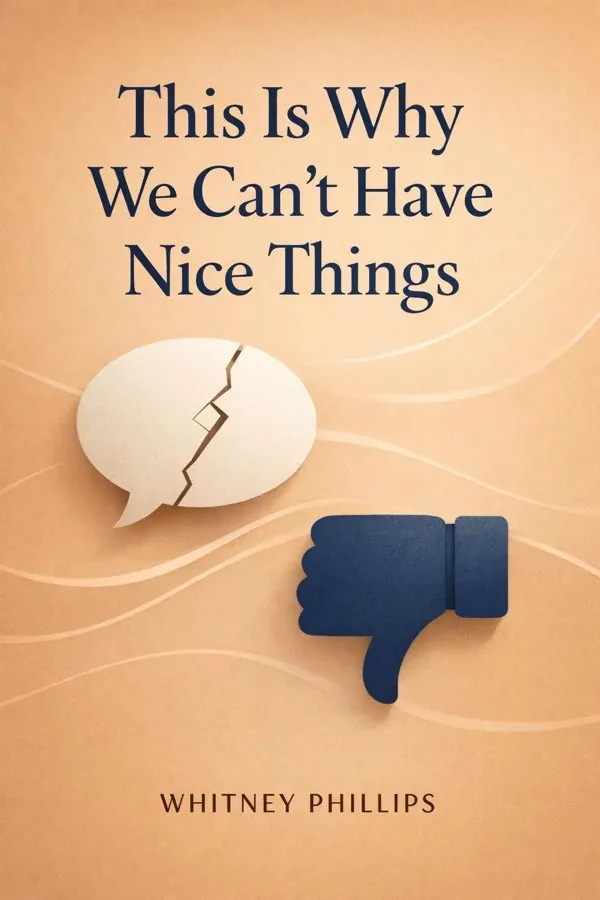
This Is Why We Can't Have Nice Things
What if internet trolling were not a fringe behavior practiced by a few malicious outsiders, but a disturbing reflection of mainstream culture itself? In This Is Why We Can't Have Nice Things, media scholar Whitney Phillips investigates trolling not simply as online mischief, but as a revealing symptom of how digital media, journalism, entertainment, and public discourse reward outrage, spectacle, and emotional manipulation. Rather than treating trolls as incomprehensible monsters, Phillips asks a harder and more important question: what social values, media incentives, and cultural habits make trolling possible, visible, and profitable? Drawing on years of immersive research into online communities, internet subcultures, and media reactions to them, Phillips offers an unusually nuanced account of trolling's logic, language, and appeal. Her work matters because it moves beyond easy moral panic. Instead of blaming the internet alone, she shows how trolling overlaps with dominant norms in politics, celebrity culture, and news coverage. The result is a book that helps readers make sense of digital cruelty without oversimplifying it. For anyone trying to understand online harassment, meme culture, or the ethics of attention in networked life, this book remains sharply relevant.
Read SummaryKey Insights from Whitney Phillips
Trolling Reflects More Than Deviant Outsiders
A society learns little when it treats its worst behavior as someone else's problem. One of Whitney Phillips' central insights is that trolling should not be dismissed as the activity of a small, alien group lurking at the edges of the internet. Instead, trolling often exaggerates values already pre...
From This Is Why We Can't Have Nice Things
Attention Is The Troll's Primary Currency
The most powerful reward online is often not agreement, money, or status in any traditional sense, but attention. Phillips shows that trolling thrives in an environment where visibility itself has value. For trolls, provoking outrage, grief, confusion, or anger is often the point. The emotional resp...
From This Is Why We Can't Have Nice Things
Media Coverage Can Magnify Harmful Behavior
Public exposure is often assumed to be a cure, but Phillips demonstrates that exposure can also become oxygen. One of the book's most compelling arguments is that news media frequently intensify trolling by covering it in sensational, decontextualized ways. Journalists may intend to warn the public ...
From This Is Why We Can't Have Nice Things
Irony Often Shields Real Cruelty
One of the most deceptive features of digital culture is how easily cruelty can hide behind a joke. Phillips explores the role of irony in trolling, showing that claims of humor, satire, or play often function as protective cover. Trolls may insist they are 'just kidding' or 'doing it for the lulz,'...
From This Is Why We Can't Have Nice Things
Online Anonymity Is Not The Whole Story
It is comforting to believe that trolling happens mainly because anonymous people feel free to behave badly, but Phillips shows that this explanation is far too simple. While anonymity can reduce social restraint, it does not create trolling out of nowhere. The deeper drivers include cultural norms,...
From This Is Why We Can't Have Nice Things
Subcultures And Mainstream Media Intertwine Constantly
The internet often gets described as a battle between fringe subcultures and respectable mainstream institutions, yet Phillips reveals that the boundary between the two is highly porous. Troll communities do not operate in isolation. They remix mass media, exploit public events, manipulate journalis...
From This Is Why We Can't Have Nice Things
About Whitney Phillips
Whitney Phillips is an American media scholar and assistant professor specializing in digital ethics, online culture, and media studies. Her research focuses on internet behavior, misinformation, and the intersections of technology and society.
Frequently Asked Questions
Whitney Phillips is an American media scholar and assistant professor specializing in digital ethics, online culture, and media studies. Her research focuses on internet behavior, misinformation, and the intersections of technology and society.
Read Whitney Phillips's books in 15 minutes
Get AI-powered summaries with key insights from 1 book by Whitney Phillips.