
Thomas Hardy Books
Thomas Hardy (1840–1928) was an English novelist and poet known for his depictions of rural life and social criticism. His works often explore the tension between human desires and societal norms, with novels such as 'Far from the Madding Crowd' and 'Jude the Obscure' establishing him as one of the major figures of Victorian literature.
Known for: Tess of the D'Urbervilles: A Pure Woman Faithfully Presented
Books by Thomas Hardy
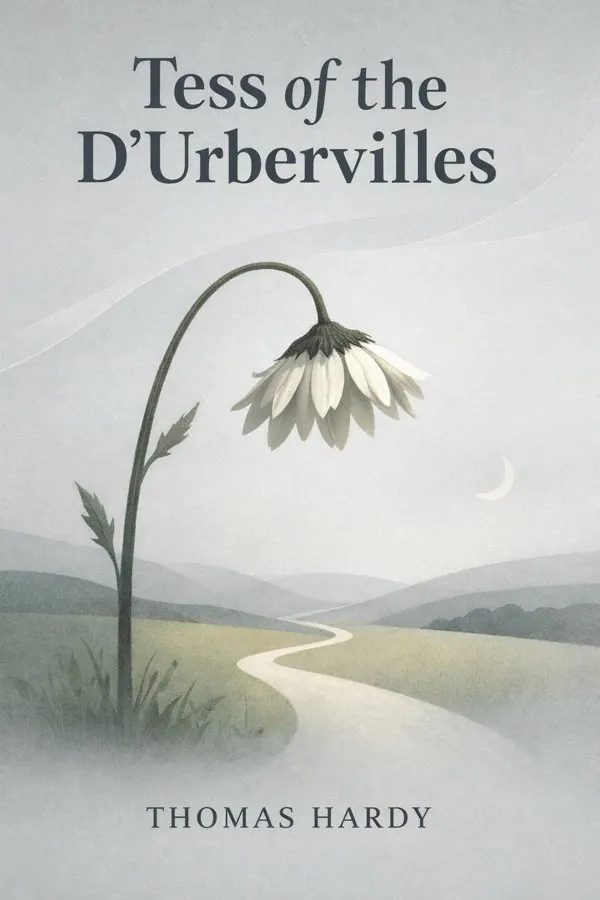
Tess of the D'Urbervilles: A Pure Woman Faithfully Presented
Thomas Hardy’s Tess of the D'Urbervilles is one of the great tragic novels in English literature, a story that follows Tess Durbeyfield, a young woman whose life is shaped by poverty, class ambition, sexual exploitation, and the harsh judgments of Victorian society. Set in the fields, dairies, and villages of rural England, the novel begins with a seemingly harmless discovery: Tess’s family may be descended from an ancient noble line. That revelation sets in motion a chain of events that exposes how social status, gender expectations, and moral hypocrisy can destroy an innocent life. Hardy calls Tess “a pure woman,” directly challenging the values of a culture that condemns women more quickly than men and confuses social respectability with moral truth. What makes the novel endure is not only its emotional power, but its fearless criticism of the world that traps Tess at every turn. Hardy, one of the sharpest observers of Victorian rural life, combines lyrical landscape writing with deep psychological insight, creating a novel that is both heartbreaking and fiercely modern in its questions about blame, dignity, and justice.
Read SummaryKey Insights from Thomas Hardy
The Durbeyfields and Inherited Illusions
A dangerous fantasy often begins with a flattering story about who we are. In the opening of the novel, John Durbeyfield, a poor and frequently drunken laborer, learns from the local parson that he is descended from the ancient d’Urberville family. This revelation should mean little in practical ter...
From Tess of the D'Urbervilles: A Pure Woman Faithfully Presented
Privilege, Predation, and Alec’s Manipulation
Power becomes most dangerous when it disguises itself as generosity. When Tess is sent to the d’Urberville estate at Trantridge, she enters a world where class privilege, male entitlement, and economic dependency work together against her. Alec d’Urberville immediately notices her beauty and treats ...
From Tess of the D'Urbervilles: A Pure Woman Faithfully Presented
Shame, Isolation, and the Fight for Renewal
One of society’s cruelest habits is punishing the wounded as if they were guilty. After Tess returns home from Trantridge, she carries not only grief and trauma but also the burden of public judgment. Her child, sorrowfully named Sorrow, dies in infancy, deepening her isolation. Hardy portrays these...
From Tess of the D'Urbervilles: A Pure Woman Faithfully Presented
Talbothays Dairy and Love’s Fragile Hope
Hope can feel most convincing precisely when life is about to become more complicated. At Talbothays Dairy, Tess enters the warmest and most life-giving section of the novel. The landscape is fertile, the work is communal, and for a time she experiences something close to belonging. Here she meets A...
From Tess of the D'Urbervilles: A Pure Woman Faithfully Presented
Marriage, Confession, and Moral Hypocrisy
Nothing reveals a moral code more clearly than whom it forgives. Tess and Angel marry after a courtship filled with hesitation, longing, and unspoken fear. On their wedding night, both make confessions. Angel admits to a past sexual lapse and expects, with some anxiety, to be forgiven. Tess forgives...
From Tess of the D'Urbervilles: A Pure Woman Faithfully Presented
Hardship, Labor, and Social Judgment
When love fails, material reality becomes brutal very quickly. After Angel leaves for Brazil, Tess enters one of the bleakest phases of her life. She works at Flintcomb-Ash, a harsh and unforgiving farm where labor is mechanical, exhausting, and stripped of the warmth she experienced at Talbothays. ...
From Tess of the D'Urbervilles: A Pure Woman Faithfully Presented
About Thomas Hardy
Thomas Hardy (1840–1928) was an English novelist and poet known for his depictions of rural life and social criticism. His works often explore the tension between human desires and societal norms, with novels such as 'Far from the Madding Crowd' and 'Jude the Obscure' establishing him as one of the ...
Read more
Thomas Hardy (1840–1928) was an English novelist and poet known for his depictions of rural life and social criticism. His works often explore the tension between human desires and societal norms, with novels such as 'Far from the Madding Crowd' and 'Jude the Obscure' establishing him as one of the ...
Thomas Hardy (1840–1928) was an English novelist and poet known for his depictions of rural life and social criticism. His works often explore the tension between human desires and societal norms, with novels such as 'Far from the Madding Crowd' and 'Jude the Obscure' establishing him as one of the major figures of Victorian literature.





Frequently Asked Questions
Thomas Hardy (1840–1928) was an English novelist and poet known for his depictions of rural life and social criticism. His works often explore the tension between human desires and societal norms, with novels such as 'Far from the Madding Crowd' and 'Jude the Obscure' establishing him as one of the major figures of Victorian literature.
Read Thomas Hardy's books in 15 minutes
Get AI-powered summaries with key insights from 1 book by Thomas Hardy.