
Thomas Clarke Books
Thomas Clarke is a professor of management and director of the Centre for Corporate Governance at the University of Technology Sydney. He is known for his extensive research on corporate governance, business ethics, and organizational sustainability.
Known for: The Corporation in the Twenty-First Century
Books by Thomas Clarke
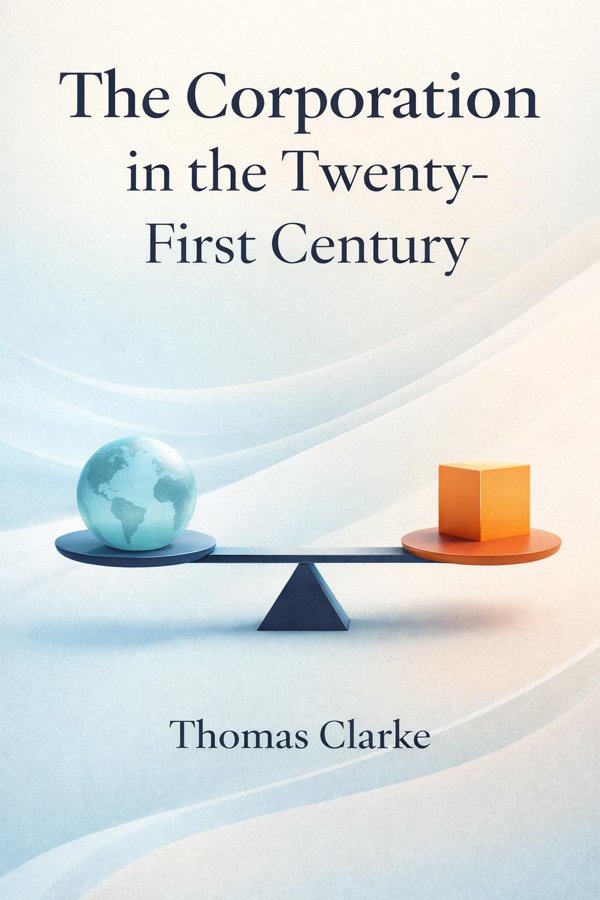
The Corporation in the Twenty-First Century
The modern corporation is one of the most powerful institutions ever created. It shapes economies, politics, labor markets, innovation, and even the future of the planet. In The Corporation in the Twenty-First Century, Thomas Clarke examines how this institution evolved, why its traditional governance models are under pressure, and what must change if corporations are to remain legitimate and effective in a turbulent global age. The book moves beyond narrow debates about profit and management efficiency to ask a bigger question: what should corporations exist for in a world defined by financial instability, technological disruption, climate risk, and rising public distrust? Clarke argues that the corporation is not a fixed or purely economic entity. It is a social, legal, and political construct whose purpose has always been contested. That makes corporate governance central to the future of capitalism itself. Drawing on history, law, finance, ethics, and management, he shows why shareholder primacy is no longer enough and why stakeholder responsibility, sustainability, and institutional reform now matter more than ever. As a leading scholar of corporate governance and business ethics, Clarke brings both authority and urgency to this essential account of corporate transformation.
Read SummaryKey Insights from Thomas Clarke
Corporations Are Historical Inventions, Not Natural Facts
One of the book’s most important insights is that corporations are not timeless market creatures that simply emerged from economic necessity. They are human-made legal and social inventions, shaped by changing political choices, public needs, and institutional compromises. That matters because if co...
From The Corporation in the Twenty-First Century
Shareholder Primacy Became Powerful but Problematic
A corporation can be governed for many ends, but for decades one idea came to dominate the field: the belief that companies exist primarily to maximize shareholder value. Clarke shows that this doctrine did not emerge because it was unquestionably correct; it rose because changing ownership structur...
From The Corporation in the Twenty-First Century
Globalization Exposed Corporate Power and Fragility
The global corporation promised efficiency, growth, and integrated markets, but Clarke argues that globalization also revealed how vulnerable and politically consequential corporations had become. As firms stretched supply chains across borders, sourced labor globally, and moved capital rapidly betw...
From The Corporation in the Twenty-First Century
Technology Is Rewriting Corporate Strategy and Control
Technological change does more than create new products; it reshapes the corporation itself. Clarke highlights how digitalization, automation, data analytics, platform models, and network effects are transforming how firms organize work, create value, and exercise market power. The twenty-first-cent...
From The Corporation in the Twenty-First Century
Stakeholders Are Central to Long-Term Value
A business may be legally incorporated, but it is socially embedded. Clarke emphasizes that corporations do not create value in isolation; they depend on relationships with employees, customers, suppliers, creditors, communities, and natural systems. Stakeholder theory, in this sense, is not a moral...
From The Corporation in the Twenty-First Century
Sustainability Must Move Into Core Governance
Environmental and social challenges are no longer peripheral issues to be handled by public relations teams. Clarke argues that sustainability has become a defining test of whether the corporation can remain a legitimate institution in the twenty-first century. Climate change, biodiversity loss, res...
From The Corporation in the Twenty-First Century
About Thomas Clarke
Thomas Clarke is a professor of management and director of the Centre for Corporate Governance at the University of Technology Sydney. He is known for his extensive research on corporate governance, business ethics, and organizational sustainability.
Frequently Asked Questions
Thomas Clarke is a professor of management and director of the Centre for Corporate Governance at the University of Technology Sydney. He is known for his extensive research on corporate governance, business ethics, and organizational sustainability.
Read Thomas Clarke's books in 15 minutes
Get AI-powered summaries with key insights from 1 book by Thomas Clarke.