
Susan Sontag Books
Susan Sontag (1933–2004) was an American writer, philosopher, and cultural critic known for her works on modern culture, art, and politics. Her essays and books, including 'Against Interpretation' and 'Illness as Metaphor', established her as one of the most influential intellectuals of the 20th century.
Known for: On Photography
Books by Susan Sontag
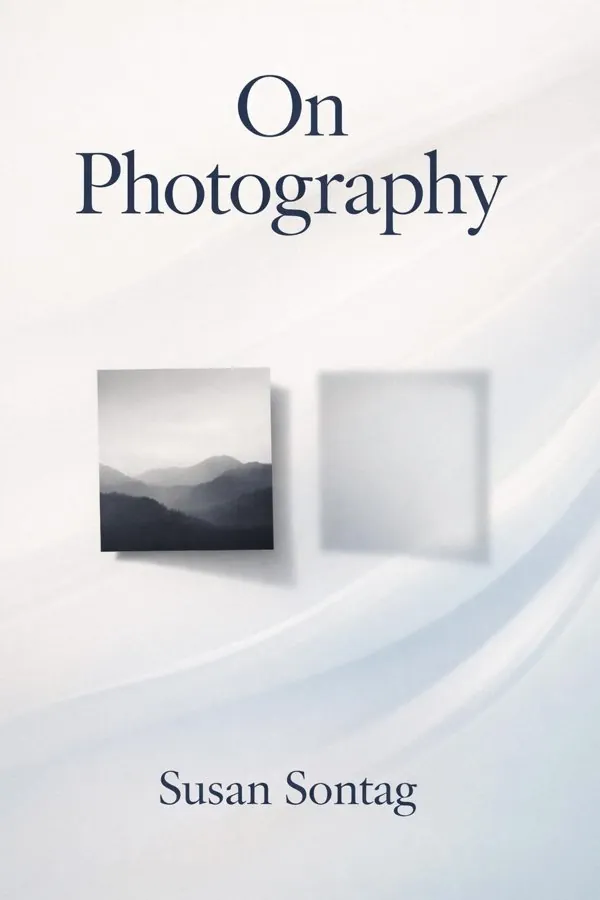
On Photography
Susan Sontag’s On Photography is one of the most influential books ever written about images, looking, and modern life. First published in 1977 as a series of essays, it asks a deceptively simple question: what does photography do to the way we see the world? Sontag argues that photographs are never neutral records. They shape memory, define reality, turn suffering into spectacle, and teach us how to desire, consume, and judge. In her view, the camera is both a tool of knowledge and a tool of power. What makes this book endure is that Sontag saw, decades before social media, how image-saturated culture changes attention, empathy, and experience itself. Her insights speak directly to an age of smartphones, selfies, surveillance, and endless scrolling. She shows that taking a picture is not just preserving a moment; it is claiming, framing, and often distancing it. Sontag writes with unusual authority because she was not only a literary stylist but also a major cultural critic who moved effortlessly across philosophy, politics, art, and media. On Photography remains essential for anyone who wants to understand why images feel so powerful—and so dangerous.
Read SummaryKey Insights from Susan Sontag
Photography Replaces Experience With Images
We increasingly believe we know the world because we have seen pictures of it. That is the unsettling premise behind Sontag’s opening argument in “In Plato’s Cave.” Like the prisoners in Plato’s allegory who mistake shadows for reality, modern people often relate to life through images rather than d...
From On Photography
American Photography Mixes Cheerfulness And Death
A culture reveals itself through what it chooses to photograph. In “America, Seen Through Photographs, Darkly,” Sontag suggests that American photography is marked by a peculiar duality: exuberance on one side, decay on the other. The United States has produced vast archives of aspiration, mobility,...
From On Photography
Photographs Turn Time Into Melancholy Objects
Every photograph is a small elegy. Even when it captures joy, it silently announces that the moment is gone. In “Melancholy Objects,” Sontag explores photography’s intimate bond with loss, nostalgia, and mortality. A photograph freezes time, but precisely by freezing it, it reminds us that life move...
From On Photography
Seeing Can Feel Like A Form Of Power
To photograph is not only to observe; it is also, in a subtle sense, to appropriate. In “The Heroism of Vision,” Sontag examines the prestige attached to the photographic eye. The photographer is often celebrated as a brave witness, someone who enters unfamiliar territory, notices what others ignore...
From On Photography
Photography Creates Its Own Belief System
Photographs do more than record events; they teach people what is worth noticing, believing, and desiring. In “Photographic Evangels,” Sontag explores how certain photographers and traditions turn photography into a kind of secular gospel. The camera becomes a doctrine of attention: it promises trut...
From On Photography
The Modern World Becomes An Image-World
When images multiply without limit, reality itself begins to feel secondary. In “The Image-World,” Sontag argues that modern society increasingly lives inside a vast circulation of pictures. Photographs do not just accompany reality; they compete with it, define it, and in many contexts replace it. ...
From On Photography
About Susan Sontag
Susan Sontag (1933–2004) was an American writer, philosopher, and cultural critic known for her works on modern culture, art, and politics. Her essays and books, including 'Against Interpretation' and 'Illness as Metaphor', established her as one of the most influential intellectuals of the 20th cen...
Read more
Susan Sontag (1933–2004) was an American writer, philosopher, and cultural critic known for her works on modern culture, art, and politics. Her essays and books, including 'Against Interpretation' and 'Illness as Metaphor', established her as one of the most influential intellectuals of the 20th cen...
Susan Sontag (1933–2004) was an American writer, philosopher, and cultural critic known for her works on modern culture, art, and politics. Her essays and books, including 'Against Interpretation' and 'Illness as Metaphor', established her as one of the most influential intellectuals of the 20th century.
Frequently Asked Questions
Susan Sontag (1933–2004) was an American writer, philosopher, and cultural critic known for her works on modern culture, art, and politics. Her essays and books, including 'Against Interpretation' and 'Illness as Metaphor', established her as one of the most influential intellectuals of the 20th century.
Read Susan Sontag's books in 15 minutes
Get AI-powered summaries with key insights from 1 book by Susan Sontag.