

Steven Levitt Books
Steven D. Levitt is a professor of economics at the University of Chicago, best known for his work on crime and incentives.
Known for: Freakonomics
Books by Steven Levitt
Freakonomics
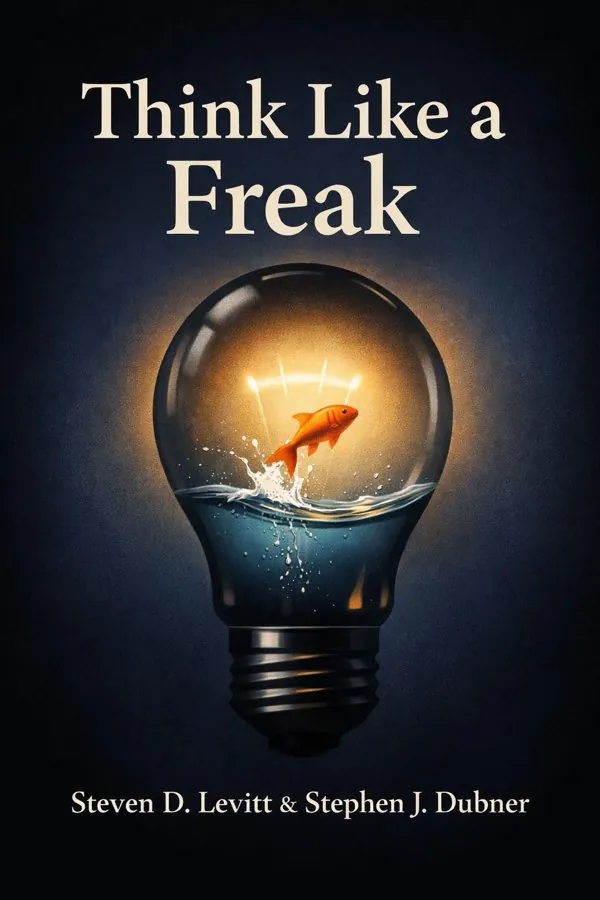
Why do people cheat in some situations but act generously in others? Why do smart policies sometimes fail, while simple changes create outsized results? These are the kinds of questions that made the Freakonomics approach famous. In this book, Steven D. Levitt and Stephen J. Dubner invite readers to go beyond surface explanations and learn a more useful skill: how to think clearly when the world seems confusing. Rather than offering motivational slogans or neat formulas, they show how curiosity, data, and a willingness to challenge assumptions can uncover the hidden logic behind human behavior. What makes this book matter is its practicality. The ideas are not limited to economics classrooms or policy debates; they apply to parenting, business, negotiation, career choices, and everyday decisions. Levitt, a University of Chicago economist known for his work on crime and incentives, teams up with Dubner, a journalist and storyteller, to translate complex insights into memorable lessons. Together, they make a compelling case that better thinking starts with humility, sharper questions, and a habit of following evidence instead of intuition. If you want to solve problems more creatively and understand why people do what they do, this book offers a powerful mental toolkit.
Read SummaryKey Insights from Steven Levitt
The Value of Saying 'I Don’t Know'
Thinking like a Freak starts with the most radical admission you can make: acknowledging your ignorance. When Levitt and Dubner studied markets, crime, and social behavior, they found that real progress began only after someone stopped pretending to have the answer. In most environments, confidence ...
From Freakonomics
Incentives and Human Behavior
One of the central ideas in the Freakonomics worldview is that incentives drive behavior, but not always in the way we expect. People respond to rewards, punishments, social pressure, identity, convenience, and status. Money matters, but so do pride, guilt, embarrassment, and belonging. To understan...
From Freakonomics
Thinking Small
Big problems often tempt us into big, dramatic solutions. But one of the most useful lessons in this book is that meaningful progress usually begins small. Thinking like a Freak means breaking down a complicated challenge into a narrow, manageable part that can actually be studied, tested, and impro...
From Freakonomics
The Importance of Asking the Right Question
Many people work hard on the wrong problem. That is why asking the right question is often more valuable than having a quick answer. Levitt and Dubner emphasize that clever thinking begins by reframing the issue. If the question is poorly designed, even smart analysis leads nowhere. The goal is not ...
From Freakonomics
The Role of Data and Evidence
A hallmark of the Freakonomics approach is the insistence on evidence over intuition. Stories can be persuasive, traditions can feel trustworthy, and expert opinions can sound convincing, but none of them are enough without data. Levitt and Dubner repeatedly show that many widely accepted beliefs co...
From Freakonomics
Overcoming Bias and Emotion
One of the hardest parts of thinking clearly is recognizing how often our judgments are shaped by emotion, loyalty, and identity rather than facts. Levitt and Dubner argue that people do not simply misunderstand information; they actively filter it through what they want to be true. We protect our e...
From Freakonomics
About Steven Levitt
Steven D. Levitt is a professor of economics at the University of Chicago, best known for his work on crime and incentives. Stephen J. Dubner is a journalist and radio host, co-author of the Freakonomics series, and creator of the Freakonomics Radio podcast. Together, they have popularized economic ...
Read more
Steven D. Levitt is a professor of economics at the University of Chicago, best known for his work on crime and incentives. Stephen J. Dubner is a journalist and radio host, co-author of the Freakonomics series, and creator of the Freakonomics Radio podcast. Together, they have popularized economic ...
Steven D. Levitt is a professor of economics at the University of Chicago, best known for his work on crime and incentives. Stephen J. Dubner is a journalist and radio host, co-author of the Freakonomics series, and creator of the Freakonomics Radio podcast. Together, they have popularized economic thinking for a broad audience through their books and media projects.



Frequently Asked Questions
Steven D. Levitt is a professor of economics at the University of Chicago, best known for his work on crime and incentives.
Read Steven Levitt's books in 15 minutes
Get AI-powered summaries with key insights from 1 book by Steven Levitt.