
Piers Steel Books
Piers Steel, Ph. D.
Known for: The Procrastination Equation: How to Stop Putting Things Off and Start Getting Stuff Done
Books by Piers Steel
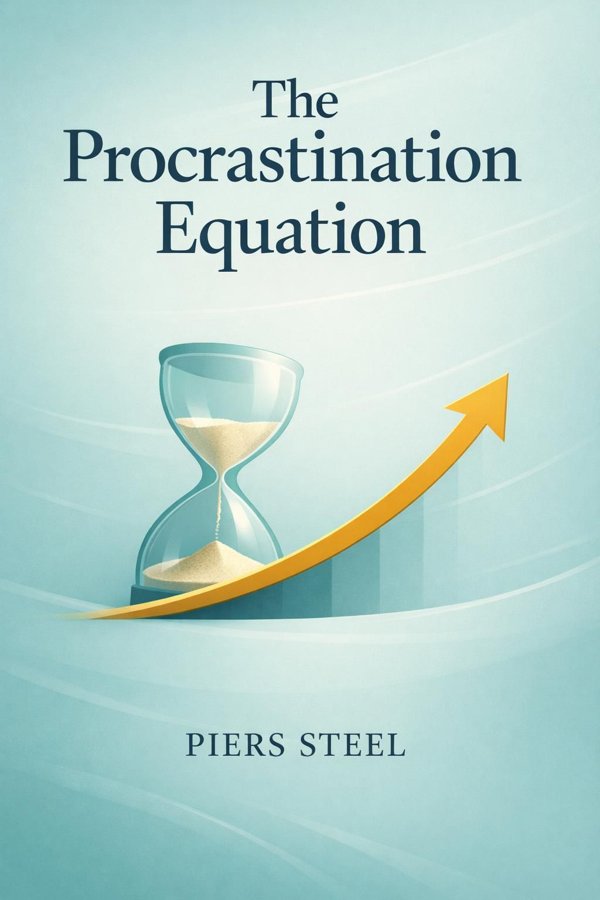
The Procrastination Equation: How to Stop Putting Things Off and Start Getting Stuff Done
Why do intelligent, ambitious, well-meaning people keep delaying the very things they say matter most? In The Procrastination Equation, psychologist Piers Steel tackles that question with unusual rigor. Rather than treating procrastination as laziness, moral failure, or poor character, he shows that it is a predictable pattern rooted in how motivation works. Drawing from psychology, behavioral economics, neuroscience, and decades of empirical research, Steel presents a clear formula for understanding why we act now, delay action, or never begin at all. At the heart of the book is a powerful idea: motivation rises when we expect success and value the outcome, but falls when we are impulsive and when rewards feel far away. This simple equation explains why deadlines suddenly create urgency, why distractions are so seductive, and why long-term goals often lose to immediate comforts. Steel combines scientific insight with practical strategies for reshaping habits, environments, and expectations. The result is a book that is both intellectually satisfying and deeply useful for students, professionals, creators, and anyone tired of postponing meaningful work.
Read SummaryKey Insights from Piers Steel
The Science Behind Chronic Delay
Procrastination feels personal, but one of Steel’s most important insights is that it is also lawful. It follows patterns that can be studied, measured, and predicted. That matters because people often explain delay in moral terms: I’m lazy, undisciplined, or just bad at follow-through. Steel argues...
From The Procrastination Equation: How to Stop Putting Things Off and Start Getting Stuff Done
Expectancy Builds the Courage to Begin
People rarely rush into tasks they believe will expose their inadequacy. Steel shows that expectancy, or your belief that effort will lead to success, is one of the strongest drivers of action. When confidence is low, starting feels risky. Delay becomes a form of emotional self-protection. If you av...
From The Procrastination Equation: How to Stop Putting Things Off and Start Getting Stuff Done
Value Makes Effort Feel Worthwhile
We do not merely procrastinate because tasks are difficult; we procrastinate because many tasks feel emotionally flat. Steel emphasizes that value is the second major engine of motivation. If an activity is meaningful, enjoyable, rewarding, or connected to identity, we are far more likely to do it. ...
From The Procrastination Equation: How to Stop Putting Things Off and Start Getting Stuff Done
Impulsiveness Fuels Short-Term Escapes
One of the book’s sharpest observations is that procrastination is often not a planning problem but a temptation problem. Steel argues that impulsiveness weakens motivation by making immediate rewards disproportionately attractive. Even when we care about future goals, we are drawn toward whatever o...
From The Procrastination Equation: How to Stop Putting Things Off and Start Getting Stuff Done
Delay Makes Future Rewards Feel Unreal
A distant deadline can be as dangerous as no deadline at all. Steel shows that delay powerfully weakens motivation because human beings discount the future. The farther away a reward or consequence lies, the less emotionally vivid it feels in the present. We may intellectually understand that an act...
From The Procrastination Equation: How to Stop Putting Things Off and Start Getting Stuff Done
Deadlines, Structure, and Commitment Devices
Freedom sounds appealing, but Steel makes clear that too much unstructured freedom often invites procrastination. Many people imagine they delay because they dislike rules or pressure. In reality, they often perform better with external structure. Deadlines, schedules, accountability, and commitment...
From The Procrastination Equation: How to Stop Putting Things Off and Start Getting Stuff Done
About Piers Steel
Piers Steel, Ph.D., is a Canadian psychologist and professor at the University of Calgary. He is recognized for his research on motivation and procrastination, and his work has been widely cited in academic and popular psychology literature.


Frequently Asked Questions
Piers Steel, Ph. D.
Read Piers Steel's books in 15 minutes
Get AI-powered summaries with key insights from 1 book by Piers Steel.