
Philip Zimbardo Books
Philip Zimbardo is an American psychologist best known for his research on social psychology, particularly the Stanford Prison Experiment. He has taught at Stanford University and authored numerous books on psychology, ethics, and human behavior.
Known for: The Lucifer Effect: Understanding How Good People Turn Evil
Books by Philip Zimbardo
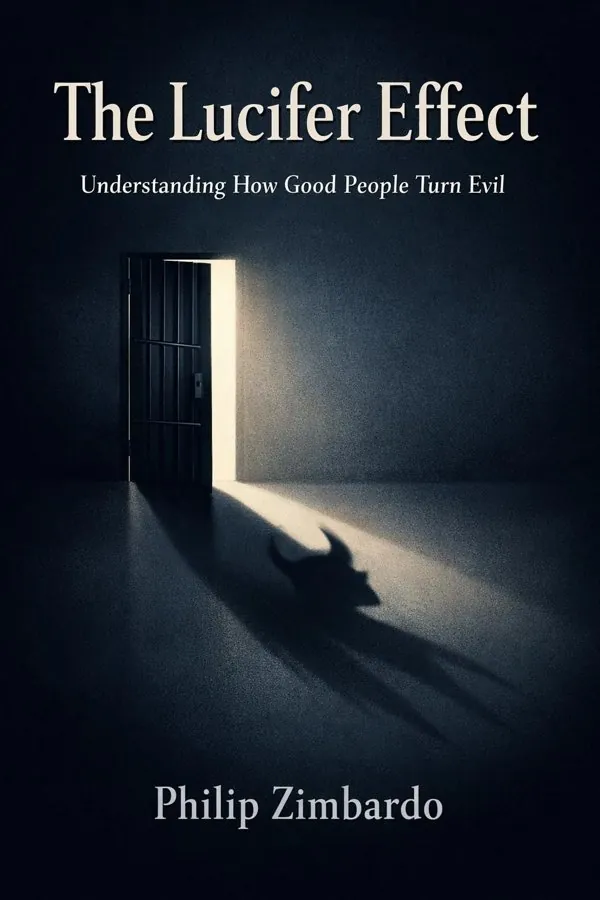
The Lucifer Effect: Understanding How Good People Turn Evil
Why do ordinary people sometimes commit extraordinary cruelty? In The Lucifer Effect, psychologist Philip Zimbardo explores one of the most unsettling questions in human behavior: how decent, everyday individuals can be transformed by situations, systems, and social pressures into agents of harm. Best known for leading the Stanford Prison Experiment, Zimbardo uses that infamous study as a starting point to examine how power, anonymity, obedience, group identity, and institutional culture can distort moral judgment. He connects laboratory findings with real-world atrocities, including prison abuse, war crimes, and organizational corruption, arguing that evil is often less about “bad apples” and more about “bad barrels” and the larger systems that shape conduct. The book matters because it challenges a comforting illusion—that only monsters do monstrous things. Instead, Zimbardo shows how vulnerable all humans are to environmental influence, while also highlighting the possibility of resistance, moral courage, and heroic action. Combining psychological research, case analysis, and moral reflection, The Lucifer Effect is a powerful warning about human nature and a practical guide to recognizing the forces that can pull good people toward destructive behavior.
Read SummaryKey Insights from Philip Zimbardo
Evil Often Begins With Ordinary People
The most disturbing truth in psychology may be that evil rarely announces itself with horns, rage, or obvious madness. More often, it begins with ordinary people placed in unusual circumstances. Zimbardo’s central argument is that many harmful acts are not committed by inherently monstrous individua...
From The Lucifer Effect: Understanding How Good People Turn Evil
Situations Can Override Personal Morality
We like to believe that our values will guide us no matter what. Zimbardo argues that this confidence is often misplaced. Under pressure, situations can overpower personal morality, especially when they are structured to reward compliance, blur responsibility, and redefine what counts as acceptable ...
From The Lucifer Effect: Understanding How Good People Turn Evil
Roles Shape Identity Faster Than Expected
One of the book’s most memorable lessons is that people do not merely perform roles; they can become psychologically absorbed by them. Zimbardo shows how social roles carry scripts, expectations, and power relations that influence how people see themselves and others. Once a role is accepted, behavi...
From The Lucifer Effect: Understanding How Good People Turn Evil
Dehumanization Makes Cruelty Psychologically Easier
People usually hesitate to harm those they fully recognize as human beings. That is why dehumanization is such a powerful gateway to cruelty. Zimbardo emphasizes that when individuals or groups are stripped of identity, dignity, or complexity, aggression becomes easier to justify. Once others are se...
From The Lucifer Effect: Understanding How Good People Turn Evil
Authority Gains Power Through Obedience
One of the most frightening facts about human behavior is how readily people obey authority, even when commands conflict with conscience. Zimbardo builds on classic psychological research to show that authority does not need to be physically coercive to be powerful. Titles, expertise, uniforms, inst...
From The Lucifer Effect: Understanding How Good People Turn Evil
Systems Create Bad Barrels For Good Apples
Blaming one villain is emotionally satisfying, but Zimbardo argues it is often psychologically incomplete. His famous distinction between “bad apples” and “bad barrels” points to the importance of systems. A bad apple explanation focuses on flawed individuals. A bad barrel explanation examines the e...
From The Lucifer Effect: Understanding How Good People Turn Evil
About Philip Zimbardo
Philip Zimbardo is an American psychologist best known for his research on social psychology, particularly the Stanford Prison Experiment. He has taught at Stanford University and authored numerous books on psychology, ethics, and human behavior.



Frequently Asked Questions
Philip Zimbardo is an American psychologist best known for his research on social psychology, particularly the Stanford Prison Experiment. He has taught at Stanford University and authored numerous books on psychology, ethics, and human behavior.
Read Philip Zimbardo's books in 15 minutes
Get AI-powered summaries with key insights from 1 book by Philip Zimbardo.