
Michael Wheeler Books
Michael Wheeler is a professor emeritus at Harvard Business School, where he taught negotiation for over two decades. His research focuses on negotiation dynamics, decision-making, and adaptive strategy.
Known for: The Art of Negotiation: How to Improvise Agreement in a Chaotic World
Books by Michael Wheeler
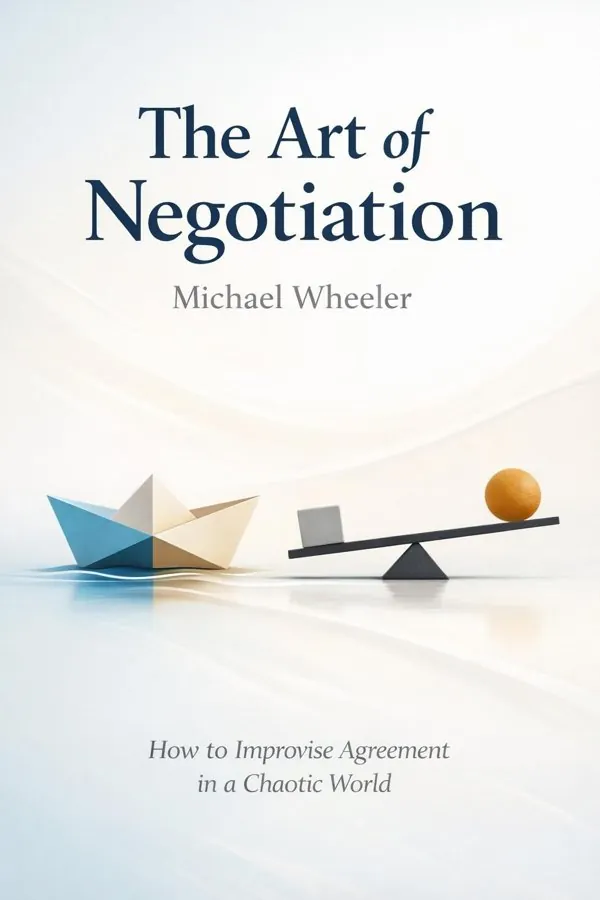
The Art of Negotiation: How to Improvise Agreement in a Chaotic World
Negotiation is often taught as if it were a clean sequence: prepare your goals, choose your tactics, sit down at the table, and execute the plan. Michael Wheeler argues that this picture is dangerously incomplete. In The Art of Negotiation, he shows that real negotiation is messy, emotional, fluid, and full of surprise. People change their minds, information arrives late, power shifts, and unexpected opportunities emerge. The best negotiators are not those who cling most tightly to a script, but those who can adapt intelligently in the moment. Drawing on decades of teaching at Harvard Business School, along with research in psychology, behavioral economics, strategy, and leadership, Wheeler reframes negotiation as a form of disciplined improvisation. Preparation still matters, but not as a rigid map. It matters as a foundation for agile judgment under pressure. This book matters because negotiation is not limited to boardrooms and legal deals. It shapes salaries, partnerships, family decisions, political disputes, and everyday collaboration. Wheeler’s great contribution is to show that success comes from combining planning with flexibility, confidence with curiosity, and strategic intent with the ability to respond creatively to uncertainty.
Read SummaryKey Insights from Michael Wheeler
Negotiation Is Not a Script
The biggest mistake negotiators make is assuming that the process will unfold according to plan. Wheeler challenges the traditional image of negotiation as a linear exercise in setting goals, preparing tactics, and executing them step by step. In reality, negotiation is more like navigating changing...
From The Art of Negotiation: How to Improvise Agreement in a Chaotic World
Improvisation Requires Deep Preparation
Improvisation is often confused with winging it, but Wheeler makes a sharper distinction: good improvisation is impossible without preparation. The jazz musician who plays freely has mastered scales, rhythm, and structure. The skilled negotiator works the same way. Flexibility in the moment depends ...
From The Art of Negotiation: How to Improvise Agreement in a Chaotic World
Flexibility Beats Rigid Planning
A rigid plan can create a dangerous illusion of control. Wheeler argues that while preparation is essential, overcommitting to one strategy can leave negotiators brittle and blind. The most effective negotiators enter with a clear sense of direction but remain willing to alter tactics, sequencing, a...
From The Art of Negotiation: How to Improvise Agreement in a Chaotic World
Information Matters, Judgment Matters More
Negotiators often believe that success goes to whoever has the most information. Wheeler agrees that information is valuable, but he insists that judgment is even more important. Data is never complete, and raw facts do not interpret themselves. Negotiators must decide what matters, what may be misl...
From The Art of Negotiation: How to Improvise Agreement in a Chaotic World
Emotions Shape Every Bargain
Many people imagine negotiation as a rational contest of offers and counteroffers, yet Wheeler shows that emotion is always present. Anxiety, pride, resentment, hope, fear, and trust do not sit outside the negotiation; they influence how people interpret statements, assess risks, and make decisions....
From The Art of Negotiation: How to Improvise Agreement in a Chaotic World
Create Value Before Claiming It
One of Wheeler’s most practical themes is that negotiation is not only about dividing a fixed pie. Often, the better question is how to enlarge it before arguing over slices. Value creation happens when negotiators uncover different priorities, time horizons, tolerances for risk, or non-monetary int...
From The Art of Negotiation: How to Improvise Agreement in a Chaotic World
About Michael Wheeler
Michael Wheeler is a professor emeritus at Harvard Business School, where he taught negotiation for over two decades. His research focuses on negotiation dynamics, decision-making, and adaptive strategy. Wheeler has written extensively on negotiation theory and practice and has advised executives an...
Read more
Michael Wheeler is a professor emeritus at Harvard Business School, where he taught negotiation for over two decades. His research focuses on negotiation dynamics, decision-making, and adaptive strategy. Wheeler has written extensively on negotiation theory and practice and has advised executives an...
Michael Wheeler is a professor emeritus at Harvard Business School, where he taught negotiation for over two decades. His research focuses on negotiation dynamics, decision-making, and adaptive strategy. Wheeler has written extensively on negotiation theory and practice and has advised executives and organizations worldwide.


Frequently Asked Questions
Michael Wheeler is a professor emeritus at Harvard Business School, where he taught negotiation for over two decades. His research focuses on negotiation dynamics, decision-making, and adaptive strategy.
Read Michael Wheeler's books in 15 minutes
Get AI-powered summaries with key insights from 1 book by Michael Wheeler.