
Michael Argyle Books
Michael Argyle (1925–2002) was a British social psychologist known for his pioneering research on social interaction, nonverbal communication, and happiness. He was a professor at the University of Oxford and authored several key works in social psychology, including 'The Psychology of Interpersonal Behaviour' and 'The Social Brain'.
Known for: The Social Brain: Discovering the Networks of the Mind
Books by Michael Argyle
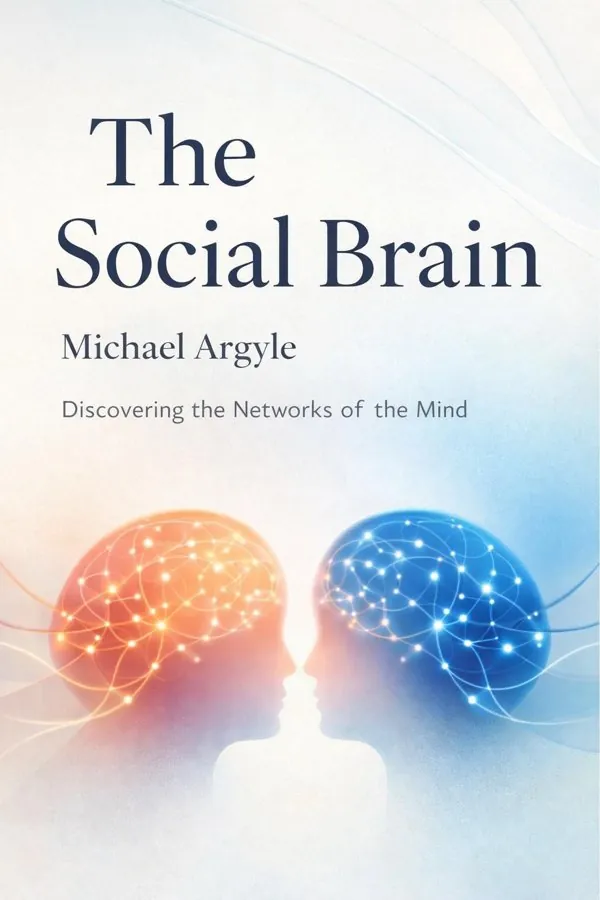
The Social Brain: Discovering the Networks of the Mind
Michael Argyle’s The Social Brain: Discovering the Networks of the Mind explores a deceptively simple question: how does the human brain make social life possible? Rather than treating the mind as an isolated thinking machine, Argyle shows that perception, emotion, language, imitation, and group behavior are all deeply shaped by our need to relate to other people. The book brings together social psychology, biology, and early neuroscience to explain how we recognize faces, interpret expressions, learn from others, and build relationships, communities, and cultures. Its importance lies in its central claim: the brain is not merely built to think, but to connect. That insight helps explain everyday experiences ranging from awkward conversations and emotional misunderstandings to empathy, cooperation, and social belonging. Argyle was one of the leading social psychologists of the twentieth century, especially known for his pioneering work on nonverbal communication and interpersonal behavior. His authority gives this book unusual depth. It is both an intellectual map of social behavior and a practical guide to understanding why human beings are so profoundly shaped by one another.
Read SummaryKey Insights from Michael Argyle
The Biological Roots of Human Connection
Before people speak, reason, or consciously judge one another, they are already social. One of Argyle’s most important insights is that social behavior begins in biology. Infants orient toward faces, respond to voices, track eye gaze, and calm down when touched long before they understand language. ...
From The Social Brain: Discovering the Networks of the Mind
How the Brain Reads Other People
We do not merely look at other people; we interpret them continuously. Argyle emphasizes that one of the social brain’s most remarkable achievements is perception: recognizing faces, decoding expressions, noticing posture, and inferring intention from subtle cues. In ordinary life this process feels...
From The Social Brain: Discovering the Networks of the Mind
Nonverbal Communication Shapes Every Encounter
Some of the most influential messages people send are never spoken. Argyle was a pioneer in the study of nonverbal communication, and this theme stands at the center of The Social Brain. Facial expressions, gestures, posture, distance, touch, eye contact, and vocal tone often communicate more than w...
From The Social Brain: Discovering the Networks of the Mind
Language Extends the Reach of Social Life
Words do more than transfer information; they create shared reality. Argyle treats language as one of the social brain’s most powerful tools because it allows people to coordinate actions, explain intentions, transmit culture, and form relationships across time. Through language, individuals can neg...
From The Social Brain: Discovering the Networks of the Mind
Emotion and Empathy Make Understanding Possible
Human beings do not connect through logic alone. Argyle shows that emotion is central to social life because feelings guide attention, motivate response, and reveal what matters to us. Empathy, in turn, allows us to resonate with the emotional states of others, making cooperation and care possible. ...
From The Social Brain: Discovering the Networks of the Mind
Imitation and Social Learning Build the Self
Much of what people become is borrowed before it is chosen. Argyle emphasizes that human beings learn socially: by observing, imitating, practicing, and internalizing the behavior of others. From infancy onward, we copy facial expressions, speech patterns, habits, emotional responses, and group norm...
From The Social Brain: Discovering the Networks of the Mind
About Michael Argyle
Michael Argyle (1925–2002) was a British social psychologist known for his pioneering research on social interaction, nonverbal communication, and happiness. He was a professor at the University of Oxford and authored several key works in social psychology, including 'The Psychology of Interpersonal...
Read more
Michael Argyle (1925–2002) was a British social psychologist known for his pioneering research on social interaction, nonverbal communication, and happiness. He was a professor at the University of Oxford and authored several key works in social psychology, including 'The Psychology of Interpersonal...
Michael Argyle (1925–2002) was a British social psychologist known for his pioneering research on social interaction, nonverbal communication, and happiness. He was a professor at the University of Oxford and authored several key works in social psychology, including 'The Psychology of Interpersonal Behaviour' and 'The Social Brain'.


Frequently Asked Questions
Michael Argyle (1925–2002) was a British social psychologist known for his pioneering research on social interaction, nonverbal communication, and happiness. He was a professor at the University of Oxford and authored several key works in social psychology, including 'The Psychology of Interpersonal Behaviour' and 'The Social Brain'.
Read Michael Argyle's books in 15 minutes
Get AI-powered summaries with key insights from 1 book by Michael Argyle.