
Mark Epstein Books
Mark Epstein is an American psychiatrist and author known for his work integrating Buddhist teachings with psychotherapy. He studied at Harvard University and has written several influential books on the intersection of mindfulness and psychology.
Known for: Thoughts Without a Thinker: Psychotherapy from a Buddhist Perspective, Advice Not Given: A Guide to Getting Over Yourself
Books by Mark Epstein
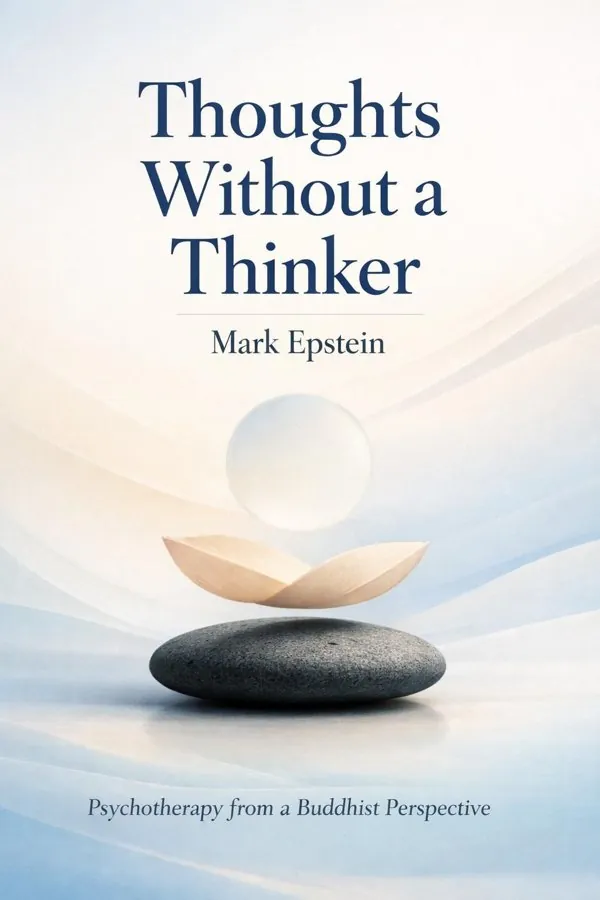
Thoughts Without a Thinker: Psychotherapy from a Buddhist Perspective
Thoughts Without a Thinker is a groundbreaking exploration of the meeting point between modern psychotherapy and Buddhist psychology. In this influential book, psychiatrist Mark Epstein argues that ma...

Advice Not Given: A Guide to Getting Over Yourself
In this book, psychiatrist and author Mark Epstein explores how Buddhist teachings can complement psychotherapy. Drawing on his clinical experience and personal practice, Epstein shows how the Eightfo...
Key Insights from Mark Epstein
The self is less solid
One of the book’s most provocative insights is that much of our suffering comes from defending a self that is not nearly as fixed as we think. In Western culture, people are often encouraged to build a strong identity, define themselves clearly, and protect their personal story. Buddhism offers a st...
From Thoughts Without a Thinker: Psychotherapy from a Buddhist Perspective
Suffering grows from clinging and avoidance
A powerful thread running through Epstein’s work is that emotional pain becomes suffering when we cling to what we want and resist what we fear. Buddhism teaches that craving and aversion sit at the center of distress. Psychotherapy sees the same pattern in a different language: people become trappe...
From Thoughts Without a Thinker: Psychotherapy from a Buddhist Perspective
Mindfulness reveals without immediate fixing
One of Epstein’s most valuable contributions is his insistence that awareness itself can be therapeutic. Many people approach inner life like a problem to solve as quickly as possible. If sadness appears, they want to get rid of it. If anger appears, they want to justify or suppress it. If fear appe...
From Thoughts Without a Thinker: Psychotherapy from a Buddhist Perspective
Psychotherapy and Buddhism need each other
A central insight of the book is that psychotherapy and Buddhism illuminate different parts of the same human struggle. Buddhism offers a profound understanding of attachment, impermanence, ego, and the causes of suffering. Psychotherapy brings careful attention to childhood development, trauma, rel...
From Thoughts Without a Thinker: Psychotherapy from a Buddhist Perspective
Healthy narcissism differs from ego fixation
Epstein handles the subject of narcissism with unusual nuance. In popular use, narcissism often means vanity or selfishness, but in psychological development it also refers to the basic need for coherence, mirroring, and a stable sense of worth. Buddhism’s teaching of no-self can sound as if all sel...
From Thoughts Without a Thinker: Psychotherapy from a Buddhist Perspective
Desire can teach rather than mislead
Many readers assume Buddhist psychology rejects desire entirely, but Epstein presents a more sophisticated view. The problem is not that human beings want things; it is that desire becomes distorted when we expect it to permanently complete us. Psychotherapy similarly recognizes that desire carries ...
From Thoughts Without a Thinker: Psychotherapy from a Buddhist Perspective
About Mark Epstein
Mark Epstein is an American psychiatrist and author known for his work integrating Buddhist teachings with psychotherapy. He studied at Harvard University and has written several influential books on the intersection of mindfulness and psychology.




Frequently Asked Questions
Mark Epstein is an American psychiatrist and author known for his work integrating Buddhist teachings with psychotherapy. He studied at Harvard University and has written several influential books on the intersection of mindfulness and psychology.
Read Mark Epstein's books in 15 minutes
Get AI-powered summaries with key insights from 2 books by Mark Epstein.