
Johann Wolfgang Von Goethe Books
Johann Wolfgang von Goethe (1749–1832) was a German poet, playwright, novelist, scientist, and statesman. A central figure of the Weimar Classicism movement, he is considered one of the greatest writers in world literature.
Known for: Faust: Part One
Books by Johann Wolfgang Von Goethe
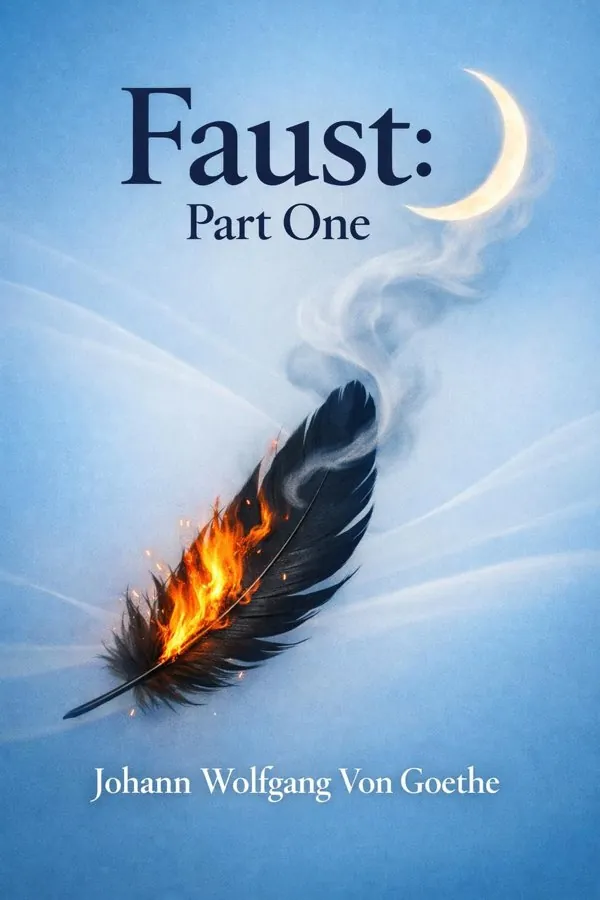
Faust: Part One
Faust: Part One is Johann Wolfgang Von Goethe’s dramatic masterpiece about a brilliant man who has reached the limits of formal knowledge and still finds himself empty. Heinrich Faust has studied philosophy, law, medicine, and theology, yet he feels no closer to truth, purpose, or joy. In his despair, he enters into a pact with Mephistopheles, a witty and destructive spirit who promises him experience, pleasure, and movement in exchange for his soul if Faust ever becomes fully satisfied. What follows is not just a supernatural bargain, but a profound exploration of ambition, temptation, innocence, guilt, and the dangerous consequences of human desire unrestrained by wisdom. The play matters because it captures a timeless conflict: the gap between what people know and what they feel, between achievement and meaning, between longing and responsibility. Goethe, one of the greatest writers in world literature, brings philosophical depth, poetic power, and psychological realism to every scene. Faust: Part One remains essential because it asks questions that never go away: How should we live? What do we owe others? And what happens when our hunger for more overwhelms our moral judgment?
Read SummaryKey Insights from Johann Wolfgang Von Goethe
The Cosmic Wager and Human Striving
A great drama often begins by asking whether human beings are doomed by weakness or redeemed by striving. Goethe opens Faust: Part One with exactly that question. In the “Prologue in Heaven,” Mephistopheles appears before the Lord as a spirit of negation, mockery, and perpetual doubt. He sneers at h...
From Faust: Part One
Knowledge Without Meaning Becomes Despair
It is possible to know more than ever and still feel utterly lost. In the “Night” scene, Faust sits alone in his study and confesses the emptiness of his achievements. He has mastered philosophy, law, medicine, and theology, yet he feels no wiser. Books, titles, and academic accomplishments have not...
From Faust: Part One
The Pull of Ordinary Human Life
Sometimes salvation begins not in grand revelation, but in the simple presence of other people. When Faust leaves his study and walks “Outside the City Gate,” he enters a world of ordinary citizens enjoying Easter festivities, conversation, movement, and spring renewal. After the suffocating darknes...
From Faust: Part One
The Pact as a Crisis of Desire
The most dangerous bargains are rarely made out of simple greed; they are made out of exhaustion, pride, and desperation. Faust’s pact with Mephistopheles grows from his refusal to accept a limited human life. Mephistopheles offers him not wisdom in any ultimate sense, but motion, sensation, diversi...
From Faust: Part One
Temptation Works Through Distraction and Appetite
Moral decline often begins not with one monstrous act, but with a series of entertainments that dull judgment. Goethe shows this in Faust’s early journey with Mephistopheles through places like Auerbach’s Cellar and the Witch’s Kitchen. In Auerbach’s Cellar, we see drunkenness, vulgar humor, and col...
From Faust: Part One
Gretchen and the Cost of Selfish Love
The most heartbreaking tragedies occur when one person’s hunger enters another person’s innocence. Gretchen, or Margarete, is introduced as simple, modest, devout, and socially vulnerable. Faust becomes captivated by her beauty, but his attraction is not grounded in mature love. It is intensified by...
From Faust: Part One
About Johann Wolfgang Von Goethe
Johann Wolfgang von Goethe (1749–1832) was a German poet, playwright, novelist, scientist, and statesman. A central figure of the Weimar Classicism movement, he is considered one of the greatest writers in world literature. His most famous works include Faust, The Sorrows of Young Werther, and Wilhe...
Read more
Johann Wolfgang von Goethe (1749–1832) was a German poet, playwright, novelist, scientist, and statesman. A central figure of the Weimar Classicism movement, he is considered one of the greatest writers in world literature. His most famous works include Faust, The Sorrows of Young Werther, and Wilhe...
Johann Wolfgang von Goethe (1749–1832) was a German poet, playwright, novelist, scientist, and statesman. A central figure of the Weimar Classicism movement, he is considered one of the greatest writers in world literature. His most famous works include Faust, The Sorrows of Young Werther, and Wilhelm Meister’s Apprenticeship.




Frequently Asked Questions
Johann Wolfgang von Goethe (1749–1832) was a German poet, playwright, novelist, scientist, and statesman. A central figure of the Weimar Classicism movement, he is considered one of the greatest writers in world literature.
Read Johann Wolfgang Von Goethe's books in 15 minutes
Get AI-powered summaries with key insights from 1 book by Johann Wolfgang Von Goethe.