
James Lovelock Books
James Lovelock (1919–2022) was a British scientist, environmentalist, and futurist best known for formulating the Gaia hypothesis, which views Earth as a self-regulating system. His work spanned atmospheric chemistry, climate science, and planetary ecology, influencing both scientific and environmental thought worldwide.
Known for: Novacene: The Coming Age of Hyperintelligence
Books by James Lovelock
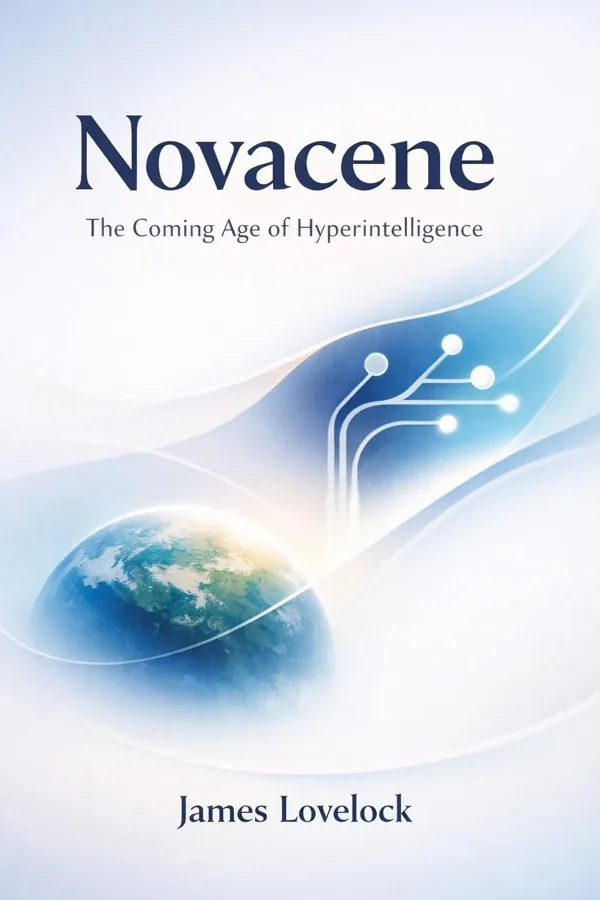
Novacene: The Coming Age of Hyperintelligence
In 'Novacene', James Lovelock proposes that the Earth is entering a new geological era following the Anthropocene. He argues that intelligent, self-aware machines will soon surpass human intelligence and become the dominant life form on Earth. Rather than being a threat, Lovelock suggests that these hyperintelligent beings will collaborate with humans to preserve the planet’s biosphere, continuing Gaia’s self-regulating processes. The book blends scientific insight with philosophical reflection on the future of life and consciousness.
Read SummaryKey Insights from James Lovelock
Revisiting Gaia
Nearly half a century ago, I first proposed that Earth behaves like a single living organism—a self-regulating system that keeps conditions fit for life. This concept, which came to be known as the Gaia hypothesis, was initially dismissed as mysticism. Yet time has vindicated it. Satellite data, atm...
From Novacene: The Coming Age of Hyperintelligence
The End of the Anthropocene
Every epoch leaves its mark. The Anthropocene—our age—will be remembered as a time when one species, Homo sapiens, substantially reshaped the biosphere. We mined mountains, diverted rivers, burned oil and coal, synthesized new materials, and flooded the atmosphere with carbon dioxide. We took contro...
From Novacene: The Coming Age of Hyperintelligence
About James Lovelock
James Lovelock (1919–2022) was a British scientist, environmentalist, and futurist best known for formulating the Gaia hypothesis, which views Earth as a self-regulating system. His work spanned atmospheric chemistry, climate science, and planetary ecology, influencing both scientific and environmen...
Read more
James Lovelock (1919–2022) was a British scientist, environmentalist, and futurist best known for formulating the Gaia hypothesis, which views Earth as a self-regulating system. His work spanned atmospheric chemistry, climate science, and planetary ecology, influencing both scientific and environmen...
James Lovelock (1919–2022) was a British scientist, environmentalist, and futurist best known for formulating the Gaia hypothesis, which views Earth as a self-regulating system. His work spanned atmospheric chemistry, climate science, and planetary ecology, influencing both scientific and environmental thought worldwide.

Frequently Asked Questions
James Lovelock (1919–2022) was a British scientist, environmentalist, and futurist best known for formulating the Gaia hypothesis, which views Earth as a self-regulating system. His work spanned atmospheric chemistry, climate science, and planetary ecology, influencing both scientific and environmental thought worldwide.
Read James Lovelock's books in 15 minutes
Get AI-powered summaries with key insights from 1 book by James Lovelock.