
Daniel Drescher Books
Daniel Drescher is a professional in banking and capital markets technology with extensive experience in automation, machine learning, and distributed systems. He has worked in various roles bridging business and technology, focusing on financial innovation and digital transformation.
Known for: Blockchain Basics: A Non-Technical Introduction in 25 Steps
Books by Daniel Drescher
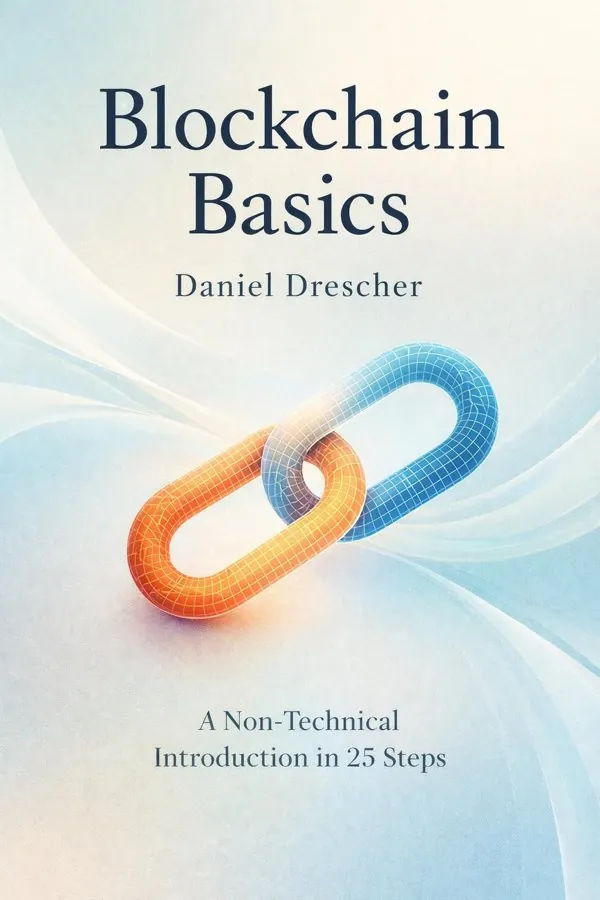
Blockchain Basics: A Non-Technical Introduction in 25 Steps
Blockchain is often discussed as if it were either a miracle technology or an impossibly technical puzzle. Daniel Drescher’s Blockchain Basics: A Non-Technical Introduction in 25 Steps cuts through both extremes. The book is designed for readers who want to understand what blockchain actually is, why it works, and where it fits in the modern economy—without needing a background in computer science, cryptography, or finance. In a sequence of short, carefully structured steps, Drescher builds the subject from the ground up: transactions, ledgers, distributed records, consensus, cryptographic security, smart contracts, and real-world use cases. What makes the book valuable is not just its simplicity, but its discipline. Rather than rely on hype, Drescher explains the logic behind blockchain and shows how trust can be created through rules, transparency, and mathematics instead of centralized intermediaries. Drawing on his experience in banking, capital markets technology, and digital innovation, he offers a practical, business-aware perspective. The result is an accessible guide for professionals, students, and curious readers who want to understand one of the defining technologies of the digital age.
Read SummaryKey Insights from Daniel Drescher
Transactions Are the Starting Point
Every blockchain discussion begins in the wrong place if it starts with code. Drescher begins somewhere much more intuitive: the transaction. A transaction is simply an exchange of value or information between parties. That could be money sent from one account to another, a property title transferre...
From Blockchain Basics: A Non-Technical Introduction in 25 Steps
Ledgers Shape Economic Trust
Most people rarely think about ledgers, yet ledgers quietly organize modern society. A ledger is simply a record of transactions, but its design determines who is trusted, who can participate, and how disputes are resolved. Drescher explains that traditional ledgers are usually centralized: one orga...
From Blockchain Basics: A Non-Technical Introduction in 25 Steps
Decentralization Redefines Institutional Control
The most radical promise of blockchain is not speed or novelty, but the possibility of coordinating trust without a central authority. Drescher carefully explains what that means. In conventional systems, an intermediary validates transactions and enforces rules. We depend on banks to prevent double...
From Blockchain Basics: A Non-Technical Introduction in 25 Steps
Consensus Creates Shared Reality
In everyday life, disagreement is expensive. In digital systems, disagreement over records can be catastrophic. Blockchain solves this through consensus: a method for ensuring that all participants in a distributed network accept the same valid state of the ledger. Drescher makes this concept access...
From Blockchain Basics: A Non-Technical Introduction in 25 Steps
Cryptography Secures Without Personal Trust
Trust is strongest when it does not depend on good intentions alone. Drescher shows how cryptography gives blockchain that property. While the book stays non-technical, it explains enough to make the role of cryptography intuitive. Digital signatures help prove that a transaction was authorized by t...
From Blockchain Basics: A Non-Technical Introduction in 25 Steps
Blocks and Chains Preserve History
Information matters, but ordered information matters more. Drescher explains that blockchain is not just a database of entries; it is a structured history. Transactions are grouped into blocks, and blocks are linked to earlier blocks, forming a chain. This design means each new addition carries a tr...
From Blockchain Basics: A Non-Technical Introduction in 25 Steps
About Daniel Drescher
Daniel Drescher is a professional in banking and capital markets technology with extensive experience in automation, machine learning, and distributed systems. He has worked in various roles bridging business and technology, focusing on financial innovation and digital transformation.
Frequently Asked Questions
Daniel Drescher is a professional in banking and capital markets technology with extensive experience in automation, machine learning, and distributed systems. He has worked in various roles bridging business and technology, focusing on financial innovation and digital transformation.
Read Daniel Drescher's books in 15 minutes
Get AI-powered summaries with key insights from 1 book by Daniel Drescher.