
Charles Mackay Books
Charles Mackay (1814–1889) was a Scottish poet, journalist, and social commentator. He wrote extensively on historical and psychological subjects, gaining lasting recognition for his analysis of mass delusions and popular errors.
Known for: Extraordinary Popular Delusions
Books by Charles Mackay
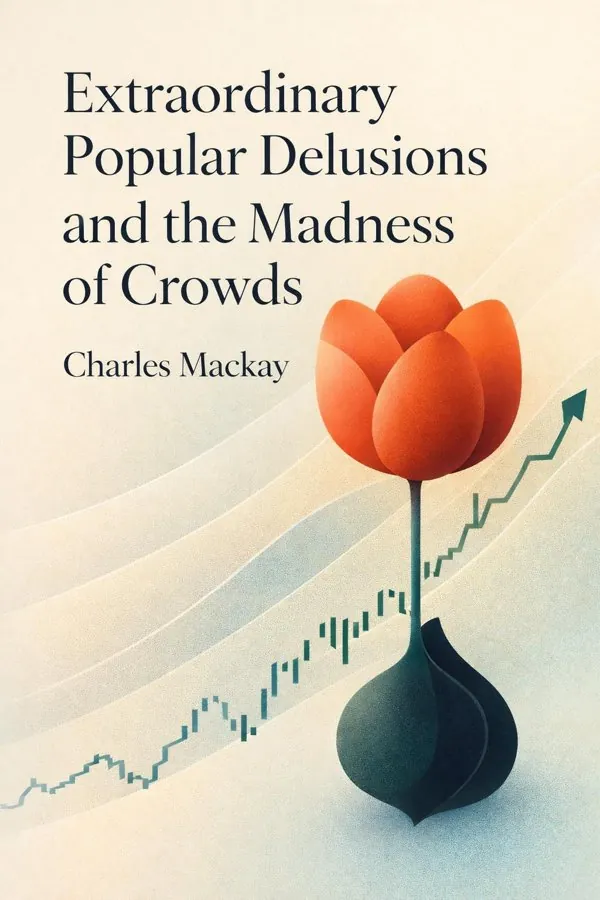
Extraordinary Popular Delusions
Originally published in 1841, Extraordinary Popular Delusions and the Madness of Crowds is Charles Mackay’s sweeping study of the strange moments when entire societies stop thinking clearly and begin believing together. Rather than treating folly as a private weakness, Mackay shows how error can become fashionable, profitable, moralized, and even sacred once it is shared by enough people. His subjects range from financial bubbles such as the Mississippi Scheme, the South Sea Bubble, and Dutch Tulipomania to witch hunts, prophecy, alchemy, dueling, and social crazes that captured the imagination of whole populations. The result is not merely a catalog of old absurdities, but a durable guide to the psychology of contagion, imitation, greed, fear, and prestige. Mackay wrote as a journalist, historian, and gifted storyteller, combining vivid narrative with sharp social observation. That is why the book still matters: in every era, markets overheat, rumors spread, experts are ignored, and crowds reward confidence over truth. Mackay’s warning is timeless—people rarely go mad alone, but they often recover one by one.
Read SummaryKey Insights from Charles Mackay
Crowds Can Magnify Human Irrationality
One of Mackay’s most unsettling insights is that ordinary people do not become wise simply because they gather in large numbers; often, they become less reasonable. A crowd gives emotional force to beliefs that would seem doubtful in private. Once a claim is repeated by friends, newspapers, authorit...
From Extraordinary Popular Delusions
The Mississippi Scheme and Manufactured Wealth
A powerful story can make paper seem richer than reality. Mackay’s account of the Mississippi Scheme shows how John Law transformed financial fantasy into national fever in early eighteenth-century France. By linking a banking system, government debt, colonial dreams, and a torrent of speculation, L...
From Extraordinary Popular Delusions
The South Sea Bubble and Prestige
People are especially vulnerable to deception when greed is endorsed by respectability. Mackay’s chapter on the South Sea Bubble shows how England’s political class, financial insiders, and ambitious public all became entangled in a scheme inflated by authority and reputation. The South Sea Company ...
From Extraordinary Popular Delusions
Tulipomania and Price Without Value
The most revealing bubbles are often built around trivial objects, because they expose how little prices sometimes have to do with usefulness. Mackay’s account of Dutch Tulipomania illustrates a moment when rare bulbs became symbols of wealth, status, and speculative opportunity. Tulips were beautif...
From Extraordinary Popular Delusions
Prophecy, Astrology, and the Comfort of Certainty
When life feels uncertain, prediction becomes a seductive form of emotional relief. Mackay’s treatment of fortune-telling and astrology is not merely a mockery of superstition; it is an examination of why people repeatedly seek systems that promise hidden knowledge of fate. In unstable times, the de...
From Extraordinary Popular Delusions
Alchemy and the Dream of Effortless Transformation
Many delusions survive because they promise not just success, but miraculous shortcut. Mackay’s chapter on alchemy captures humanity’s enduring attraction to the idea that base materials can become precious and ordinary lives can be suddenly transfigured. The philosopher’s stone was more than a chem...
From Extraordinary Popular Delusions
About Charles Mackay
Charles Mackay (1814–1889) was a Scottish poet, journalist, and social commentator. He wrote extensively on historical and psychological subjects, gaining lasting recognition for his analysis of mass delusions and popular errors. His works reflect a deep interest in human behavior, communication, an...
Read more
Charles Mackay (1814–1889) was a Scottish poet, journalist, and social commentator. He wrote extensively on historical and psychological subjects, gaining lasting recognition for his analysis of mass delusions and popular errors. His works reflect a deep interest in human behavior, communication, an...
Charles Mackay (1814–1889) was a Scottish poet, journalist, and social commentator. He wrote extensively on historical and psychological subjects, gaining lasting recognition for his analysis of mass delusions and popular errors. His works reflect a deep interest in human behavior, communication, and the influence of collective emotion on society.




Frequently Asked Questions
Charles Mackay (1814–1889) was a Scottish poet, journalist, and social commentator. He wrote extensively on historical and psychological subjects, gaining lasting recognition for his analysis of mass delusions and popular errors.
Read Charles Mackay's books in 15 minutes
Get AI-powered summaries with key insights from 1 book by Charles Mackay.