
Brian Elliott Books
Helen Kupp, Sheela Subramanian, and Brian Elliott are co-founders and executives at Future Forum, a think tank launched by Slack to help companies redesign work for the digital age.
Known for: How the Future Works: Leading Flexible Teams to Do the Best Work of Their Lives
Books by Brian Elliott
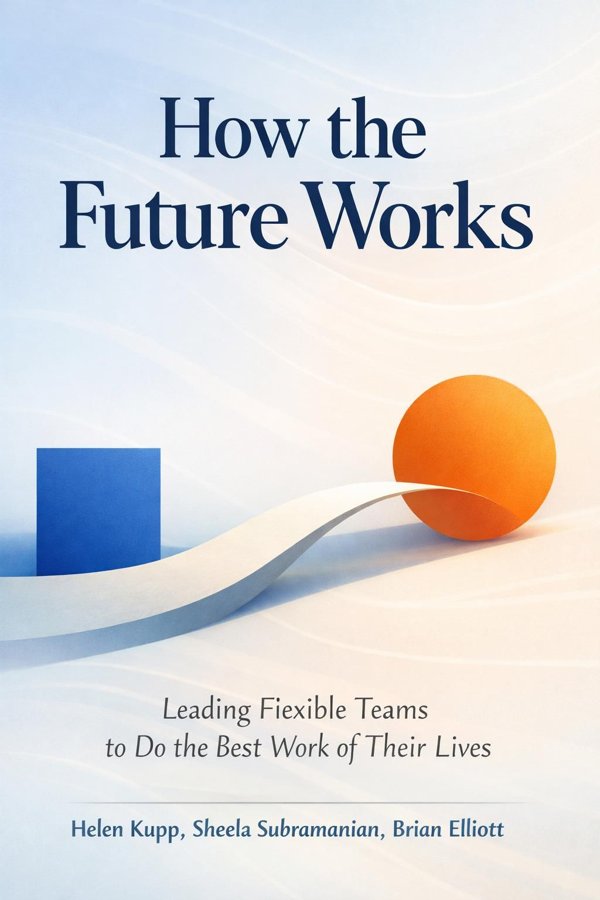
How the Future Works: Leading Flexible Teams to Do the Best Work of Their Lives
How do you build a company where people can do exceptional work without being trapped by outdated assumptions about when, where, and how work must happen? In How the Future Works, Helen Kupp, Sheela Subramanian, and Brian Elliott argue that flexible work is not a temporary perk or a crisis-era compromise. It is a fundamental redesign of work itself. Drawing on research from Future Forum, a consortium backed by Slack, the authors combine data, executive interviews, and practical leadership lessons to show why the old model of office-centric management no longer fits a digital, distributed world. Their focus is not simply on remote work, but on creating organizations built around trust, inclusion, autonomy, and clarity. This matters because the debate over flexible work often gets reduced to logistics, while the real challenge is organizational design. Leaders who understand this shift can improve performance, retention, and employee well-being. Leaders who resist it risk disengagement, inequity, and irrelevance. This book offers a thoughtful, practical roadmap for navigating one of the most important workplace transformations of our time.
Read SummaryKey Insights from Brian Elliott
Work Is Undergoing a Structural Reset
The biggest mistake leaders can make is treating flexible work as a short-term adjustment instead of a long-term structural shift. The authors argue that the world of work has moved beyond the industrial-era logic that linked productivity to visibility, standard hours, and centralized offices. That ...
From How the Future Works: Leading Flexible Teams to Do the Best Work of Their Lives
Flexibility Means More Than Location Choice
Flexibility sounds simple until organizations define it too narrowly. Many companies reduce it to a policy about how many days employees can work from home, but the authors show that real flexibility is broader and more human-centered. It includes control over time, work patterns, communication expe...
From How the Future Works: Leading Flexible Teams to Do the Best Work of Their Lives
Leadership Must Shift From Control to Clarity
When people are no longer sitting in front of managers, weak leadership habits become impossible to hide. The book argues that flexible work exposes a central truth: many organizations have relied on visibility as a substitute for management. Leaders often felt in control because they could observe ...
From How the Future Works: Leading Flexible Teams to Do the Best Work of Their Lives
Trust and Transparency Are Performance Drivers
Flexible work does not fail because people are far apart; it fails when they do not trust one another. One of the book’s strongest themes is that trust is not a soft cultural extra. It is a hard operational requirement. Without trust, managers over-monitor, employees withhold concerns, and collabora...
From How the Future Works: Leading Flexible Teams to Do the Best Work of Their Lives
Inclusion Must Be Designed, Not Assumed
An office can create the illusion of inclusion while quietly rewarding the people who are most visible, most available, or most similar to those in power. The authors show that flexible work can either widen inequality or help correct it, depending on how it is designed. Inclusion does not emerge au...
From How the Future Works: Leading Flexible Teams to Do the Best Work of Their Lives
Culture Lives in Habits, Not Headquarters
Many leaders fear that if people are not together physically, culture will disappear. The authors challenge this assumption by arguing that culture was never the office itself. Culture is the set of shared behaviors, norms, and values that shape how people work together. A beautiful headquarters may...
From How the Future Works: Leading Flexible Teams to Do the Best Work of Their Lives
About Brian Elliott
Helen Kupp, Sheela Subramanian, and Brian Elliott are co-founders and executives at Future Forum, a think tank launched by Slack to help companies redesign work for the digital age.




Frequently Asked Questions
Helen Kupp, Sheela Subramanian, and Brian Elliott are co-founders and executives at Future Forum, a think tank launched by Slack to help companies redesign work for the digital age.
Read Brian Elliott's books in 15 minutes
Get AI-powered summaries with key insights from 1 book by Brian Elliott.