
Anjan Chatterjee Books
Anjan Chatterjee is a neurologist and cognitive neuroscientist at the University of Pennsylvania. His research focuses on neuroaesthetics, spatial cognition, and the neural basis of human behavior.
Known for: The Aesthetic Brain: How We Evolved to Desire Beauty and Enjoy Art
Books by Anjan Chatterjee
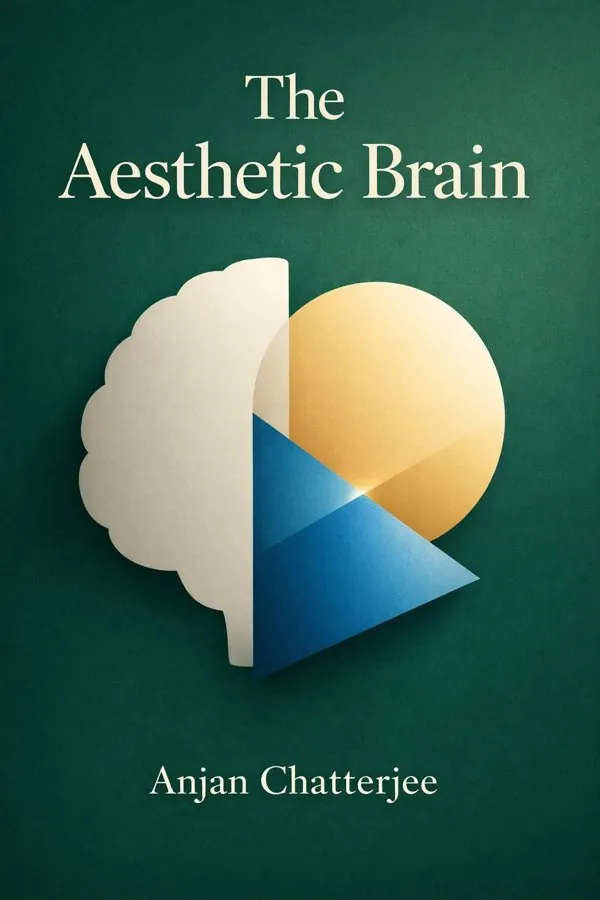
The Aesthetic Brain: How We Evolved to Desire Beauty and Enjoy Art
Why do certain faces look attractive, some rooms feel harmonious, and particular paintings or melodies move us so deeply? In The Aesthetic Brain, neurologist and cognitive neuroscientist Anjan Chatterjee investigates these questions by bringing together neuroscience, psychology, philosophy, and evolutionary biology. His central claim is both ambitious and intuitive: our love of beauty is not an accidental luxury, but a meaningful part of how the human brain evolved to perceive, evaluate, and enjoy the world. Chatterjee shows that aesthetic experience begins in ancient perceptual and reward systems, yet becomes uniquely human through emotion, memory, culture, and imagination. Beauty is not located solely in objects, nor entirely in the eye of the beholder. Instead, it emerges from the dynamic interaction between sensory features, biological predispositions, personal history, and social context. The book matters because it gives scientific depth to experiences often treated as mysterious or purely subjective. It helps explain why art matters, why design influences behavior, and why beauty has such power in everyday life. As a leading figure in neuroaesthetics, Chatterjee is especially qualified to guide readers through this frontier, making complex research accessible without diminishing its richness.
Read SummaryKey Insights from Anjan Chatterjee
Aesthetic Preferences Have Deep Evolutionary Roots
Beauty can feel like a refined cultural concept, but many of our preferences begin far below conscious thought. Chatterjee argues that aesthetic taste did not appear out of nowhere with museums, concert halls, or modern design. It likely grew out of older systems that helped our ancestors survive an...
From The Aesthetic Brain: How We Evolved to Desire Beauty and Enjoy Art
Pleasure Circuits Turn Perception Into Beauty
We do not call something beautiful simply because we see it clearly; we call it beautiful because perception becomes rewarding. Chatterjee explains that aesthetic experience depends on the brain’s reward systems, including regions involved in pleasure, motivation, and value. When people encounter im...
From The Aesthetic Brain: How We Evolved to Desire Beauty and Enjoy Art
Beauty Emerges From Perception And Cognition
Aesthetic experience begins with the senses, but it does not end there. Chatterjee emphasizes that beauty is created through an interaction between bottom-up perception and top-down cognition. Color, line, contour, balance, texture, movement, and sound provide the raw sensory input. Yet what we actu...
From The Aesthetic Brain: How We Evolved to Desire Beauty and Enjoy Art
Faces And Bodies Signal More Than Looks
Human attractiveness feels personal, but some of its foundations are surprisingly consistent. Chatterjee explores how faces and bodies recruit specialized perceptual systems in the brain and why certain features repeatedly influence judgments of beauty. Symmetry, average proportions, cues of health,...
From The Aesthetic Brain: How We Evolved to Desire Beauty and Enjoy Art
Objects And Landscapes Shape Everyday Pleasure
We often think of aesthetics in terms of galleries and concert halls, but most aesthetic life happens in ordinary settings. Chatterjee shows that our brains respond constantly to the visual and spatial qualities of objects, rooms, streets, tools, and landscapes. Curvature, proportion, texture, color...
From The Aesthetic Brain: How We Evolved to Desire Beauty and Enjoy Art
Art Engages Emotion, Attention, And Meaning
Art matters because it does more than please the eye or ear. According to Chatterjee, artworks recruit multiple systems at once: perception, emotion, memory, attention, imagination, and interpretation. A painting, poem, dance, or piece of music becomes powerful when it captures the senses while also...
From The Aesthetic Brain: How We Evolved to Desire Beauty and Enjoy Art
About Anjan Chatterjee
Anjan Chatterjee is a neurologist and cognitive neuroscientist at the University of Pennsylvania. His research focuses on neuroaesthetics, spatial cognition, and the neural basis of human behavior. He is a leading figure in the emerging field of neuroaesthetics, which studies the biological foundati...
Read more
Anjan Chatterjee is a neurologist and cognitive neuroscientist at the University of Pennsylvania. His research focuses on neuroaesthetics, spatial cognition, and the neural basis of human behavior. He is a leading figure in the emerging field of neuroaesthetics, which studies the biological foundati...
Anjan Chatterjee is a neurologist and cognitive neuroscientist at the University of Pennsylvania. His research focuses on neuroaesthetics, spatial cognition, and the neural basis of human behavior. He is a leading figure in the emerging field of neuroaesthetics, which studies the biological foundations of art and beauty.


Frequently Asked Questions
Anjan Chatterjee is a neurologist and cognitive neuroscientist at the University of Pennsylvania. His research focuses on neuroaesthetics, spatial cognition, and the neural basis of human behavior.
Read Anjan Chatterjee's books in 15 minutes
Get AI-powered summaries with key insights from 1 book by Anjan Chatterjee.