
Albert Einstein Books
Albert Einstein (1879–1955) was a German-born theoretical physicist who developed the theory of relativity and is regarded as one of the most influential scientists in history. He received the 1921 Nobel Prize in Physics for his explanation of the photoelectric effect.
Known for: Relativity: The Special and the General Theory, The Evolution of Physics: The Growth of Ideas from Early Concepts to Relativity and Quanta
Books by Albert Einstein
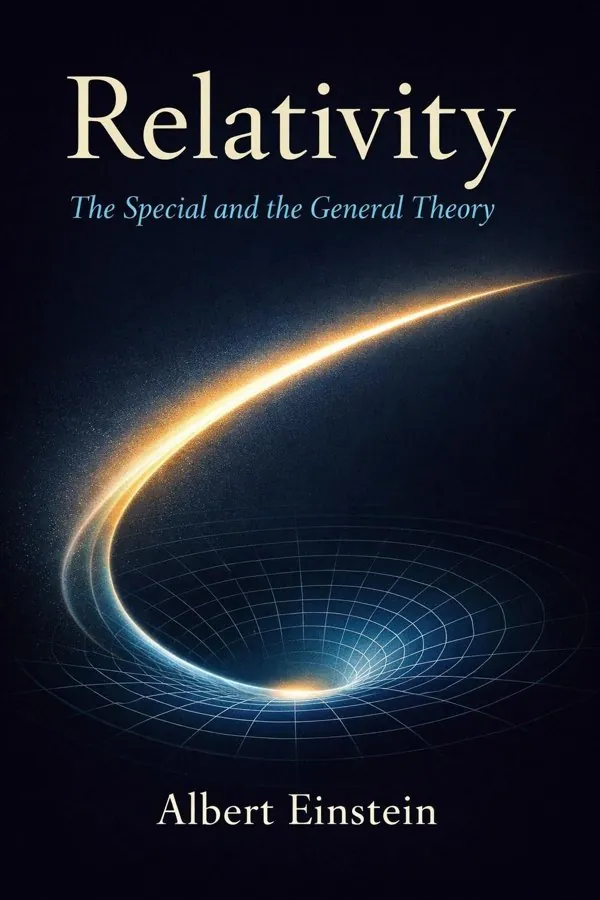
Relativity: The Special and the General Theory
This book is a popular exposition of the special and general theories of relativity, written by Albert Einstein himself. It explains the fundamental structure of space and time, the relativity of moti...
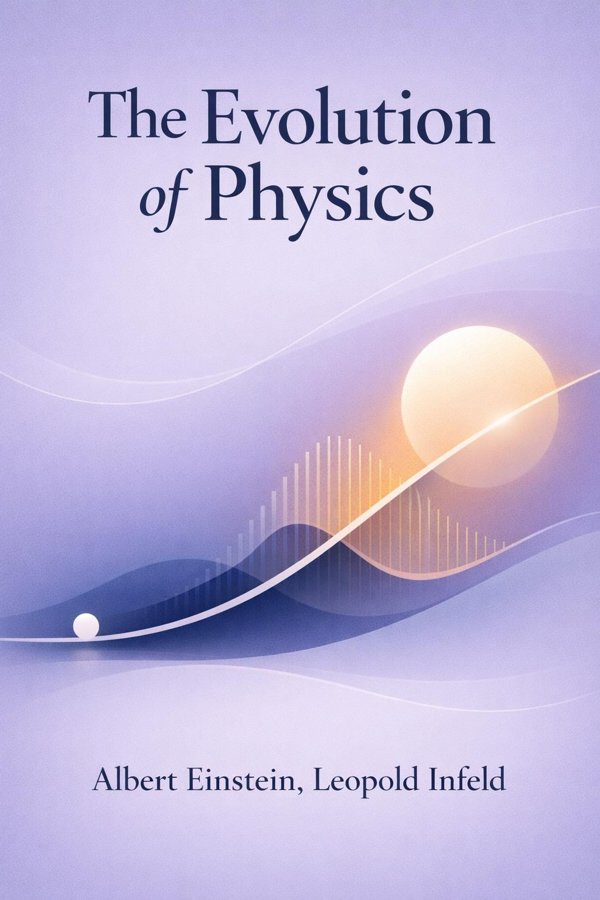
The Evolution of Physics: The Growth of Ideas from Early Concepts to Relativity and Quanta
This classic work, written by Albert Einstein and Leopold Infeld, traces the development of ideas in physics from the early mechanical concepts of Galileo and Newton to the revolutionary theories of r...
Key Insights from Albert Einstein
Part I – The Special Theory of Relativity
Let us begin with motion—so common a word that we forget how subtle it is. When I watch a train pass, I may think the train moves while I stand still. But to a passenger on the train, I am the one moving backward. Which viewpoint is correct? Classical mechanics, following Galileo and Newton, tells u...
From Relativity: The Special and the General Theory
Part II – The General Theory of Relativity
The special theory applies only when motion is uniform, free from acceleration. But nature is seldom so polite. A turning train or a falling apple feels forces beyond the reach of the special theory. To embrace these, I had to generalize the principle of relativity itself so that it included all obs...
From Relativity: The Special and the General Theory
Early Mechanical Concepts
Every great structure of thought begins with a simple image. In the seventeenth century, that image was the machine. Galileo, watching falling bodies and rolling spheres, dared to free his mind from the authority of Aristotle. He refused to see motion as the natural state of rest disturbed by force;...
From The Evolution of Physics: The Growth of Ideas from Early Concepts to Relativity and Quanta
The Rise of Field Theory
Out of those cracks arose the concept of the field, and with it, a revolution of vision. The great English experimenter Michael Faraday did not think in terms of mechanical particles alone. He saw around magnets and electric charges mysterious regions of influence. To him, these were not invisible s...
From The Evolution of Physics: The Growth of Ideas from Early Concepts to Relativity and Quanta
About Albert Einstein
Albert Einstein (1879–1955) was a German-born theoretical physicist who developed the theory of relativity and is regarded as one of the most influential scientists in history. He received the 1921 Nobel Prize in Physics for his explanation of the photoelectric effect.


Frequently Asked Questions
Albert Einstein (1879–1955) was a German-born theoretical physicist who developed the theory of relativity and is regarded as one of the most influential scientists in history. He received the 1921 Nobel Prize in Physics for his explanation of the photoelectric effect.
Read Albert Einstein's books in 15 minutes
Get AI-powered summaries with key insights from 2 books by Albert Einstein.