
A. O. Scott Books
A. O.
Known for: Better Living Through Criticism: How to Think About Art, Pleasure, Beauty, and Truth
Books by A. O. Scott
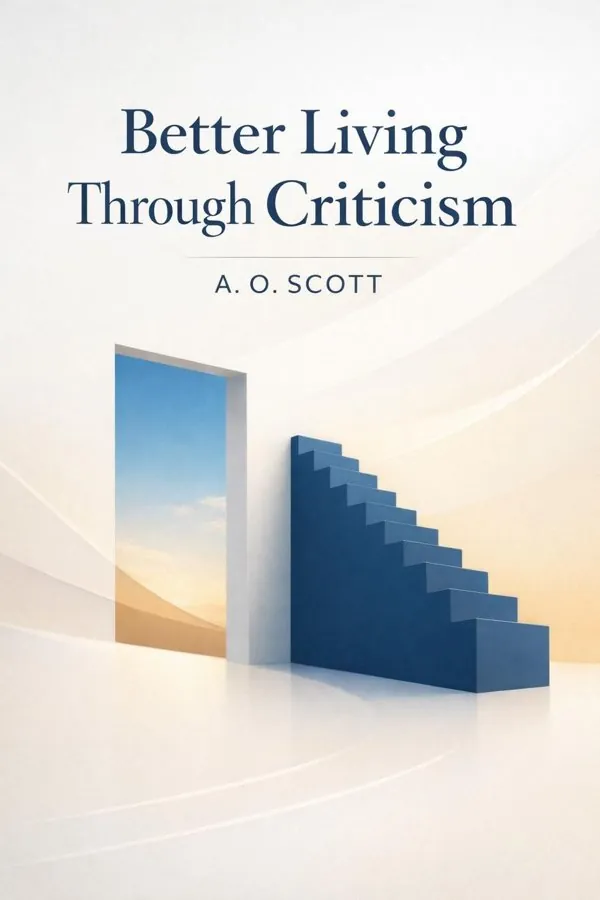
Better Living Through Criticism: How to Think About Art, Pleasure, Beauty, and Truth
In Better Living Through Criticism, A. O. Scott argues that criticism is far more than the act of handing down verdicts on books, films, paintings, or music. It is a way of paying attention, making distinctions, and participating in a larger conversation about what matters. Drawing on philosophy, literary history, popular culture, and his own experience as chief film critic for The New York Times, Scott shows that criticism belongs not only to professionals but to anyone who has ever said, “I loved that,” “I didn’t get it,” or “Why does this move me?” The book reframes criticism as an everyday human practice tied to pleasure, judgment, identity, and truth. In a culture that often treats opinions as disposable and disagreement as hostility, Scott offers a more generous and demanding model: criticism as curiosity, self-examination, and dialogue. For readers interested in writing, art, media, and the life of the mind, this book is both a defense of critics and a practical invitation to think more clearly about taste, beauty, and meaning.
Read SummaryKey Insights from A. O. Scott
Criticism Begins With Paying Attention
Every judgment starts with an act of noticing. Scott’s central claim is that criticism is not primarily about declaring something good or bad; it begins earlier, with close attention to what an artwork is doing and what it is doing to us. To criticize is to slow down experience, describe it carefull...
From Better Living Through Criticism: How to Think About Art, Pleasure, Beauty, and Truth
Criticism Has Deep Philosophical Roots
To think critically about art is also to enter an ancient argument about truth, beauty, and judgment. Scott places modern criticism within a long intellectual tradition, showing that critics did not invent the desire to evaluate culture; they inherited it from philosophy itself. He draws a line from...
From Better Living Through Criticism: How to Think About Art, Pleasure, Beauty, and Truth
The Critic Is A Public Thinker
A critic’s real work is not to dominate conversation but to make thought visible. Scott strongly resists the caricature of the critic as a smug gatekeeper handing down arrogant verdicts from above. At their best, critics do something more democratic: they think in public. They model how to move from...
From Better Living Through Criticism: How to Think About Art, Pleasure, Beauty, and Truth
Judgment Is Subjective But Not Random
Taste feels personal, but Scott argues that personal does not mean meaningless. One of the book’s most important contributions is its defense of judgment in an age suspicious of authority. People often retreat into the slogan that art is entirely subjective, as if all responses are equally valid and...
From Better Living Through Criticism: How to Think About Art, Pleasure, Beauty, and Truth
Disagreement Keeps Culture Alive
Consensus is comfortable, but argument is often more enlightening. Scott presents criticism as a form of dialogue, not a final pronouncement. Because art matters differently to different people, disagreement is inevitable. Rather than seeing that as a problem, he treats it as evidence that criticism...
From Better Living Through Criticism: How to Think About Art, Pleasure, Beauty, and Truth
Criticism And Creativity Need Each Other
Artists and critics are often portrayed as enemies, but Scott shows how deeply connected they are. Creativity does not happen in a vacuum. Artists respond to traditions, borrow forms, reject conventions, and revise inherited ideas. In that sense, making art is already a kind of criticism. A new nove...
From Better Living Through Criticism: How to Think About Art, Pleasure, Beauty, and Truth
About A. O. Scott
A. O. Scott is an American journalist and cultural critic best known as the chief film critic for The New York Times. His writing spans film, literature, and art, and he is recognized for his thoughtful and accessible approach to criticism. Scott has contributed to numerous publications and is regar...
Read more
A. O. Scott is an American journalist and cultural critic best known as the chief film critic for The New York Times. His writing spans film, literature, and art, and he is recognized for his thoughtful and accessible approach to criticism. Scott has contributed to numerous publications and is regar...
A. O. Scott is an American journalist and cultural critic best known as the chief film critic for The New York Times. His writing spans film, literature, and art, and he is recognized for his thoughtful and accessible approach to criticism. Scott has contributed to numerous publications and is regarded as one of the leading voices in American cultural commentary.


Frequently Asked Questions
A. O.
Read A. O. Scott's books in 15 minutes
Get AI-powered summaries with key insights from 1 book by A. O. Scott.