

Henry Hazlitt Books
Lao She (1899–1966), born Shu Qingchun in Beijing, was a renowned Chinese novelist and playwright. His works, including Rickshaw Boy, Teahouse, and Four Generations Under One Roof, are celebrated for their vivid depiction of Beijing life and deep social insight.
Known for: Economics in One Lesson
Books by Henry Hazlitt
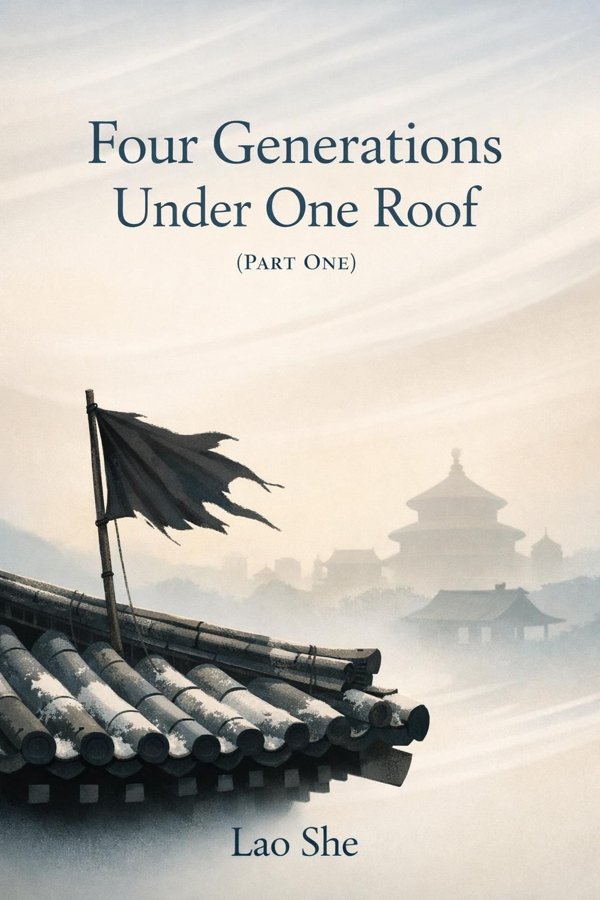
Economics in One Lesson
What if most bad economic policies survive not because they work, but because people only notice their immediate benefits and ignore their hidden costs? That is the central insight of Economics in One Lesson, Henry Hazlitt’s enduring classic on economic thinking. First published in 1946 and still sharply relevant, the book argues that sound economics requires looking beyond short-term effects, beyond one favored group, and beyond political slogans. Hazlitt shows how policies like price controls, public works spending, tariffs, and wage mandates can seem helpful on the surface while quietly creating distortions, shortages, and losses elsewhere. The book matters because modern debates still suffer from the same mistake Hazlitt identified: focusing on the visible and neglecting the invisible. Written with unusual clarity, it translates economic reasoning into plain language without sacrificing seriousness. Hazlitt, a journalist, editor, and public intellectual deeply influenced by classical liberal and Austrian economics, had a rare gift for explaining complex ideas simply. Economics in One Lesson remains one of the best introductions to economic literacy because it trains readers not just to memorize conclusions, but to think clearly about incentives, trade-offs, and unintended consequences.
Read SummaryKey Insights from Henry Hazlitt
See the Unseen, Not Just the Visible
The most dangerous economic mistake is often not ignorance, but partial vision. Hazlitt’s famous “one lesson” is that we must trace the effects of any policy not only on one group, but on all groups, and not only in the short run, but in the long run. Many policies look wise because their benefits a...
From Economics in One Lesson
The Broken Window Is Not Prosperity
Destruction does not enrich a society, even when it appears to stimulate business. Hazlitt’s best-known example, adapted from Frédéric Bastiat, is the broken window fallacy. If a vandal breaks a shopkeeper’s window, people may say the damage is good for the economy because it gives work to the glazi...
From Economics in One Lesson
Public Works Are Not Free Wealth
Government projects often look like gifts because their costs are spread out while their benefits are concentrated and visible. Hazlitt argues that public works can create the illusion of prosperity: a new bridge, road, dam, or civic complex gives people something concrete to admire, and workers hir...
From Economics in One Lesson
Taxes Shift Resources, They Do Not Create Them
A tax-funded benefit can feel like a social gain when we focus only on recipients, but Hazlitt reminds us that government cannot distribute what it has not first taken. Taxes do not generate resources; they redirect them. The key economic question is whether the redirection produces greater value th...
From Economics in One Lesson
Credit Expansion Cannot Replace Real Savings
Easy money can imitate prosperity for a while, but imitation is not the same as wealth. Hazlitt warns that artificial credit expansion—often encouraged by governments or central banks—can make it seem as if an economy has more capital than it really does. Businesses borrow more, asset prices rise, a...
From Economics in One Lesson
Price Controls Create Shortages and Distortions
When prices rise, political leaders are tempted to outlaw the symptom rather than address the cause. Hazlitt argues that price controls—whether ceilings on rents, food, fuel, or wages—may sound compassionate, but they usually reduce supply, worsen quality, and create new problems that require furthe...
From Economics in One Lesson
About Henry Hazlitt
Lao She (1899–1966), born Shu Qingchun in Beijing, was a renowned Chinese novelist and playwright. His works, including Rickshaw Boy, Teahouse, and Four Generations Under One Roof, are celebrated for their vivid depiction of Beijing life and deep social insight. He is regarded as one of the most imp...
Read more
Lao She (1899–1966), born Shu Qingchun in Beijing, was a renowned Chinese novelist and playwright. His works, including Rickshaw Boy, Teahouse, and Four Generations Under One Roof, are celebrated for their vivid depiction of Beijing life and deep social insight. He is regarded as one of the most imp...
Lao She (1899–1966), born Shu Qingchun in Beijing, was a renowned Chinese novelist and playwright. His works, including Rickshaw Boy, Teahouse, and Four Generations Under One Roof, are celebrated for their vivid depiction of Beijing life and deep social insight. He is regarded as one of the most important figures in modern Chinese literature.


Frequently Asked Questions
Lao She (1899–1966), born Shu Qingchun in Beijing, was a renowned Chinese novelist and playwright. His works, including Rickshaw Boy, Teahouse, and Four Generations Under One Roof, are celebrated for their vivid depiction of Beijing life and deep social insight.
Read Henry Hazlitt's books in 15 minutes
Get AI-powered summaries with key insights from 1 book by Henry Hazlitt.