
Edward D. Hess Books
Edward D. Hess is a professor of business administration and Batten Executive-in-Residence at the Darden Graduate School of Business, University of Virginia.
Known for: Humility Is The New Smart: Rethinking Human Excellence in the Smart Machine Age, Hyper-Learning: How to Adapt to the Speed of Change, Learn or Die: Using Science to Build a Leading-Edge Learning Organization
Books by Edward D. Hess
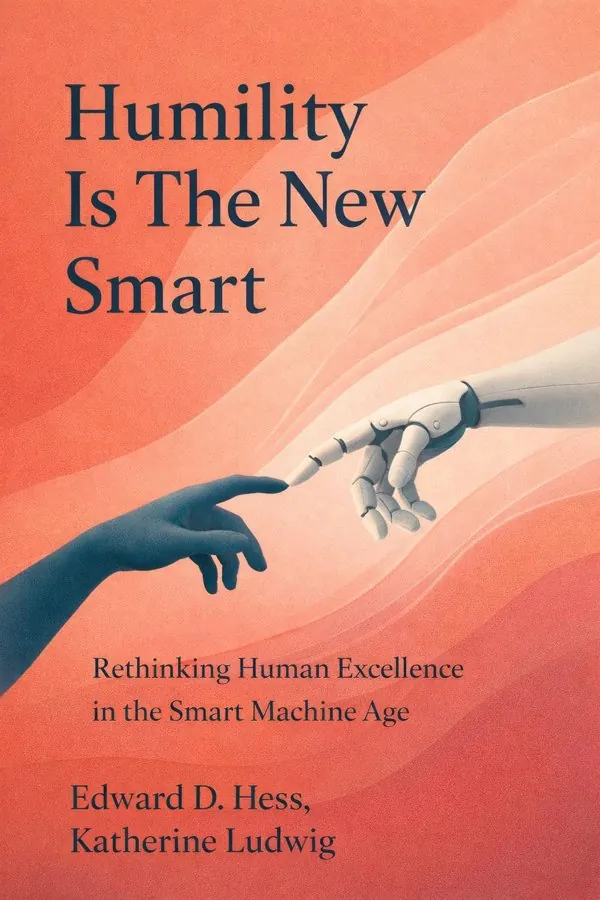
Humility Is The New Smart: Rethinking Human Excellence in the Smart Machine Age
In this book, Edward D. Hess and Katherine Ludwig argue that in the era of smart machines, traditional notions of intelligence and success must evolve. They propose 'NewSmart'—a mindset emphasizing hu...
Hyper-Learning: How to Adapt to the Speed of Change
Hyper-Learning: How to Adapt to the Speed of Change explores one of the defining challenges of modern life: how to remain valuable, capable, and fully human in a world increasingly shaped by smart mac...

Learn or Die: Using Science to Build a Leading-Edge Learning Organization
In Learn or Die, Edward D. Hess argues that in a world defined by relentless change, the greatest competitive advantage is not scale, strategy, or even talent alone, but the ability to learn continuou...
Key Insights from Edward D. Hess
The End of the Old Smart
For most of modern history, being 'smart' meant knowing more than others, having the right answers, and making rapid, confident decisions. The Old Smart rewarded mastery of facts and individual competition. In business, it translated to leaders who prided themselves on rational control and certainty...
From Humility Is The New Smart: Rethinking Human Excellence in the Smart Machine Age
Defining 'NewSmart'
When we describe 'NewSmart,' we are not introducing another performance slogan. We are describing a new definition of human excellence. 'NewSmart' acknowledges that in a world where machines outperform us cognitively, our edge comes from distinctly human abilities that machines cannot replicate: hum...
From Humility Is The New Smart: Rethinking Human Excellence in the Smart Machine Age
Learning Faster Than Change Happens
The greatest risk today is not ignorance, but the illusion that yesterday’s skills will still be enough tomorrow. Edward D. Hess builds his argument around a simple but urgent reality: the speed of technological, economic, and organizational change is accelerating so quickly that traditional learnin...
From Hyper-Learning: How to Adapt to the Speed of Change
Humility Is the Gateway to Growth
Real learning begins the moment we stop trying to prove we are smart. One of Hess’s most powerful ideas is that humility is not weakness; it is the essential condition for growth. In many workplaces, people are rewarded for appearing confident, decisive, and knowledgeable. Yet those same habits can ...
From Hyper-Learning: How to Adapt to the Speed of Change
Thinking Better Requires Managing Your Ego
Most poor decisions are not failures of intelligence; they are failures of self-management. Hess emphasizes that hyper-learning depends on the quality of our thinking, and the quality of our thinking is often distorted by ego, fear, defensiveness, and mental shortcuts. If we want to learn well, we m...
From Hyper-Learning: How to Adapt to the Speed of Change
The Best Learners Ask Better Questions
Answers can make us feel secure, but questions are what move us forward. A central theme in Hyper-Learning is that great learners distinguish themselves not by how much they know, but by the quality of the questions they ask. In a volatile world, fixed answers quickly expire. Questions, by contrast,...
From Hyper-Learning: How to Adapt to the Speed of Change
About Edward D. Hess
Edward D. Hess is a professor of business administration and Batten Executive-in-Residence at the Darden Graduate School of Business, University of Virginia. He is known for his research on organizational learning, innovation, and growth, and has authored several books on leadership and business str...
Read more
Edward D. Hess is a professor of business administration and Batten Executive-in-Residence at the Darden Graduate School of Business, University of Virginia. He is known for his research on organizational learning, innovation, and growth, and has authored several books on leadership and business str...
Edward D. Hess is a professor of business administration and Batten Executive-in-Residence at the Darden Graduate School of Business, University of Virginia. He is known for his research on organizational learning, innovation, and growth, and has authored several books on leadership and business strategy.



Frequently Asked Questions
Edward D. Hess is a professor of business administration and Batten Executive-in-Residence at the Darden Graduate School of Business, University of Virginia.
Read Edward D. Hess's books in 15 minutes
Get AI-powered summaries with key insights from 3 books by Edward D. Hess.